Before You Encapsulate Your Crawlspace, Check This First
I Found a Crawlspace That Was Basically a Swimming Pool
THE ENCAPSULATION WOULDN'T HAVE FIXED ANYTHING
I got called out to Pioneer, Tennessee yesterday to look at a crawlspace. When I got down there, it was like walking on a waterbed. Standing water everywhere.
The homeowner was ready to get quotes for encapsulation. They'd been dealing with moisture issues and fungal growth. They figured encapsulation would solve it.
Here's the problem - if we encapsulated this crawlspace right now, we'd just be covering up water with plastic. In six months, maybe a year, they'd be right back where they started. Probably worse.
Because the real issue isn't inside the crawlspace. It's outside.
Before you spend thousands on encapsulation, you need to figure out where the water is coming from. Otherwise, you're just mopping the floor while the sink is still overflowing.
Let me show you what I found and why it matters.
What I Found in This Crawlspace
The standing water was the obvious problem. But that's just the symptom.
There was a sump pump installed in the corner. Somebody put it in at some point, probably trying to fix the flooding. But it wasn't helping. I watched it run for five minutes straight and it couldn't even keep up with what was already in the basin.
Here's why - the sump pump was draining into a downspout line. And that downspout was connected to perforated corrugated pipe.
Perforated pipe has holes in it. That's the whole point - it's designed to let water leak out along the length of the pipe. Some people use it for drainage in certain situations. But you never want your downspouts or sump pump draining into it.
Because all that water just leaks right back out next to your foundation. Then it seeps back into your crawlspace. The sump pump runs constantly, but the water never actually leaves.
You could see it on the foundation walls. That discoloration running down the concrete? That's water pushing through from outside. Over and over.
On top of that, there was fungal growth on the wood and high moisture readings throughout. But those are just the results of all that water sitting there. Fix the water source, and those problems become manageable.
The Real Problem: Exterior Drainage
The sump pump wasn't the main issue. It was just fighting a losing battle.
The real problem was how the water was being handled outside the house. The downspouts were dumping into perforated corrugated pipe. Every time it rained, all that water from the roof was supposed to flow away from the foundation. Instead, it was leaking out right next to it.
Perforated pipe is meant for things like French drains where you want water to distribute into the soil. It's not meant for moving water away from your house. For that, you need solid corrugated pipe - no holes, no perforations. Just a clean path to carry water off and away.
When you use the wrong pipe, the water takes the path of least resistance. It leaks out, pools around your foundation, and finds its way into your crawlspace. Then your sump pump tries to push it back out into that same perforated pipe, and the cycle just repeats.
That's why no matter how much that sump pump ran, the crawlspace stayed flooded. The water never actually left. It just kept circulating back.
Why Encapsulation Would Fail Here
Let's say this homeowner got three quotes and everyone recommended encapsulation. Maybe a dehumidifier, maybe a sump pump upgrade. Standard crawlspace package.
They spend $10,000, $15,000, maybe more. The crew comes in, lays down vapor barrier, installs equipment, everything looks great.
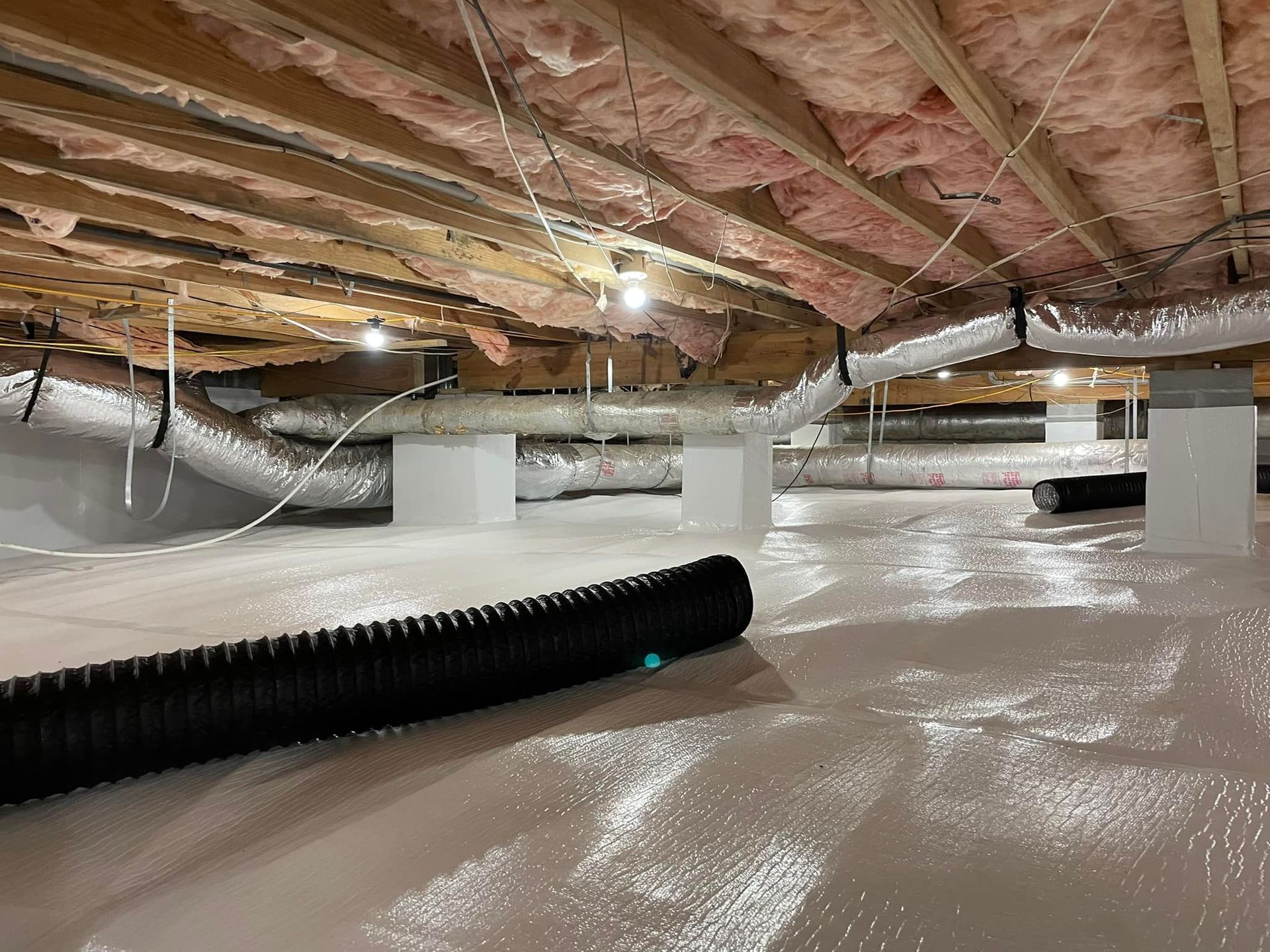
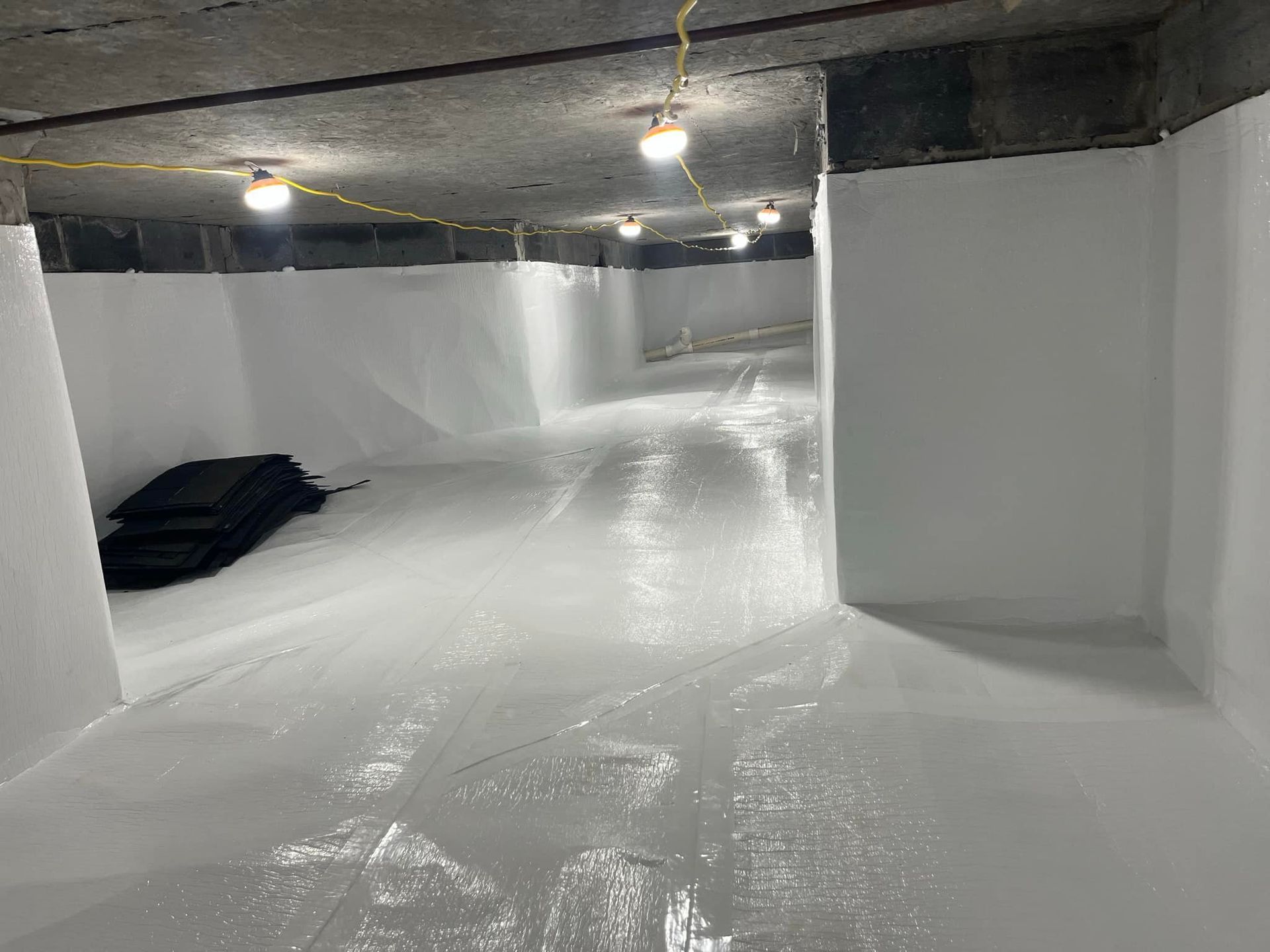
Three months later? Still wet. The vapor barrier is holding water on top of it because water is still flooding in from outside. The dehumidifier is running nonstop trying to fight exterior water intrusion. The sump pump is still battling that perforated pipe.
You can't encapsulate over a drainage problem. The water will win every single time.
This is what drives me crazy about some companies in this industry. They see moisture in a crawlspace and immediately sell encapsulation. They don't walk the exterior. They don't check the downspouts. They don't ask where the water is actually coming from.
Because encapsulation is the big ticket item. That's what makes money. Fixing a downspout discharge? That's a couple hundred bucks, maybe less.
But if you don't fix the source, the encapsulation is worthless. It's putting a bandaid on a broken bone.
The Right Order of Operations
Here's how you actually fix a crawlspace with water intrusion. And it's not sexy, but it works.
First, fix the exterior drainage. Walk the perimeter of your house. Check where your downspouts are discharging. Make sure they're connected to solid pipe that carries water at least 10 feet away from your foundation. Check your grading - the ground should slope away from your house, not toward it.
Second, install or fix your sump pump correctly. If you need one, make sure it's draining to solid pipe that goes away from the foundation. Not into perforated pipe. Not into a downspout line that dumps right back at the house. Away.
Third, deal with the standing water and moisture that's already there. Pump it out. Let it dry. Get the space stabilized.
Fourth, treat any fungal growth. Once the moisture source is controlled, treat the wood properly. Don't seal it - let it breathe. A good dehumidifier will handle the rest.
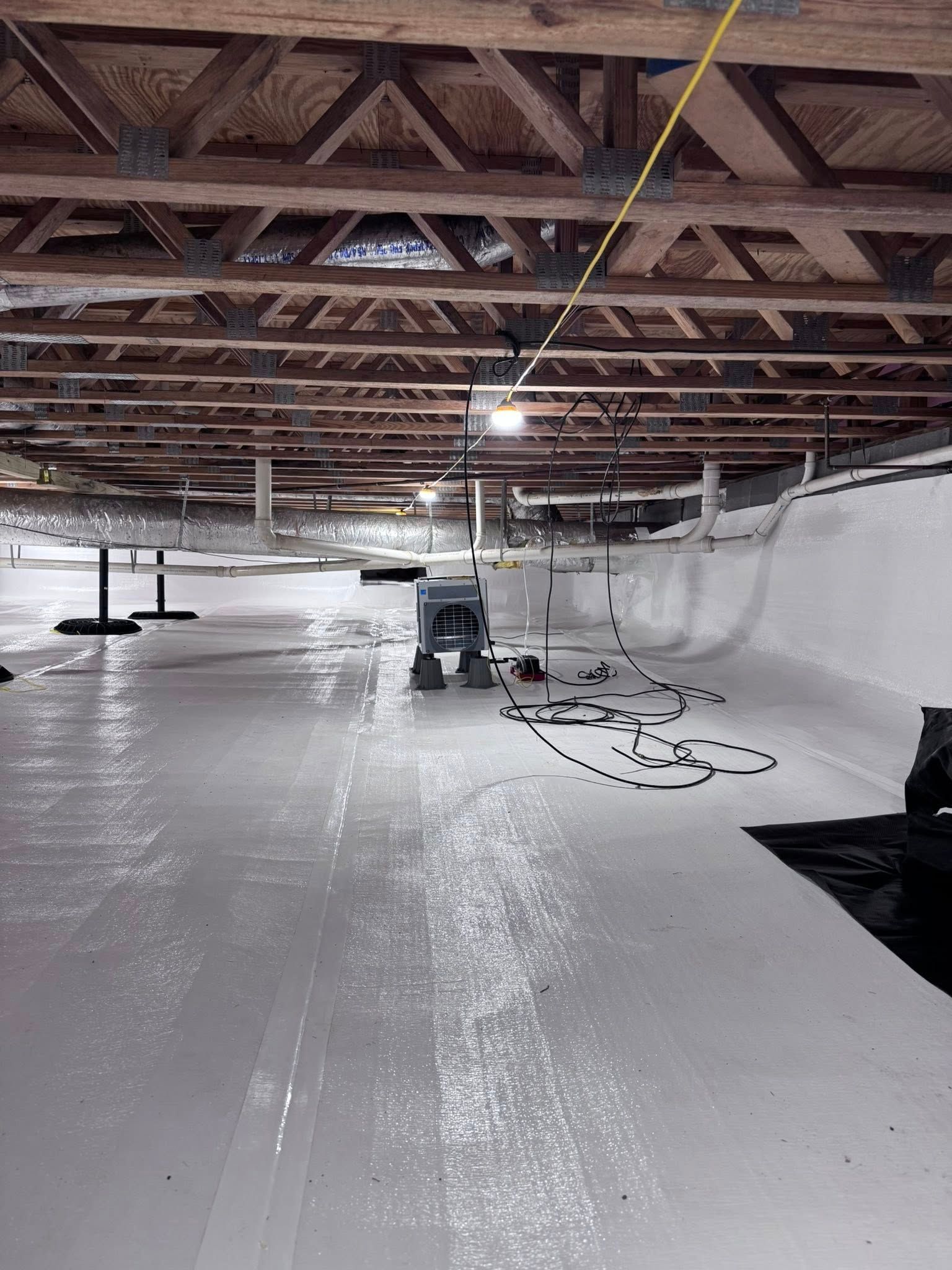
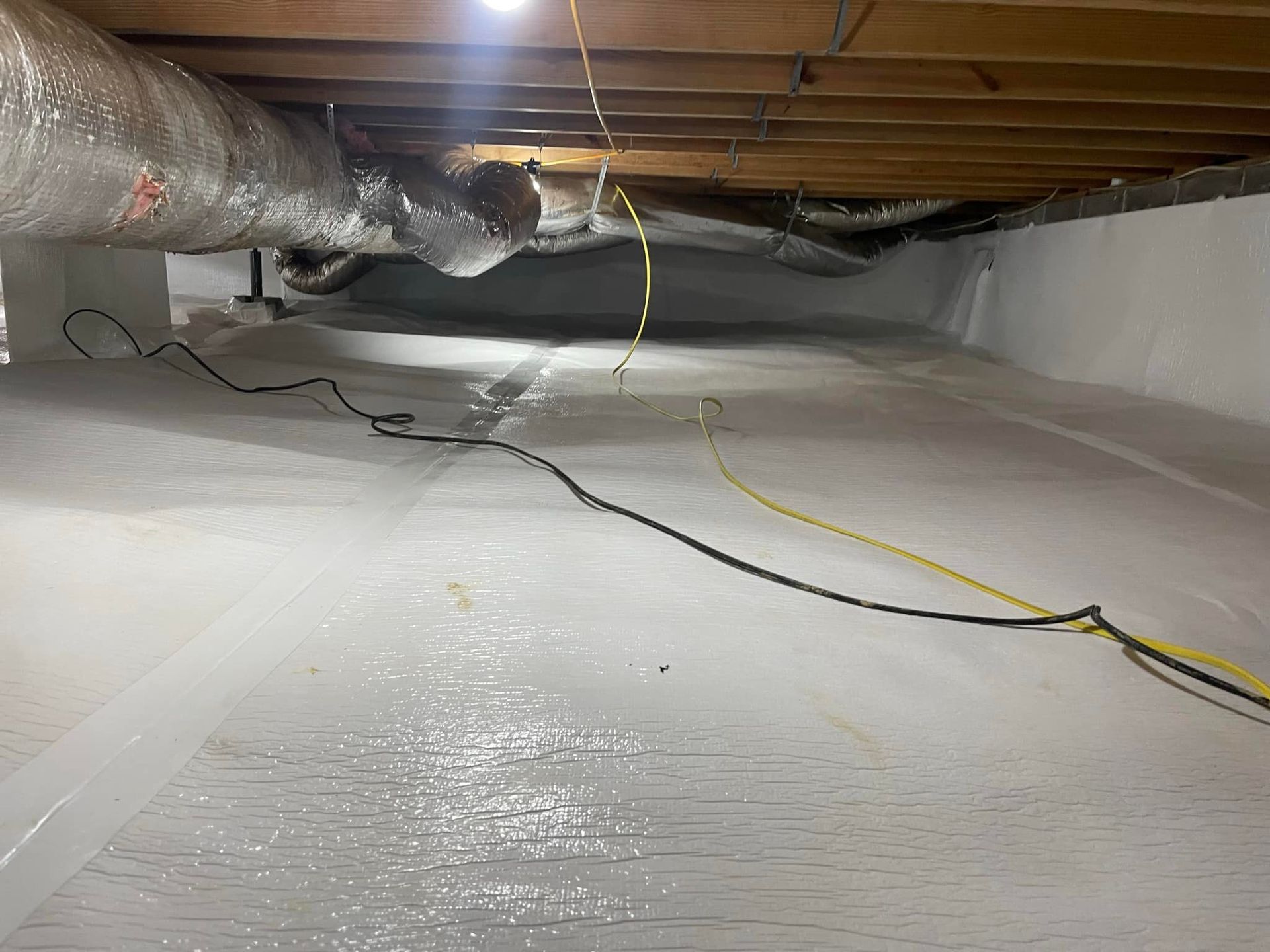
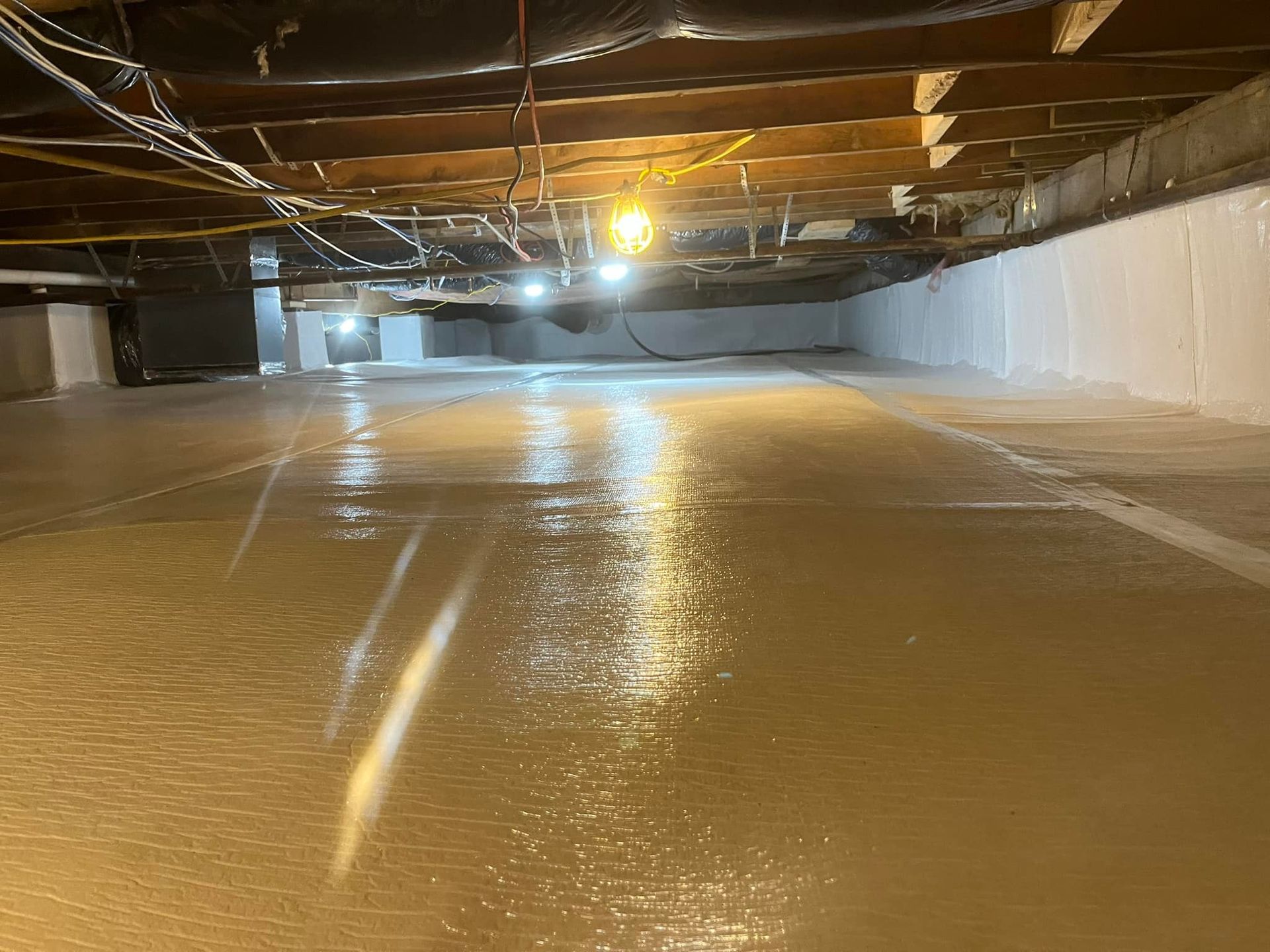
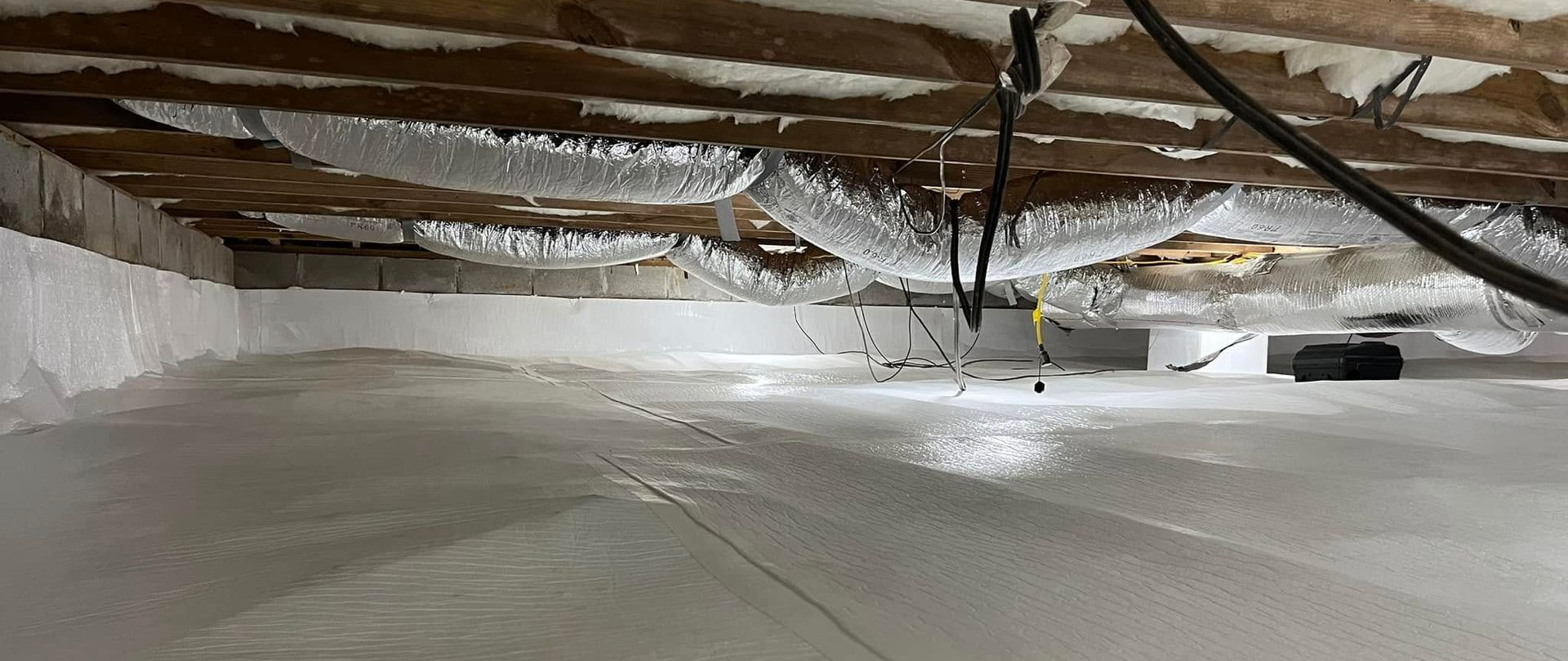
Fifth, and only then, think about encapsulation. Once you've stopped the water from coming in, then you can talk about vapor barriers and dehumidifiers and all the rest.
Skip any of these steps, and you're wasting your money. I've seen it happen too many times.
How to Check Your Own Drainage
You don't need to hire someone to figure out if you have a drainage problem. You can check this yourself.
Next time it rains, go outside and walk around your foundation. Watch where the water goes. Is it flowing away from your house? Or is it pooling next to it?
Look at your downspouts. Where do they end? If they just dump out at ground level right next to your foundation, that's a problem. If they're connected to pipe, what kind? If you can see holes or perforations in it, that's your issue.
Check the grading around your house. The ground should slope away from your foundation - at least a few inches over the first 10 feet. If it slopes toward your house, or if it's flat, water is sitting there and seeping down to your crawlspace.
Go into your crawlspace after a heavy rain if you can. Look for standing water, wet spots, or water stains on the foundation walls. If you see discoloration or mineral deposits on the concrete, that's water pushing through from outside.
These are all signs that your exterior drainage needs work before you even think about encapsulation.
Take the Next Step
If you're dealing with water in your crawlspace, let's figure out where it's coming from.
I'll come out and do a full inspection - inside and outside. I'll show you exactly what's happening and what needs to be fixed. No pressure. No games. Just an honest assessment.
Maybe you need drainage work. Maybe you need a sump pump. Maybe you do need encapsulation. But we're going to do it in the right order so your money actually fixes the problem.
Call us or send a message. We'll get you on the schedule and take a look. Let's stop the water at the source.