Thousands of Gallons Under Your House: When Crawlspace Water Becomes a Foundation Problem
I Crawled Into a Waterbed Today
WHAT HAPPENS WHEN WATER PROBLEMS GO UNFIXED
I was out in Pioneer, Tennessee yesterday looking at a couple of crawlspaces.
Pretty standard stuff at first - high moisture, some fungal growth on the wood. Nothing I haven't seen a hundred times before.
Then I crawled further in.
The entire crawlspace was a waterbed. I'm not exaggerating.
Thousands of gallons of water sitting underneath the vapor barrier. Every time I moved, I could feel it shifting under me like I was crawling on a water mattress.
This isn't your typical moisture problem. This is a foundation problem waiting to happen.
When you've got that much water sitting under your house, your foundation is sitting in saturated soil. And saturated soil moves. It settles. It shifts.
That's when you start seeing cracks in your walls, floors that sag, doors that won't close right.
This customer needs more than just a dehumidifier and some plastic.
We're talking perimeter drainage, pumping out thousands of gallons, fixing downspouts, maybe regrading part of the yard. This is a big job.
But it needs to be done. Because waiting on something like this doesn't make it better. It makes it expensive.
What I Found in This Crawlspace
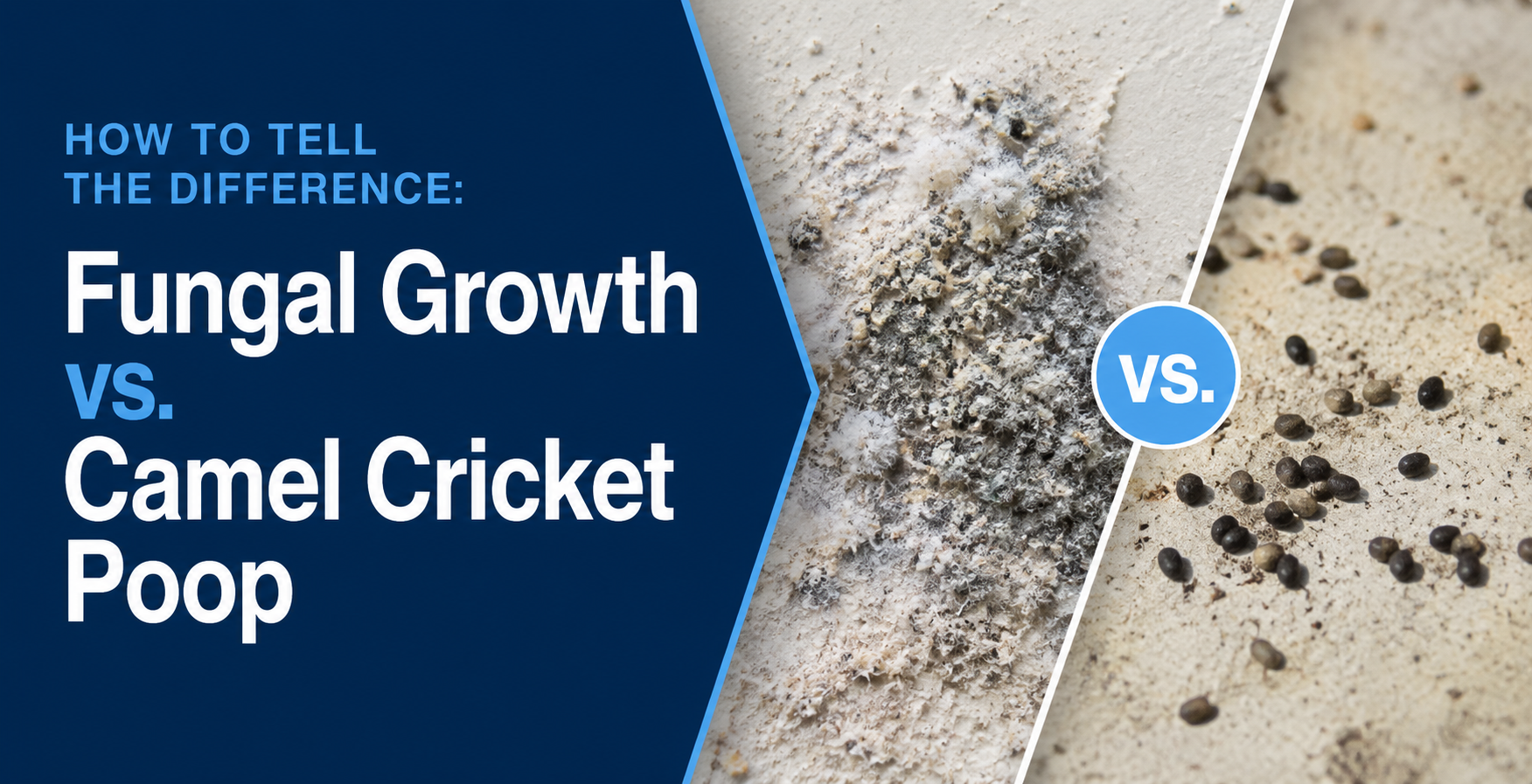
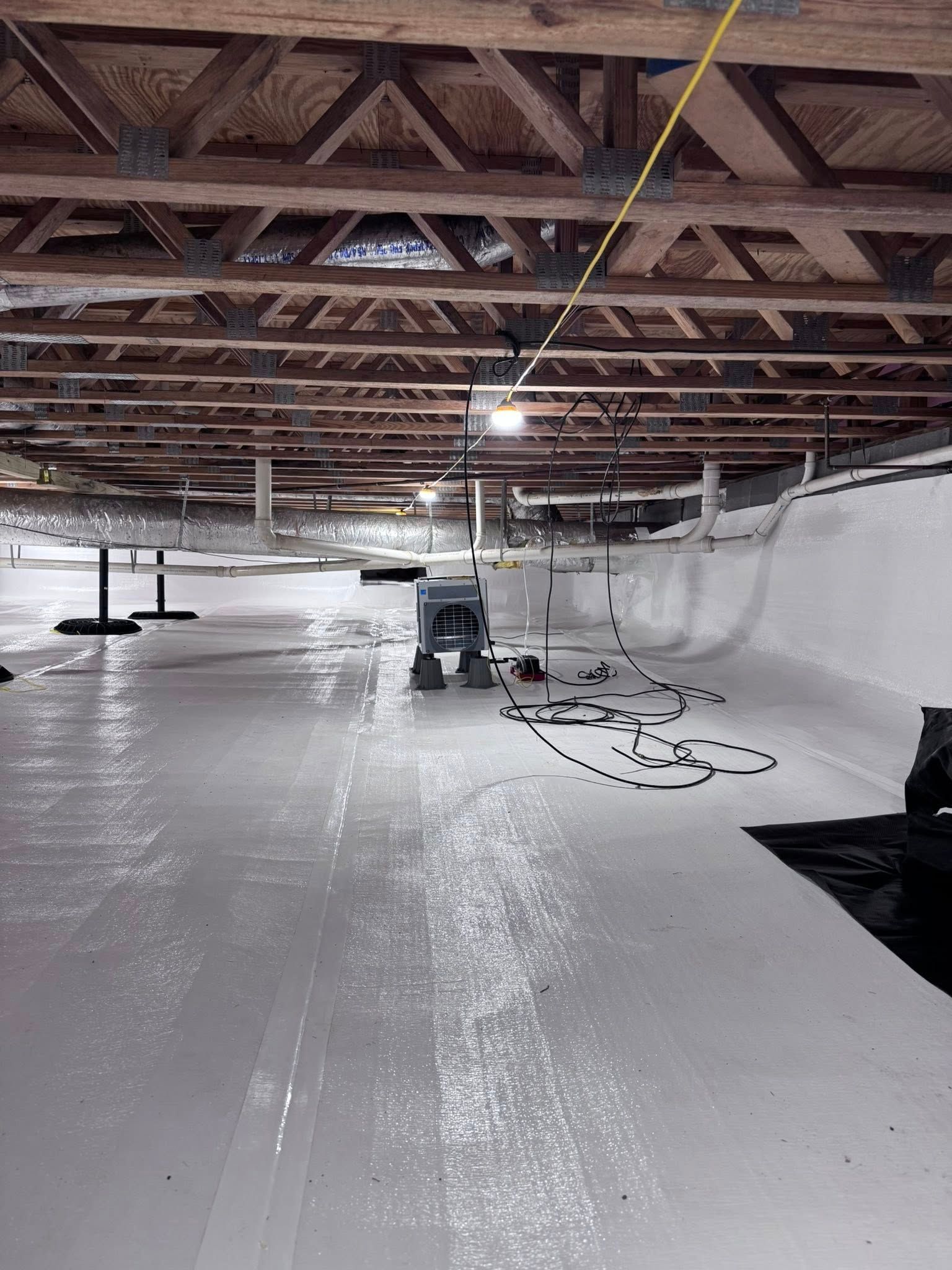
Like I said, when I first got down there, it looked pretty typical. High moisture readings. Some fungal growth on the floor joists - not terrible compared to other crawlspaces I've seen, but enough to know there's a moisture problem.
Then I started crawling around to get a full picture.
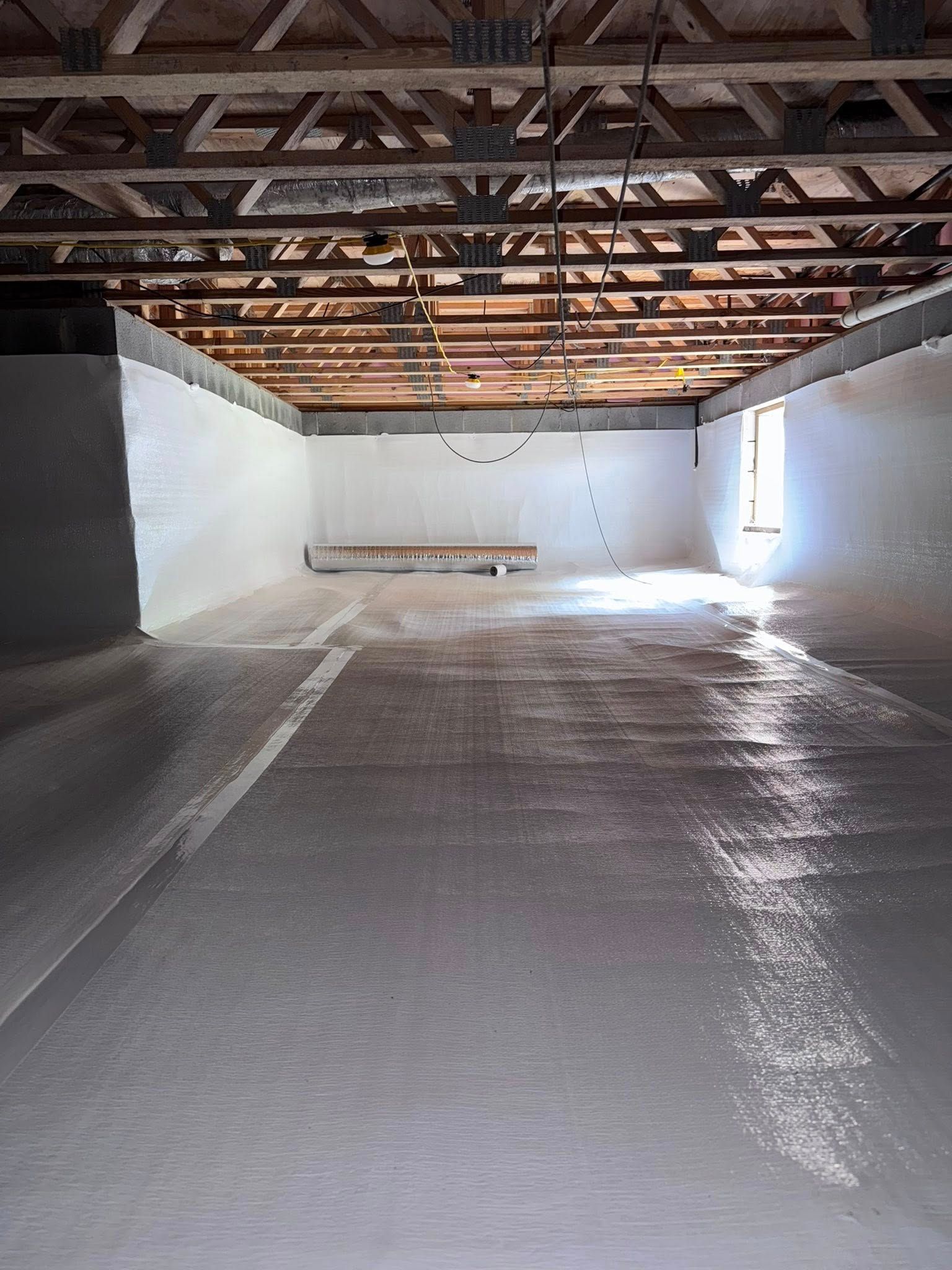
The whole floor was moving under me. At first I thought maybe it was just a soft spot. But no. The entire crawlspace. Wall to wall. Water everywhere underneath the vapor barrier.
I'm talking thousands of gallons. Enough that every time I shifted my weight, I could see the water rippling under the plastic. It felt like crawling on a waterbed.
You don't see this level of standing water often. Usually it's a corner with some pooling, or water along one wall. This was the whole space. Completely saturated.
From outside, you might not even know. The house doesn't look like it's flooding. But underneath? It's a lake.
That's the scary part. This doesn't announce itself with sirens and flashing lights. It just sits there, slowly compromising your foundation while you go about your day upstairs.
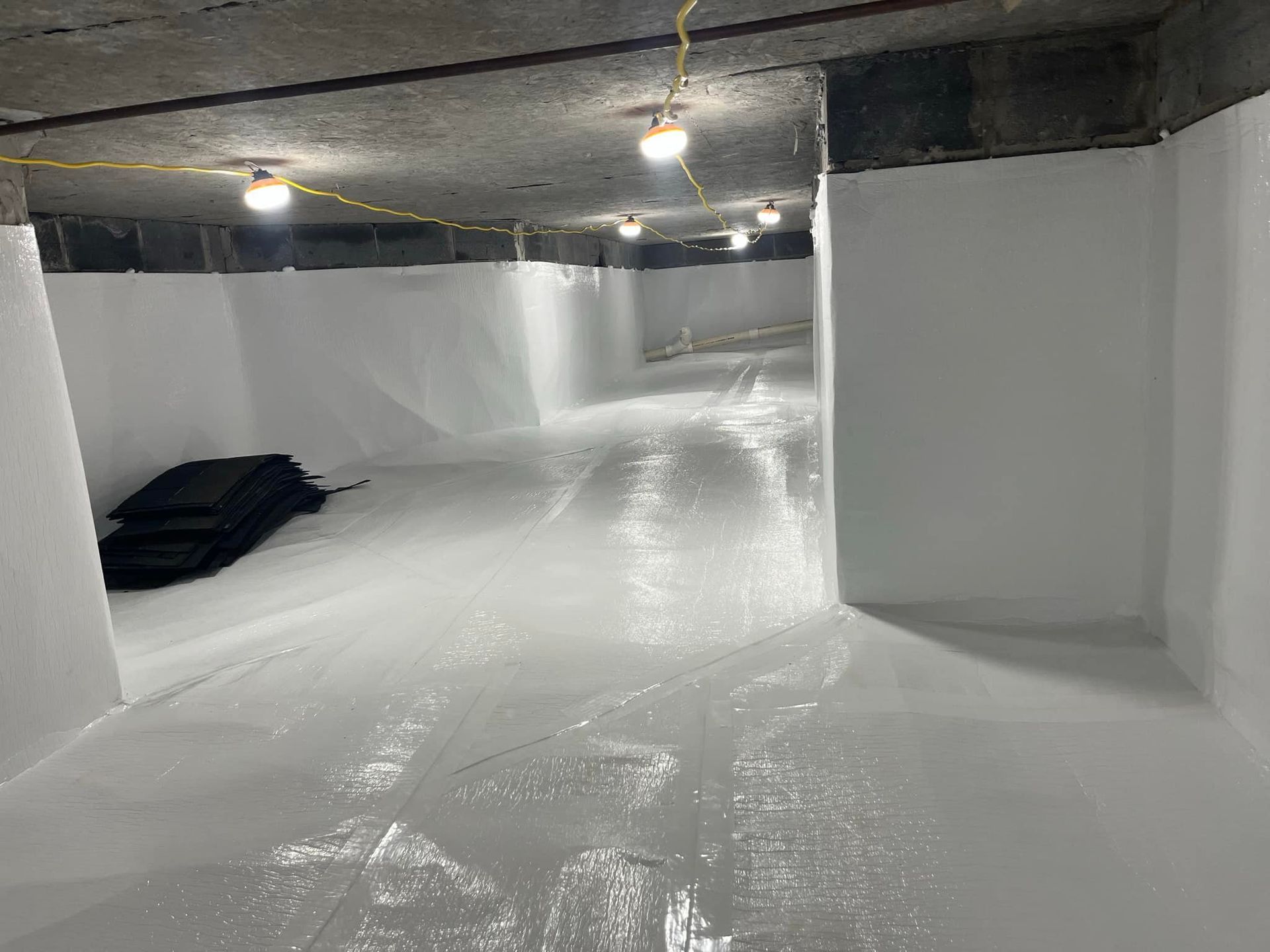
Why This Much Water Is a Foundation Problem
Here's what most people don't realize about standing water under their house. It's not just about moisture or mold. It's about what happens to the ground underneath your foundation.
Your foundation sits on soil. When that soil is dry and compacted, it's stable. It holds your house up evenly. But when you saturate it with thousands of gallons of water, everything changes.
Saturated soil is soft. It shifts. It compresses unevenly. And when the ground under your foundation starts moving, your foundation moves with it.
That's when you start seeing the warning signs upstairs. Cracks in your drywall. Gaps between the floor and the baseboard. Doors that suddenly don't close right because the frame shifted. Floors that feel soft or uneven when you walk across them.
These aren't cosmetic issues. They're signs that your foundation is settling.
And here's the thing - foundation problems don't fix themselves. They get worse. A small crack becomes a big crack. A slightly uneven floor becomes a sagging floor. What starts as a waterproofing issue turns into a structural issue.
The cost difference is huge. Right now, we're talking about drainage and waterproofing. Wait another year or two, and we're talking about foundation repair, sistering floor joists, maybe even helical piers to stabilize the foundation. That's tens of thousands of dollars.
Fix the water problem now, or fix the foundation problem later. Those are your options.
Where All This Water Came From
Water doesn't just magically appear under your house. It's coming from somewhere. And in this case, it was coming from multiple sources.
First thing I noticed - the downspouts. They're dumping water right next to the foundation. No extensions. Just straight down into the ground three feet from the house. Every time it rains, hundreds of gallons are going straight into the soil around the foundation.
Then there's the backyard. There's a pond back there, and the whole yard slopes toward the house. So not only is rainwater running toward the foundation, but moisture from that pond is seeping through the soil.
The grading around the house isn't helping either. Instead of water flowing away from the house, it's pooling up against it. Add it all up, and you've got the perfect recipe for a flooded crawlspace.
This is why I always tell people - it's never just one thing. You can't just extend the downspouts and call it fixed. You can't just install a sump pump and ignore the grading. You have to look at the whole picture.
Where's the water coming from? Where's it going? Why is it ending up under the house instead of running off into the yard?
Answer those questions, and you can actually fix the problem. Skip them, and you're just guessing.
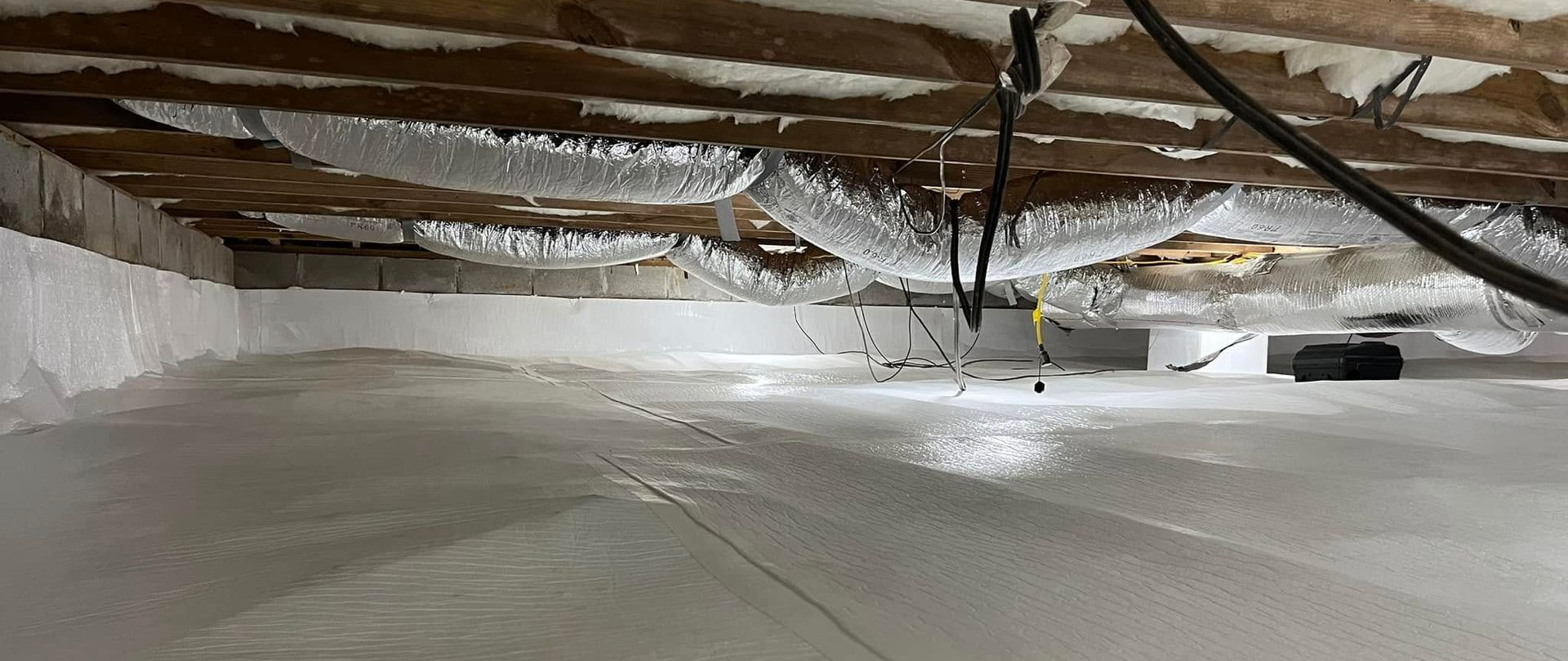
The Right Way to Fix It (Not Just Pump and Pray)
So how do we actually fix a crawlspace like this? There's a process, and you can't skip steps.
First, we pump out all that standing water. Get it out of there completely. That's step one, but it's not the solution - it's just clearing the deck so we can work.
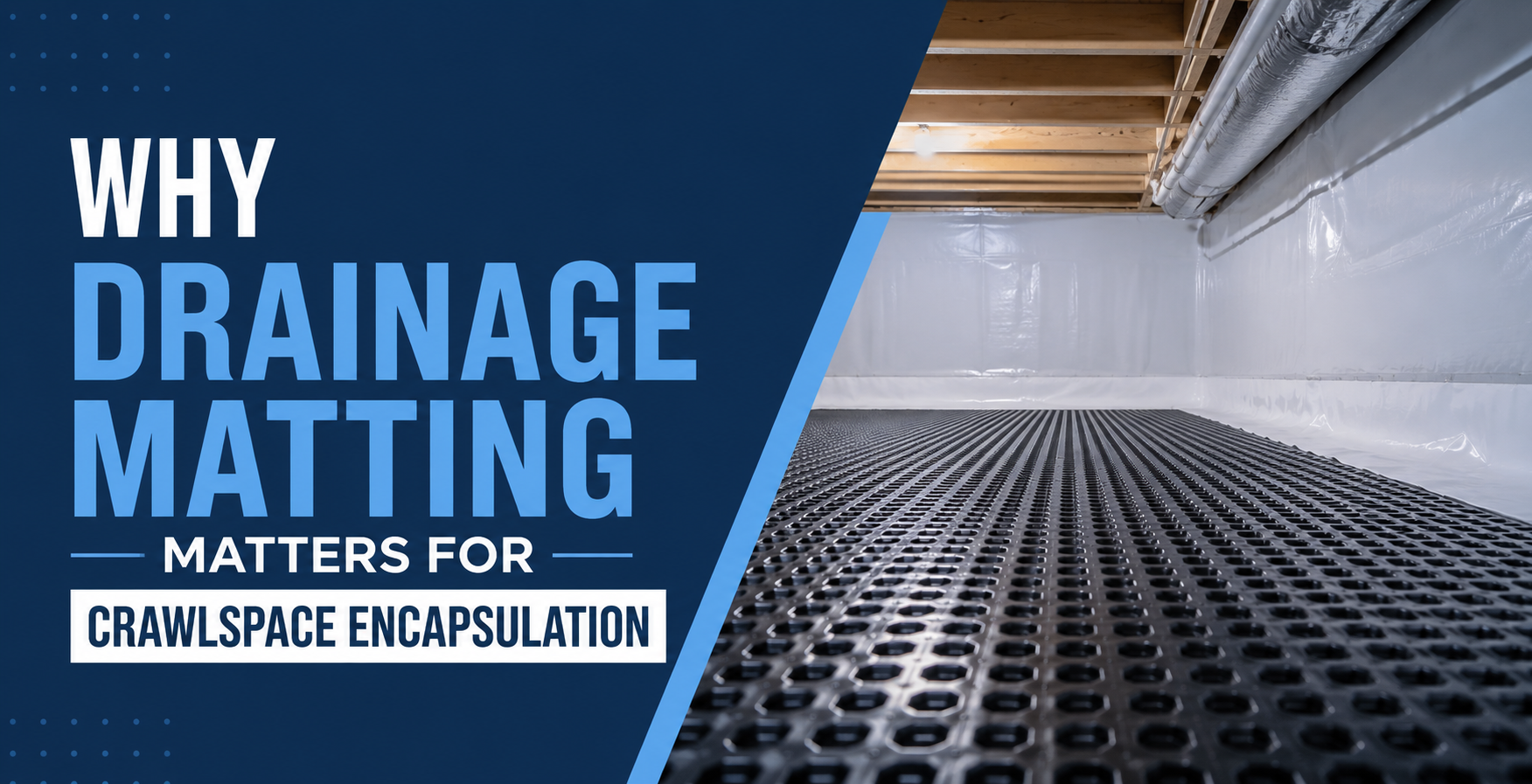
Next, we install a perimeter drainage system. This is interior drainage that runs along the foundation walls and collects water before it can pool under the house. It directs everything to a sump pump that pushes the water out and away from the foundation.
But here's where most companies stop. They pump it out, install some drainage, and leave. And six months later, the customer is calling because the water's back.
We have to fix the source. That means extending those downspouts at least 10 feet away from the house. It means regrading the yard so water flows away instead of toward the foundation. Maybe installing a swale to redirect runoff from that pond.
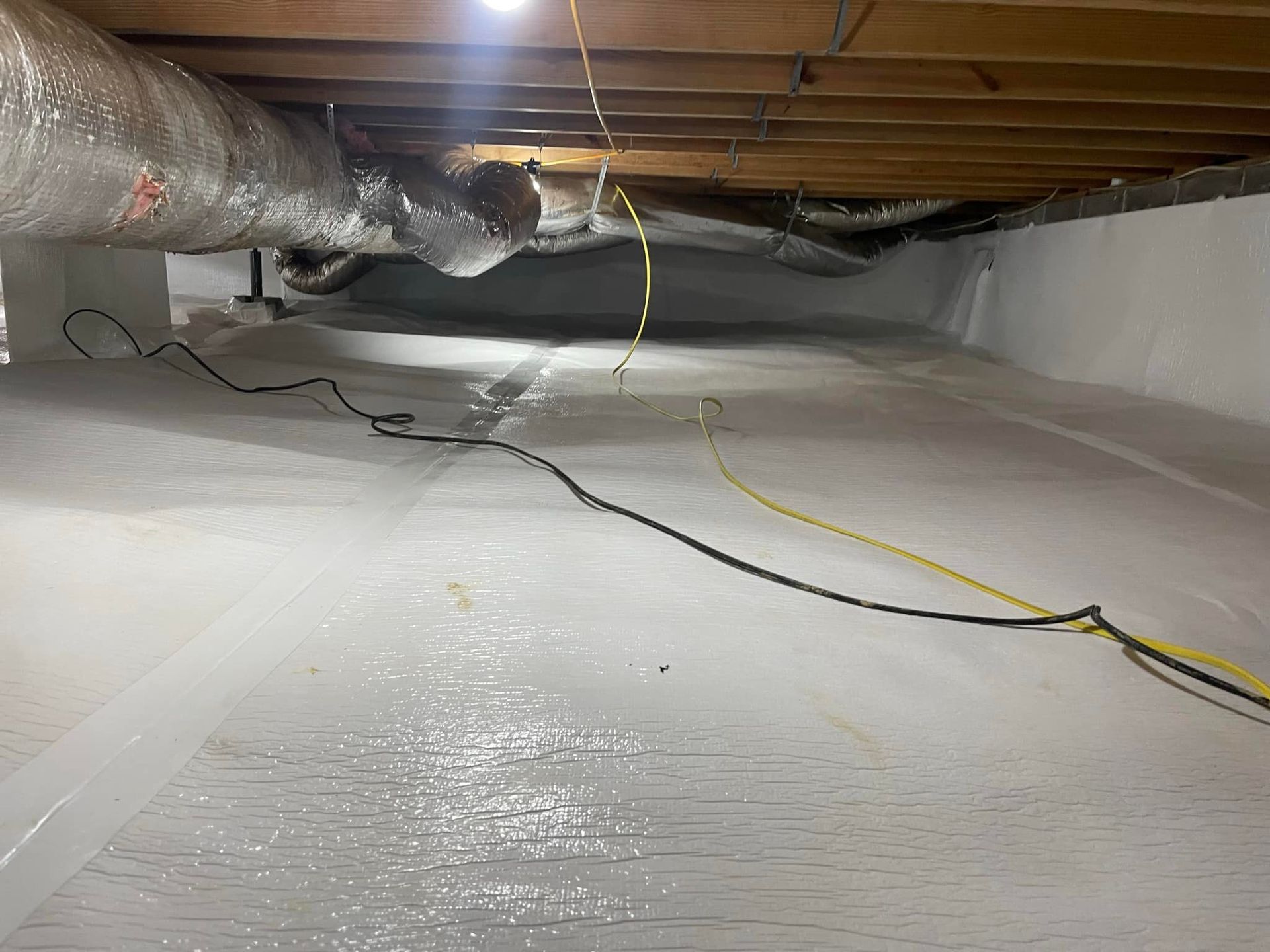
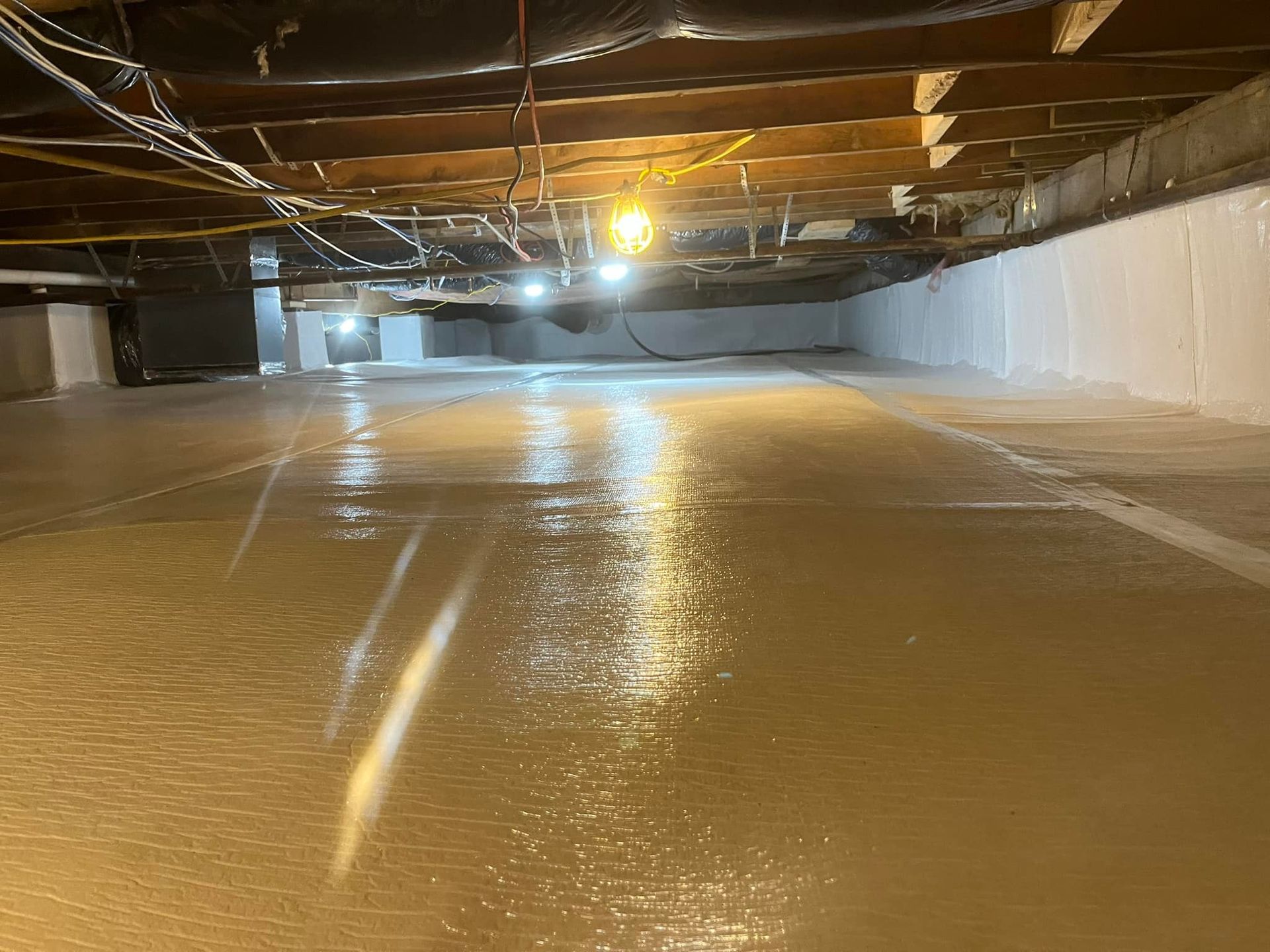
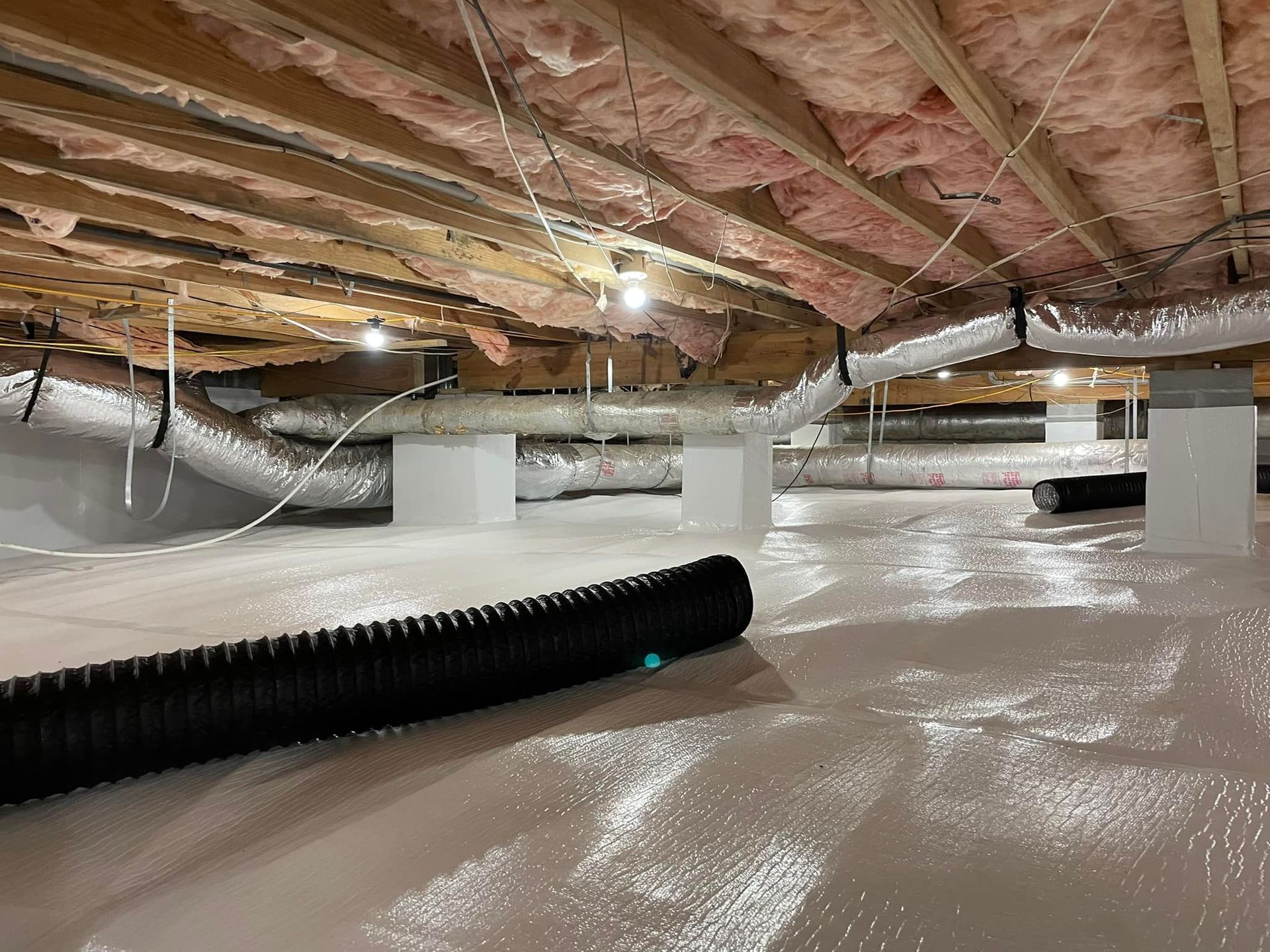
Then we encapsulate properly, install a dehumidifier, and set up a maintenance schedule so we can check on the system and make sure it's working.
That's the complete solution. Not just pumping and praying. Not just treating the symptom. Finding every source of water and making sure it goes somewhere other than under your house.
Skip any of these steps, and the problem comes back. I guarantee it.
What Happens If You Just Pump It Out
I've seen this play out too many times. Homeowner discovers standing water in their crawlspace. They call a company. The company pumps it out, maybe throws down some plastic, and collects their check.
Three months later, the water's back.
It's like bailing out a boat that's got a hole in it. You can scoop water all day long, but until you patch the hole, you're just wasting time.
Pumping out a crawlspace without fixing where the water comes from is the same thing. You get temporary relief. The crawlspace looks dry. Everything seems fine. Then the next heavy rain comes and you're right back where you started.
And here's what happens while you're in that cycle. While you're pumping and waiting and pumping again, that foundation is still sitting in saturated soil. The damage is still happening. Just slower.
Those cracks are still forming. That settlement is still occurring. The fungal growth is still spreading through your floor joists.
Every month you spend treating the symptom instead of fixing the source is another month of damage to your foundation. And foundation damage doesn't go backwards. It only gets worse.
I get it - pumping out the water and moving on is cheaper in the short term. But you end up paying for it three times over when you have to keep coming back. Or worse, when you're suddenly looking at foundation repair bills.
Fix it right the first time, or you'll be fixing it forever.
Take the Next Step
If you think you might have standing water under your house, let's take a look.
I'll come out and do a full inspection. We'll crawl the whole space, check the moisture levels, look at your drainage situation. I'll show you exactly what's going on down there.
And I'll give you an honest assessment. If you need a full drainage system, I'll tell you. If you just need some downspout extensions and minor fixes, I'll tell you that too. No games, no pressure, no trying to sell you stuff you don't need.
We'll go over what needs to be done, why it needs to be done, and what it's going to cost. Clear answers to all your questions.
Because here's the deal - foundation problems don't wait for a convenient time to get fixed. The longer you wait, the worse it gets and the more it costs.
Give us a call. Let's make sure your foundation isn't sitting in a swimming pool.