Why Your Crawlspace Needs More Than Just Encapsulation
I Just Did a Follow-Up Visit on This Crawlspace
SIX WEEKS LATER AND THE CUSTOMER'S FLOORS ARE STILL SOLID
I was out in Seymour yesterday checking on a job we finished about six weeks ago.
This is something I like to do - go back and see how the work is holding up. Most companies install and disappear. I want to know if my customer's problems are actually solved.
When I got there, the homeowner was excited to show me how everything turned out. "All my squeaking is fixed," he told me. "All the sagging and bouncing - it's all gone."
That's what I want to hear.
But here's what made this job interesting. When we first came out, he already had a dehumidifier in his crawlspace. A good one too - an AprilAire unit. So moisture was being addressed, at least partially.
But his floors were still sagging. Still squeaking. Still bouncing when you walked across them.
That's because moisture control is only part of the equation. If your structure is settling, you need more than just encapsulation.
The Original Problem
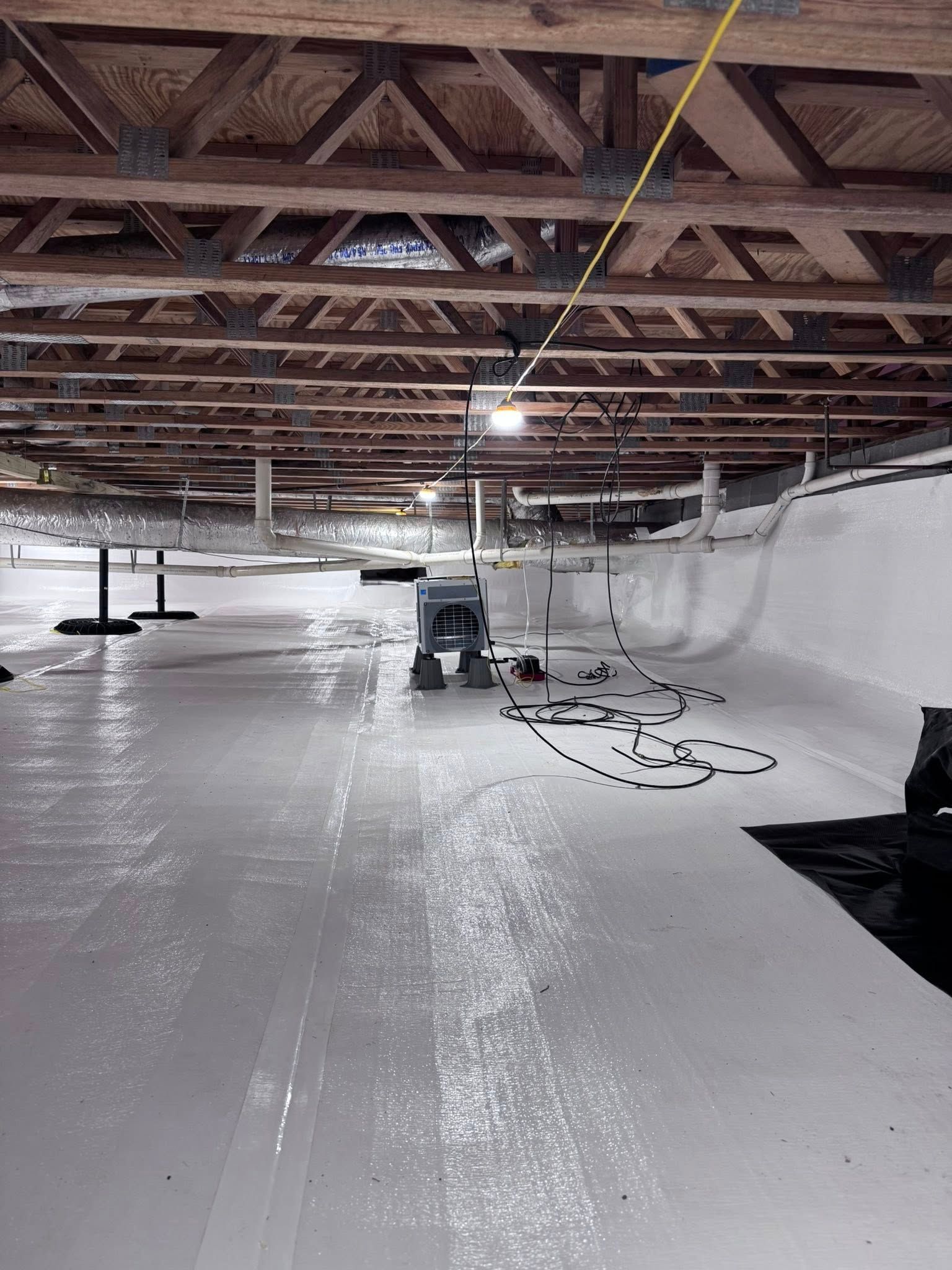
When we first inspected this crawlspace, the moisture issue was obvious. It wasn't sealed or encapsulated. The dehumidifier was running, but it wasn't part of a complete system.
But the bigger problem was structural. This house has engineered I-beams instead of traditional wood joists. And those I-beams were settling - a lot.
The customer had sagging floors throughout the house. You could feel them bounce when you walked. And the squeaking was constant. Every step, every room.
The issue was the spans. The distance between the main beam and the foundation wall was too long in several spots. Those I-beams didn't have enough support underneath them, so they were settling under the weight of the house.
Engineered I-beams are great for a lot of reasons, but they settle more than traditional joists when the spans are too long. It's just how they're built. And this crawlspace had multiple areas where the supports were spread too far apart.
So yeah, we needed to control the moisture. But if we just encapsulated and called it good, his floors would still be bouncing and squeaking. We had to fix the structure too.
That's the thing about crawlspace work. You can't just look at one problem. You have to look at the whole system - moisture, structure, airflow, everything. Otherwise, you're only solving half the issue.
Why Encapsulation Alone Wasn't Enough
Here's what a lot of companies would have done. They would have seen that dehumidifier already down there and thought, "Great, moisture is handled. Let's just encapsulate and we're done."
But that's not how this works.
First off, that dehumidifier wasn't doing much good without a proper encapsulation. Air was still getting in and out. Moisture was still coming up through the dirt floor. The unit was working harder than it needed to and not actually solving the problem.
Second, and more important - the moisture wasn't causing those sagging floors. The lack of structural support was.
You can seal up a crawlspace perfectly. You can control humidity at exactly the right level. But if your floor joists don't have enough support underneath them, your floors are still going to sag. They're still going to bounce. They're still going to squeak.
This customer needed both. He needed the encapsulation to work with that dehumidifier and actually control moisture properly. And he needed jacks and beams to support those long spans and stop the settlement.
One without the other doesn't fix the whole problem. And I'm not interested in half-fixing things.
What We Actually Did
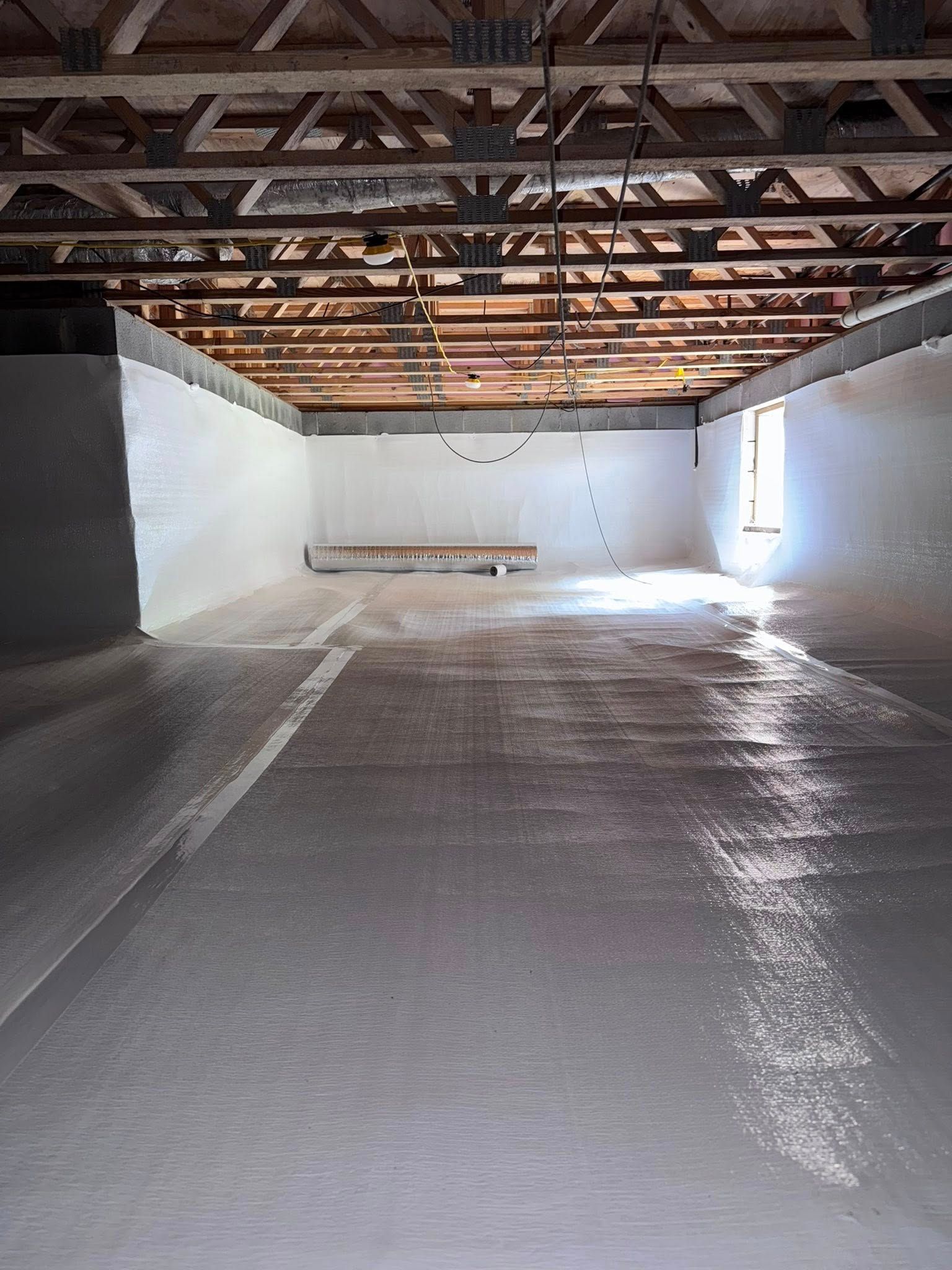
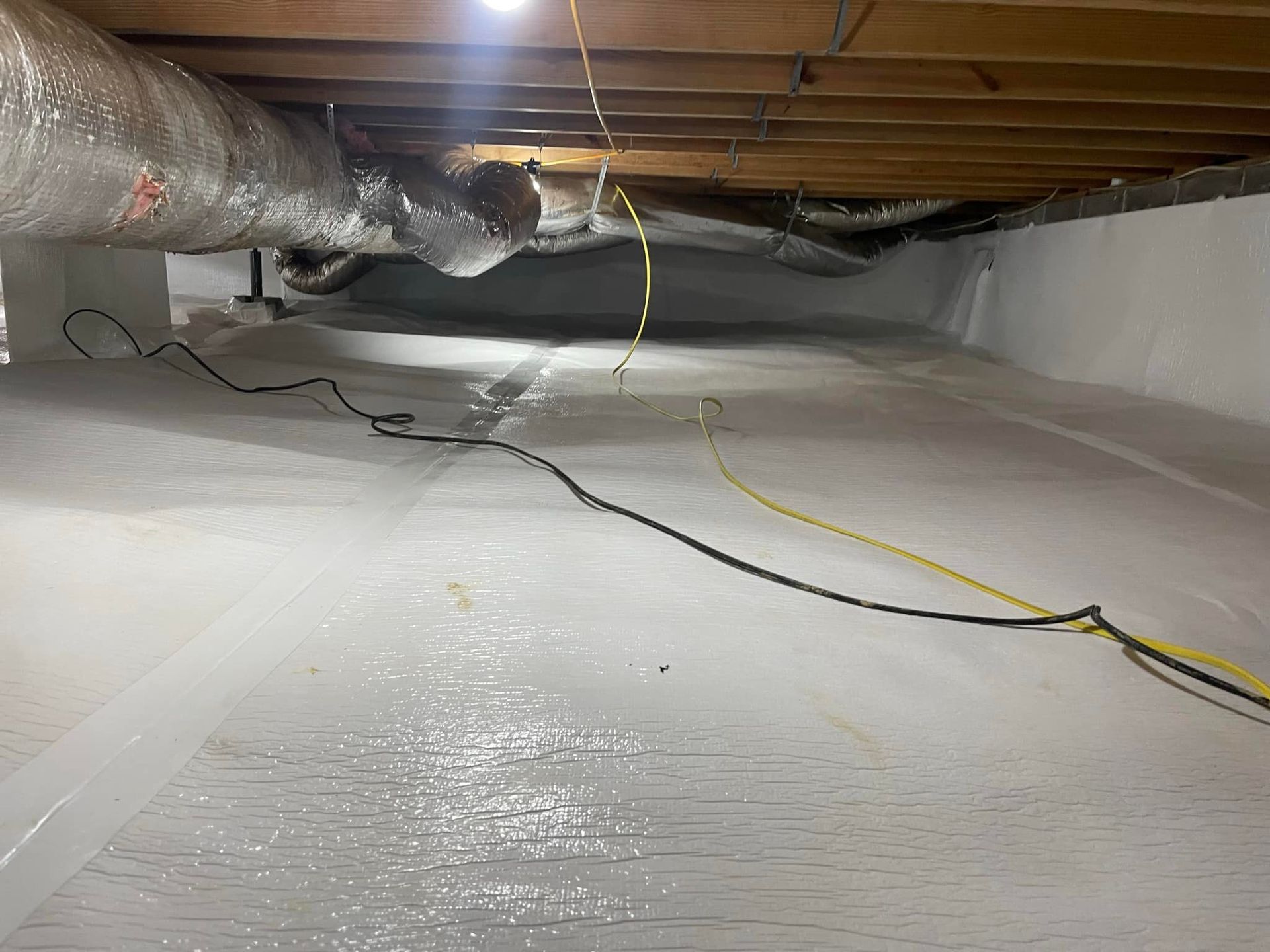
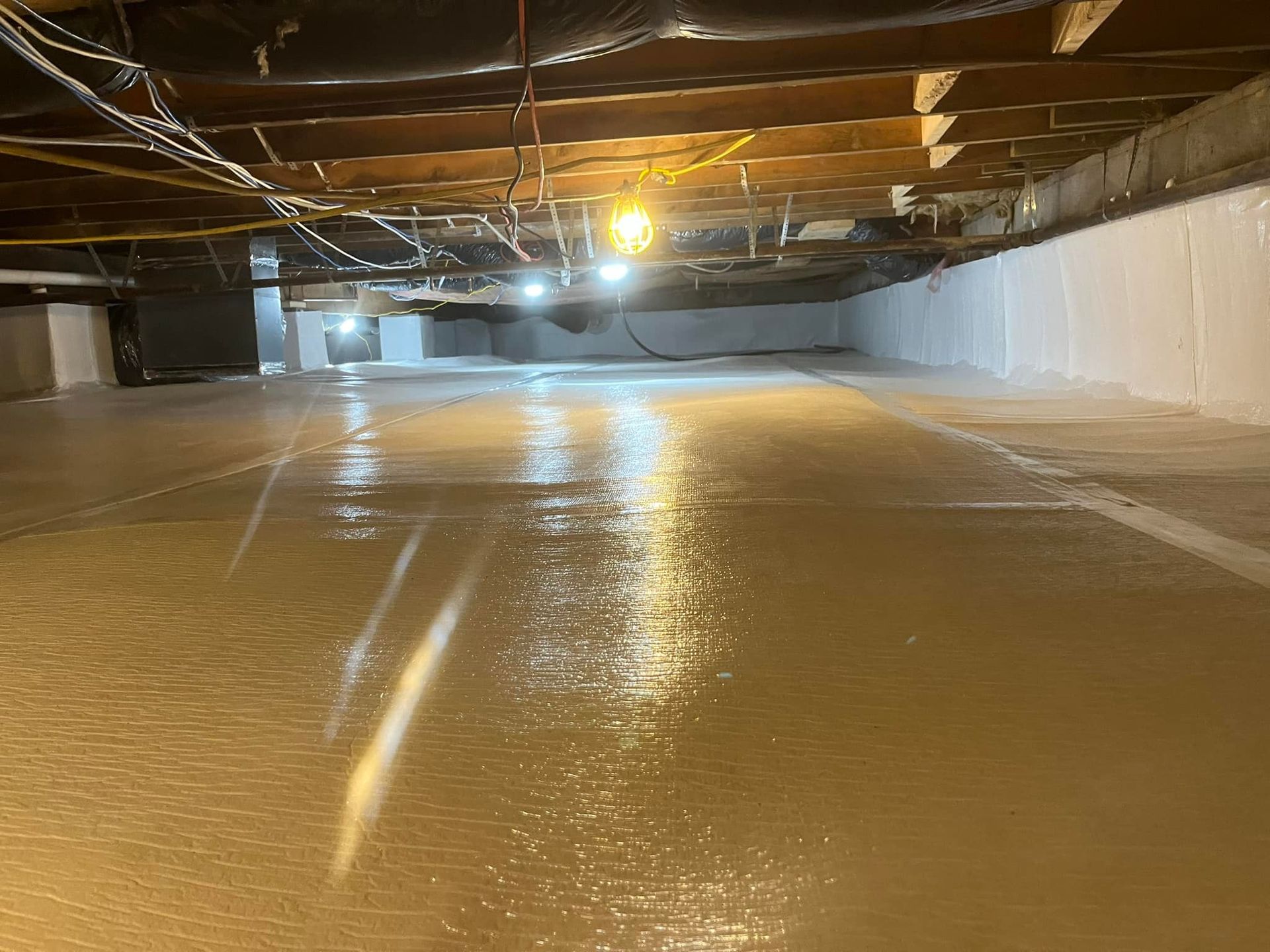
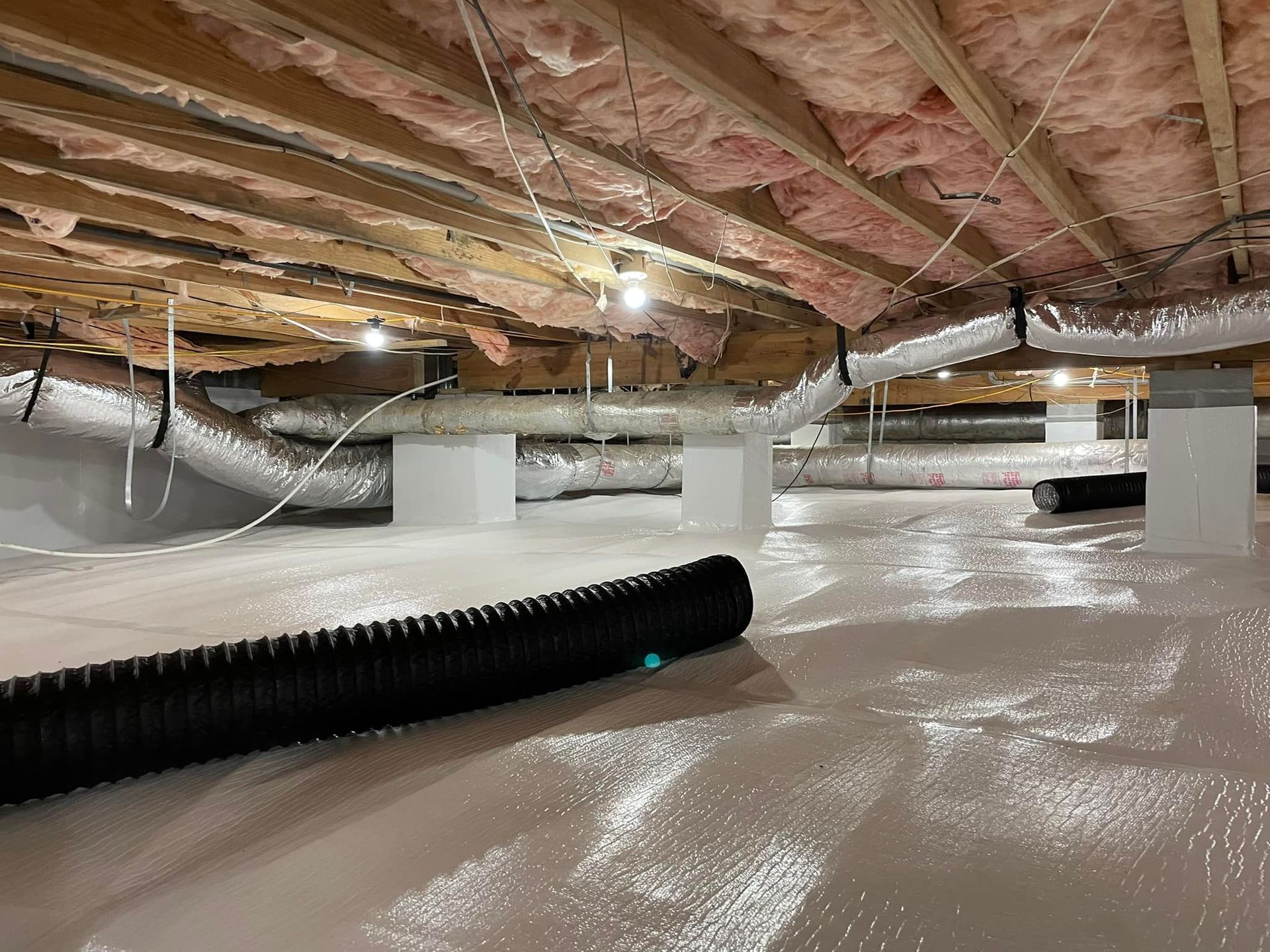
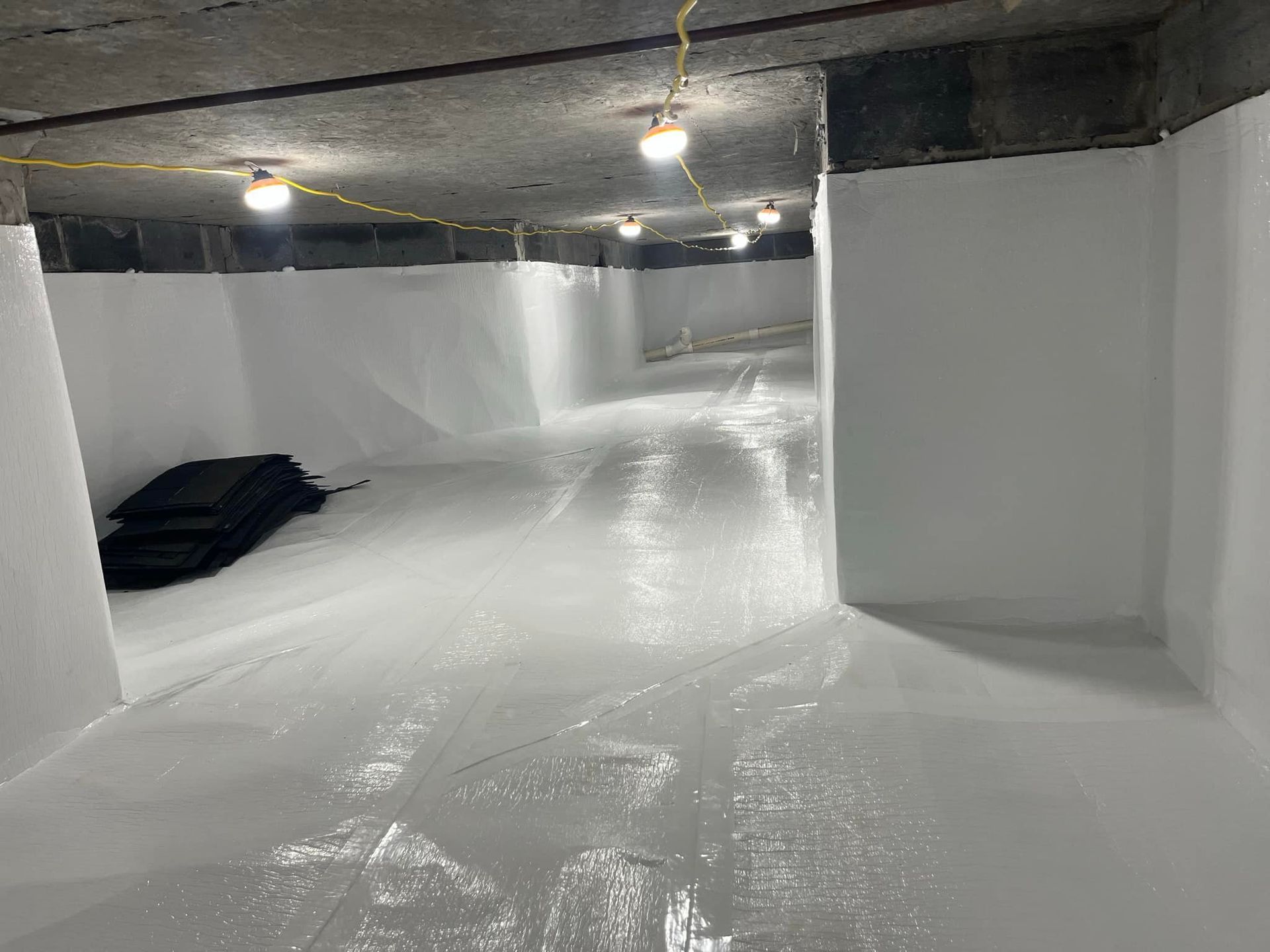
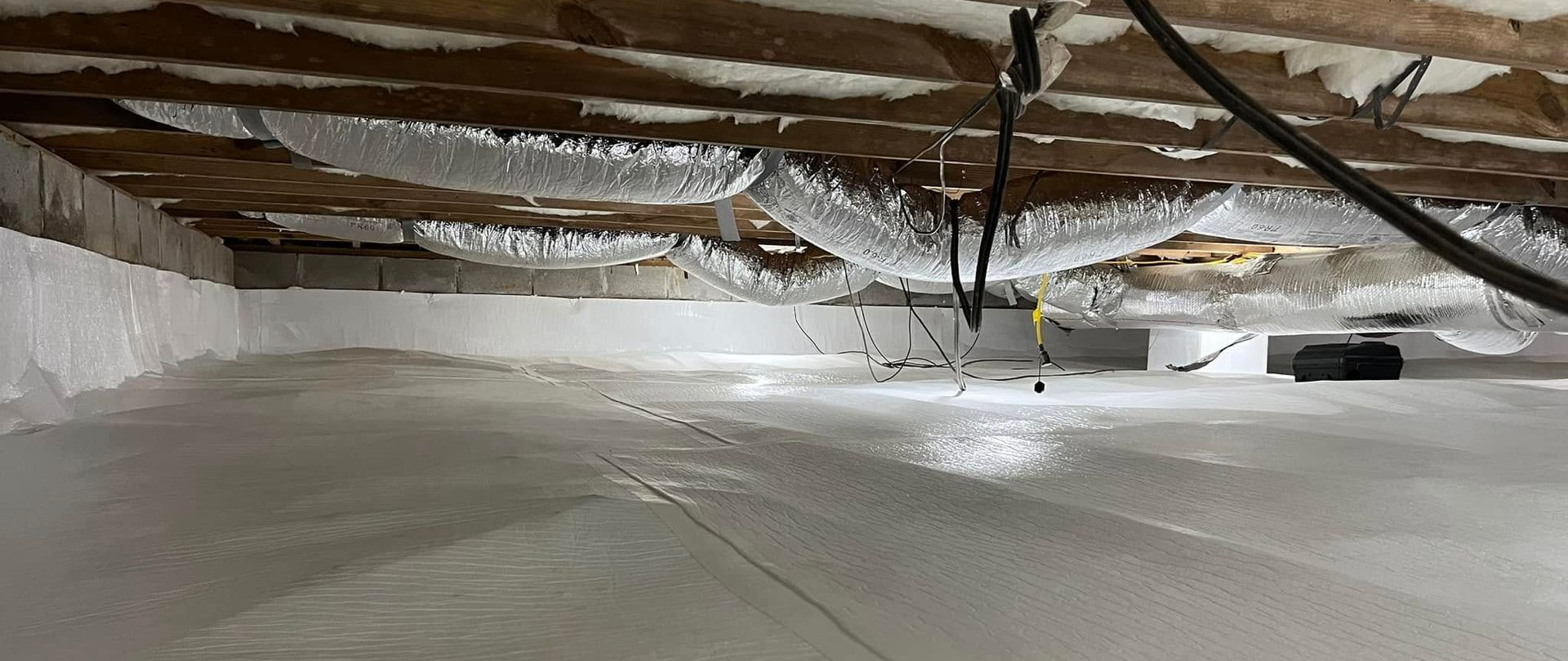
We started with the encapsulation. Sealed everything up properly so that dehumidifier could actually do its job. Now it's part of a complete system instead of just running in an open crawlspace.
Then we addressed the structure. We added supplemental jacks in the areas where the floors were sagging the most. These jacks lift the beams back to level and hold them there.
In a few spots, the distance between the main beam and the foundation wall was just too long. So we installed support beams to shorten those spans. Basically, we created intermediate support points so those I-beams aren't trying to carry weight across such a long distance.
We ended up putting in quite a few jacks. More than your average job. But this house needed it. You can't skimp on structural support just because it costs more or takes more time.
We also serviced his existing dehumidifier. Since it's an AprilAire unit - which is quality equipment - there was no reason to replace it. We just made sure it was working properly and integrated it into the sealed system.
Now everything works together. The encapsulation keeps moisture out. The dehumidifier controls humidity. And the jacks and beams keep the floors solid and level.
Why Engineered I-Beams Settle Differently
Let me explain something about engineered I-beams, because a lot of newer homes have them and most homeowners don't know this.
Traditional floor joists are solid wood - usually 2x10s or 2x12s. Engineered I-beams look kind of like a capital "I" when you see them from the end. They've got a top flange, a bottom flange, and a thin web in the middle.
They're great for spanning long distances. They're lightweight. They don't warp or twist like solid wood can. Builders love them.
But here's the thing - they're more flexible than solid wood joists. And when you don't have enough support posts underneath them, they settle and flex more.
It's not that they're bad. They just need proper support. If the span between your foundation wall and your main beam is too long, those I-beams are going to sag over time. You'll feel your floors bounce. You'll hear them squeak.
This is especially common in homes built in the last 20-30 years. Builders use these I-beams, but they don't always put support posts where they should be.
If your house has engineered I-beams and you've got bouncy or squeaky floors, there's a good chance you need supplemental jacks. It's not a foundation failure. It's not a major structural problem. You just need more support under those long spans.
We see this all the time. And it's fixable.
Why Follow-Up Matters
Here's something most companies don't do - they don't come back.
They finish the job, collect the check, and move on to the next one. If there's a problem six weeks later, six months later, good luck getting them to answer the phone.
I do follow-ups because I actually want to know if my work is holding up. I want to know if the customer is happy. And if something isn't right, I want to catch it early before it becomes a bigger issue.
This isn't about warranty obligations or covering myself legally. It's about building relationships instead of just closing sales.
When I show up at someone's house to check on work we did weeks or months ago, they're always surprised. "You came back?" Yeah, I came back. Because I care if your floors are still solid. I care if your crawlspace is still doing what it's supposed to do.
That's what local accountability looks like. I'm not hiding behind some 1-800 number. I'm the guy who's going to run into you at the grocery store or at a Little League game. My reputation is tied to the quality of my work.
Big companies can afford to do shoddy work and disappear. I can't. And honestly, I don't want to.
Ready to Find Out What Your Crawlspace Actually Needs?
If your floors are bouncing, squeaking, or sagging - or if you just want to know what's going on under your house - let's do an inspection.
I'll come out personally or send one of my managers. We'll look at your moisture situation and your structure. We'll take pictures and show you exactly what's happening down there.
And we'll tell you what you actually need. Not the kitchen sink approach. Not a one-size-fits-all quote. Just an honest assessment of your crawlspace and what it needs to protect your home.
We include follow-up visits. We maintain our equipment. And when you call, you talk to real people who actually work here - not a call center.
Give us a call or send us a message. Let's make sure your crawlspace is doing its job, not causing problems.