Why Drainage Matting Matters for Crawlspace Encapsulation
Standing in a Tall Crawlspace in Knoxville
HERE'S WHAT MOST COMPANIES SKIP (AND WHY IT MATTERS)
I'm standing in a crawlspace in Knoxville that's tall enough to walk around in. The customers use it for storage. Christmas decorations, old furniture, boxes of stuff they don't need every day but want to keep.
They called because they know the crawlspace has moisture issues. That old vapor barrier on the ground is torn up. Punctures everywhere. And they want to keep using this space without their stuff getting ruined.
When I give them the quote, I'm going to recommend drainage matting under the encapsulation. Most companies won't even mention it. But if you're going to use your crawlspace - especially for storage - it's the difference between an encapsulation that lasts and one that's full of holes in a couple years.
Let me explain what it is and why it matters.
What Drainage Matting Is
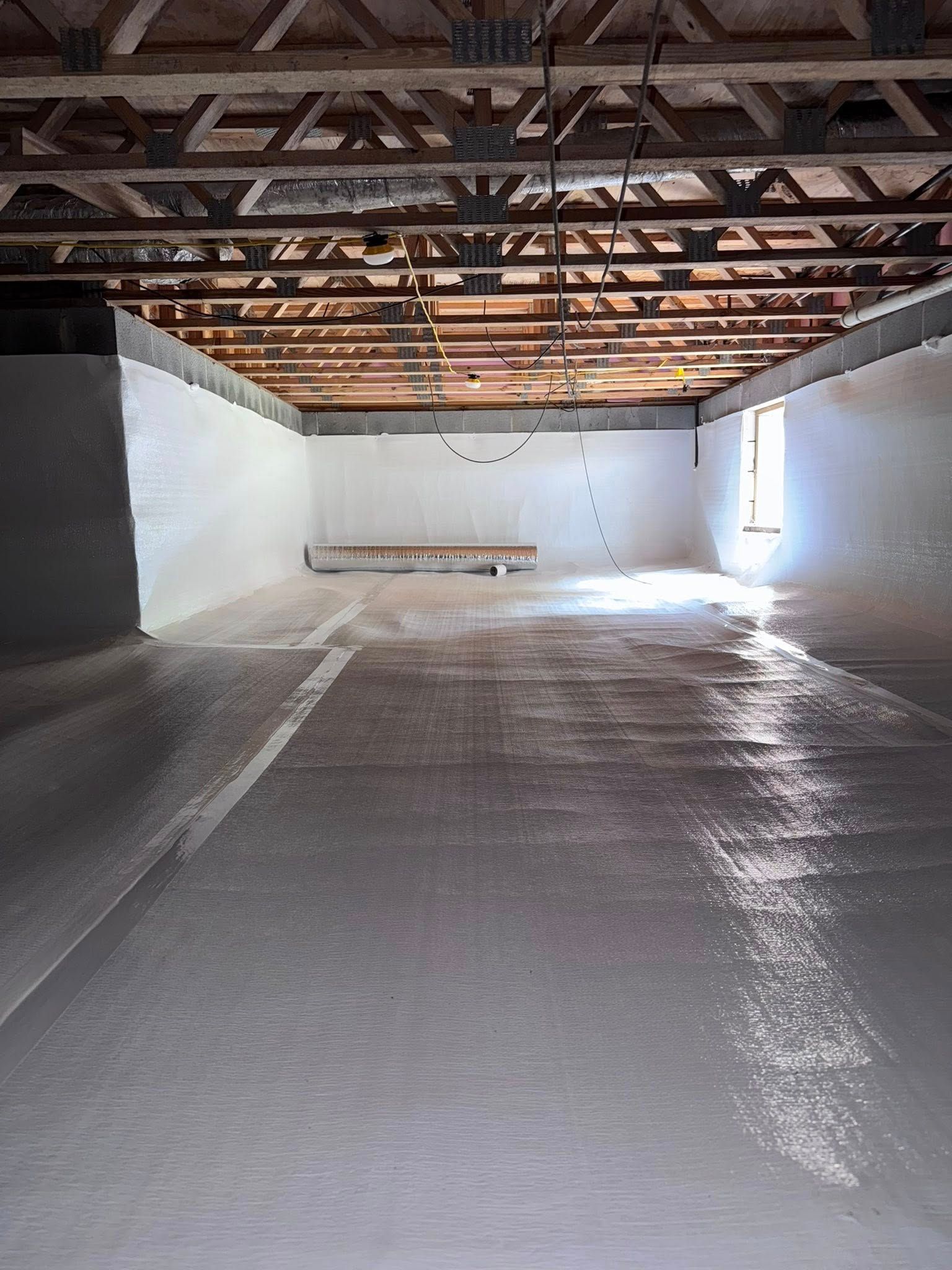
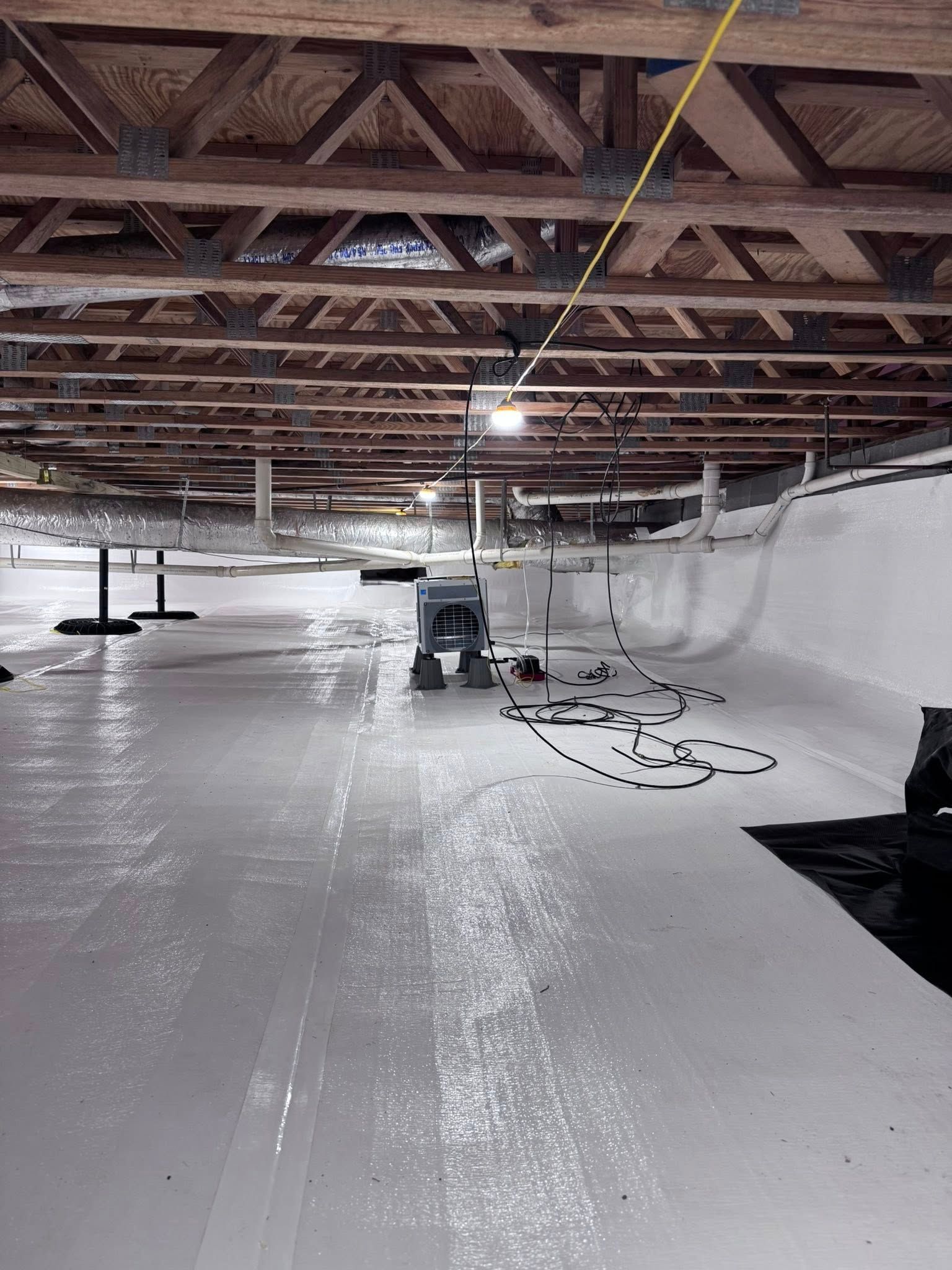
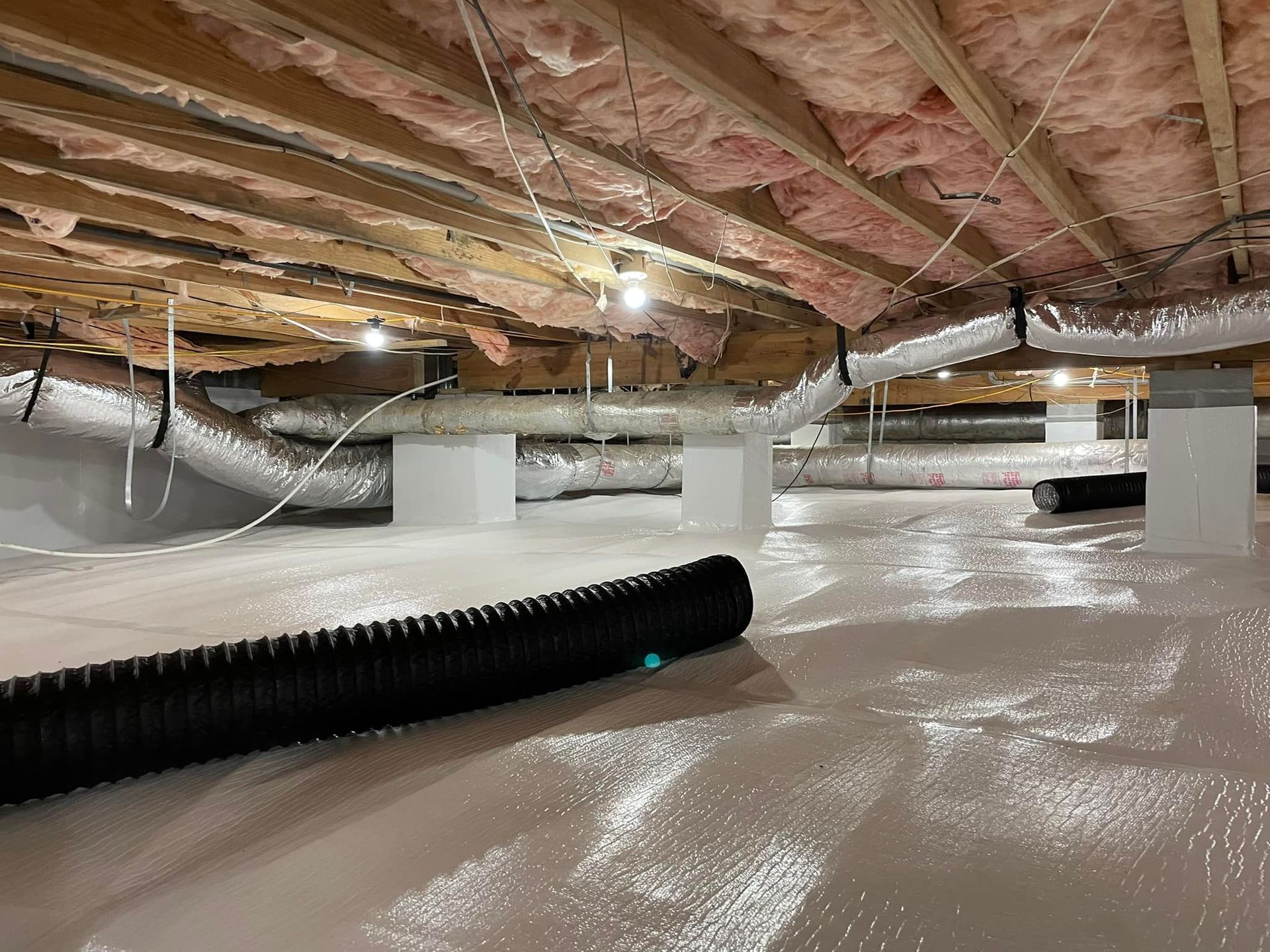
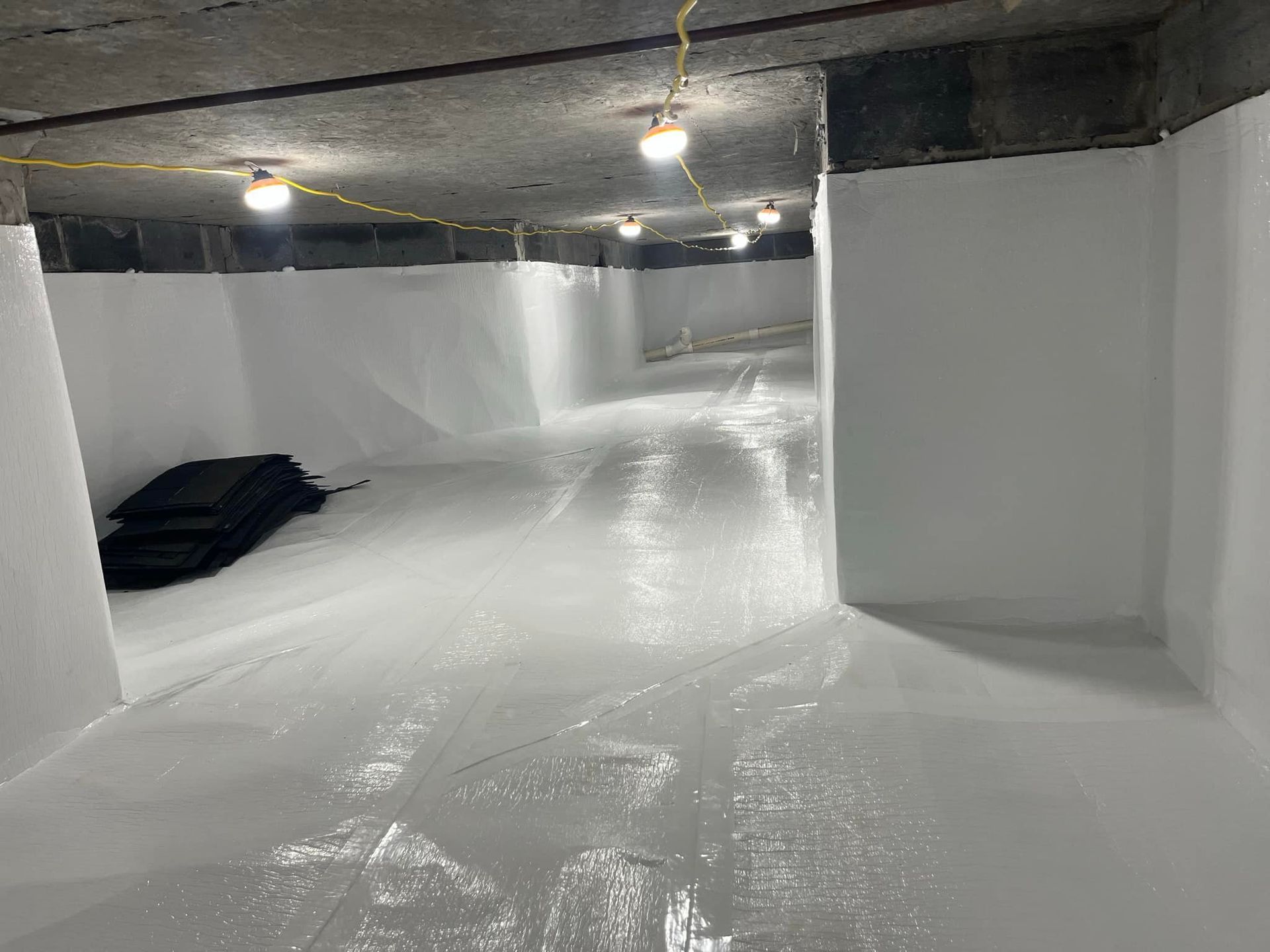
Drainage matting is a thick plastic material with dimples all over it. Kind of looks like bubble wrap, but heavy duty.
It was originally designed for the outside of foundations. You put it against the concrete wall to prevent water pressure from building up. But in crawlspaces, we use it for something different.
We lay it down on the floor before the vapor barrier goes in. It does two things. First, it protects the vapor barrier from getting punctured by the gravel or rocky dirt underneath. Second, those dimples use surface tension to pull water toward the low points in your crawlspace.
Most companies skip it. They just put down the vapor barrier and call it good. But if you've got a gravel floor or you're actually going to use the space, that's a mistake.
The Problem with Gravel Floors
Look at this crawlspace floor. It's covered in gravel. Sharp edges everywhere.
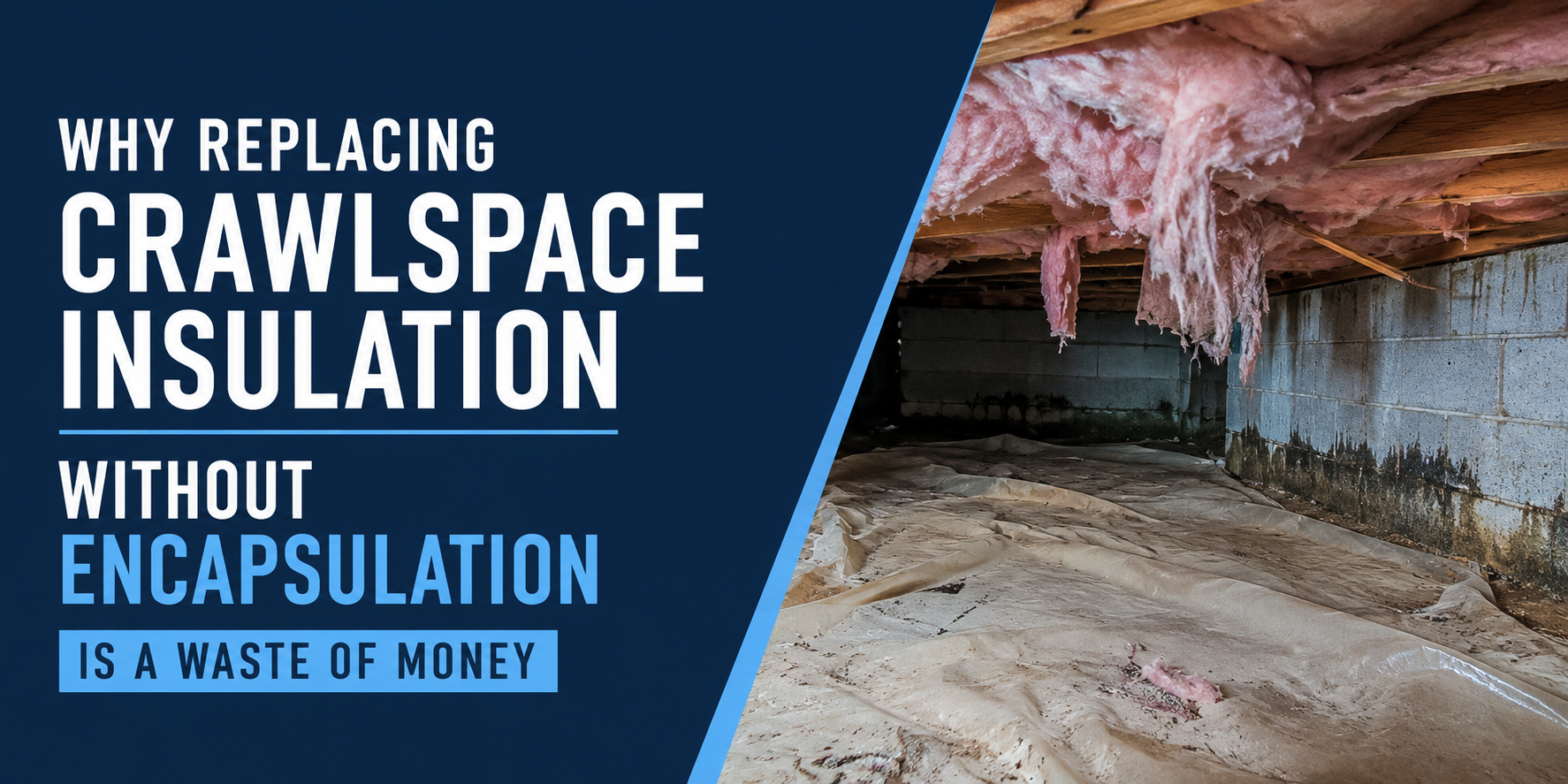
Now look at that old 6 mil vapor barrier they've got down here. See all those punctures and tears? That's what gravel does to thin plastic over time. Every time someone walks on it, every time they drag a box across it, those sharp rocks poke through.
Once your vapor barrier has holes, it's not doing its job anymore. Moisture comes up through those punctures. Your dehumidifier has to work harder. The humidity stays high. And anything you're storing down here is exposed to that moisture.
The problem is, this doesn't happen all at once. The barrier looks fine when it's first installed. Six months later, a year later, you start seeing the damage. By then, good luck getting the company that installed it to come back and fix it.
If you're planning to use your crawlspace for anything - storage, workshop space, whatever - that vapor barrier needs protection. Otherwise you're just counting down until it fails.
How Drainage Matting Protects Your Investment
This is where drainage matting makes a difference.
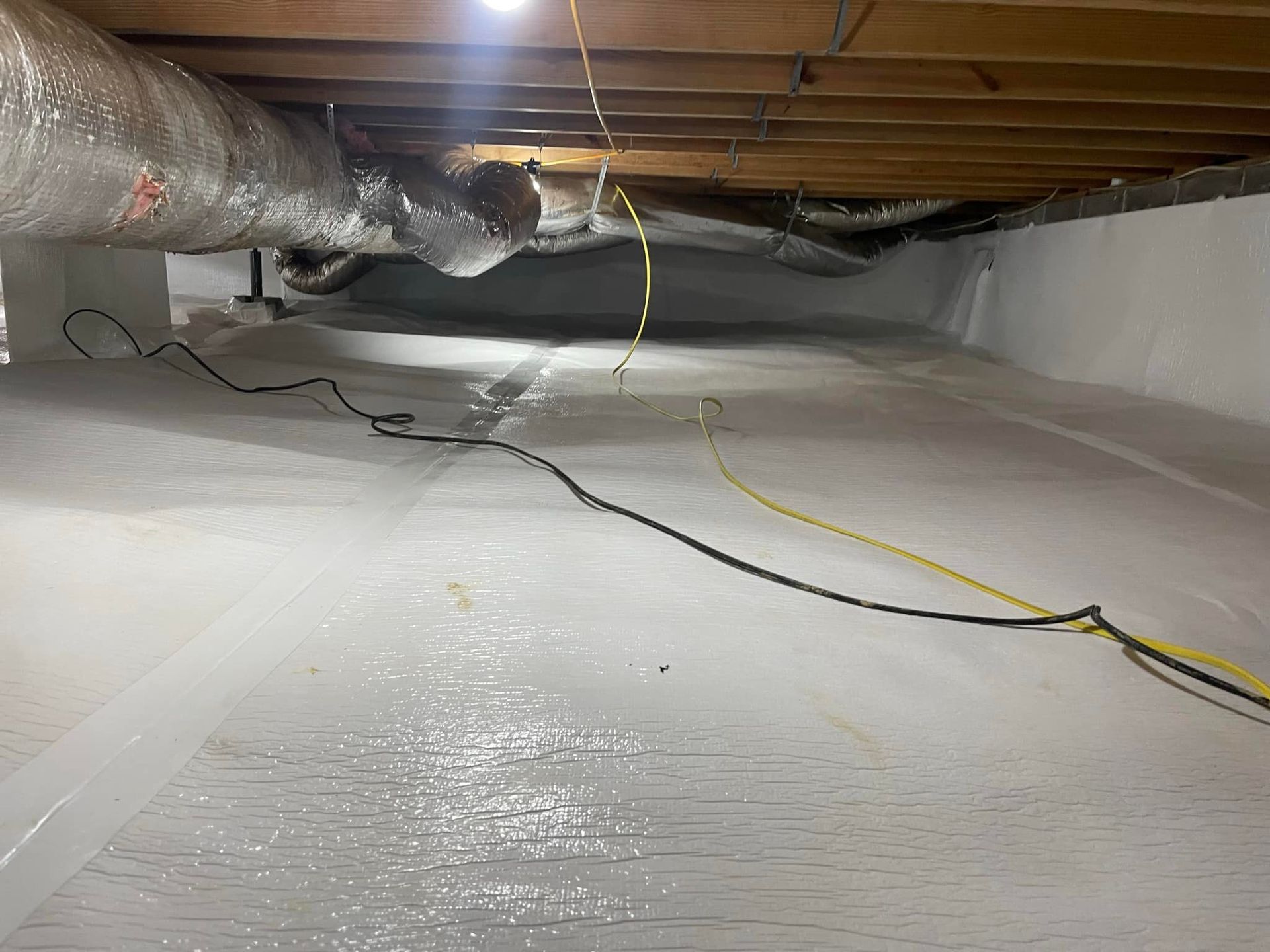
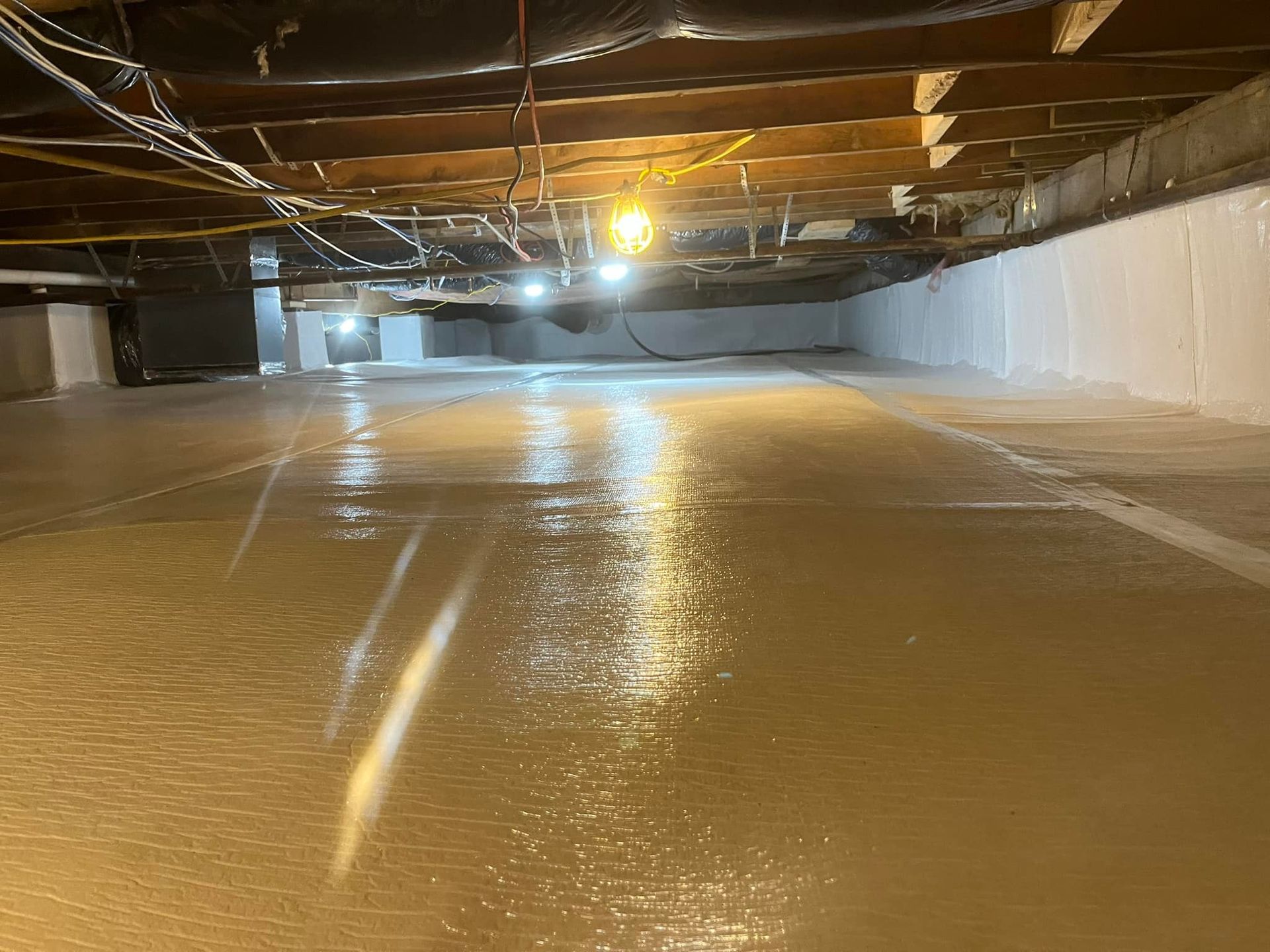
When we put that dimpled layer down first, it creates a cushion between the sharp gravel and your vapor barrier. The rocks can't poke through because there's a protective barrier in the way.
You can walk on it. Store boxes on it. Move stuff around. The vapor barrier stays intact because it's not sitting directly on those sharp edges.
And we're not using 6 mil plastic like that old barrier. We use thicker material - 10 mil, 12 mil, sometimes 20 mil depending on the job. But even thick vapor barriers can get punctured by gravel over time. The drainage matting is insurance.
Think of it this way. You're paying thousands of dollars for an encapsulation. You want it to still look good and work properly five years from now, not just on install day. That's what the drainage matting does. It protects your investment.
The Water Management Benefit
Here's the other thing drainage matting does that most people don't think about.
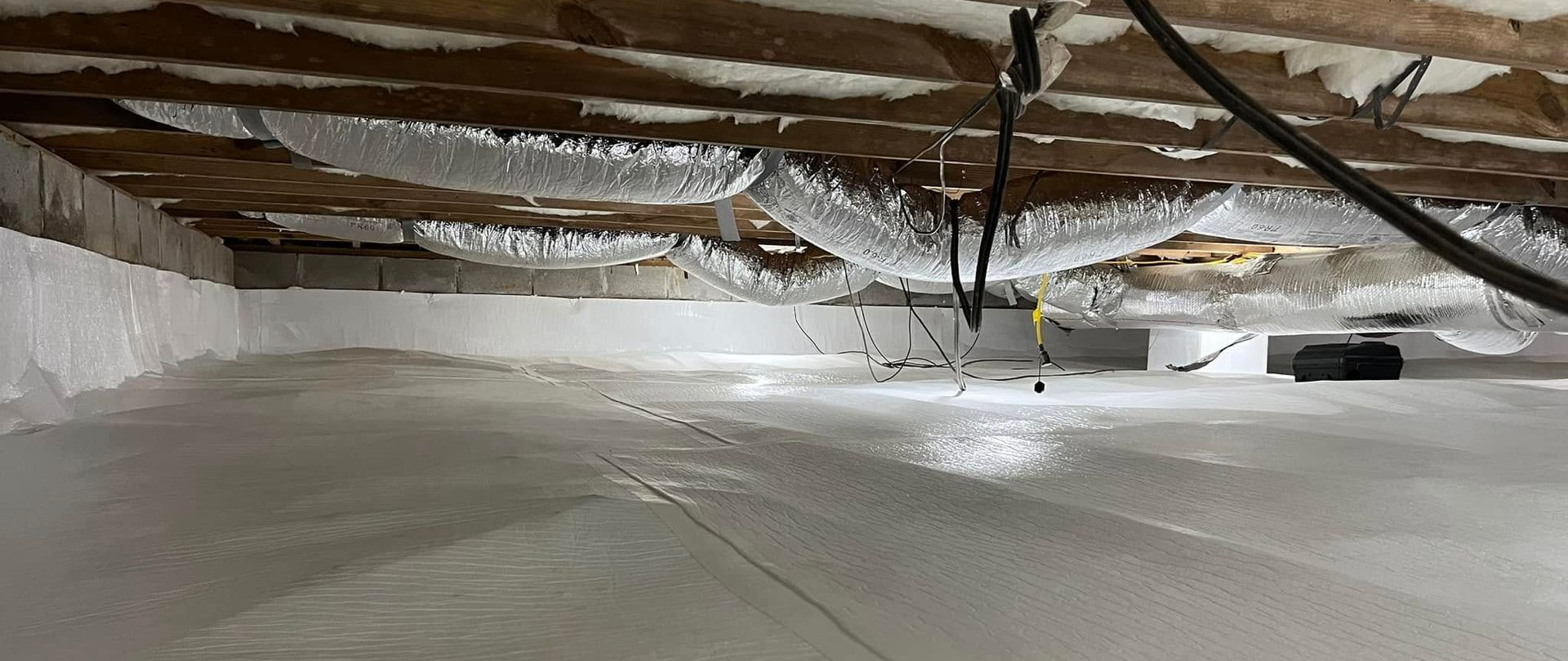
Those dimples create channels underneath the vapor barrier. When water does get under there - and some water is always going to find its way in - it doesn't just sit there. Surface tension pulls it through those channels toward the low points in your crawlspace.
If you've got a sump pump, the water moves toward that. If you've got a drainage system along the perimeter, it flows that direction. The point is, it's moving, not pooling.
Even in crawlspaces that seem dry, you get moisture. Condensation. Small amounts of groundwater. Without drainage matting, that water sits under your vapor barrier and creates pockets of moisture. With it, the water has somewhere to go.
It's not magic. It's just physics. But it makes a real difference in how well your encapsulation system works long-term.
When You Actually Need Drainage Matting
So does every crawlspace need drainage matting? Not necessarily.
If you've got a crawlspace with a dirt floor that's relatively smooth, and you're never going down there, and you're just doing a basic encapsulation, you might be fine without it.
But here's when you definitely want it.
Gravel or rocky floors. Like this crawlspace. Those sharp edges will tear up your vapor barrier without protection.
You're planning to use the space. Storage, workshop, anything where you'll be walking around and moving things. The traffic alone will eventually damage an unprotected barrier.
You want long-term protection. If you're investing in quality encapsulation and you want it to last ten, fifteen, twenty years, drainage matting is cheap insurance.
High moisture areas. If your crawlspace tends to get water intrusion, you want that water moving toward your drainage system, not sitting in puddles.
Honestly, I recommend it on most jobs. The cost difference isn't huge, and the protection it provides is worth it. But I'm not going to tell you that you need it if you don't. That's not how I operate.
Let's Look at Your Crawlspace
If you're thinking about encapsulation, or you're getting quotes and trying to figure out what you actually need, give us a call.
I'll come out personally or send one of my managers. We'll look at your crawlspace, tell you what we see, and give you options based on how you plan to use the space.
If you need drainage matting, I'll explain why. If you don't, I'll tell you that too. No upselling. No pressure. Just an honest assessment of what your crawlspace needs.
We'll show you pictures, walk you through the process, and give you a quote that makes sense. And when we do the work, it'll be done right the first time.
Reach out when you're ready. Let's make sure your crawlspace is actually protecting your home, not just looking good on install day.