Why Cheap Vapor Barriers and Bad Dehumidifier Placement Cost You More
The "Hybrid System" That's Costing This Homeowner Twice
WHEN CORNER-CUTTING COMES BACK TO HAUNT YOU
I'm out here in Knoxville looking at a crawl space that was done by one of my old competitors.
They used to be a local company - probably started by someone who cared about doing good work.
Then they got bought out by a private equity group, became part of a franchise, and well... here's what happens.
This homeowner paid thousands of dollars for what he was told was a "hybrid system."
He thought he was getting professional crawl space encapsulation.
What he actually got was shoddy work with the cheapest materials possible, installed by people who were clearly rushing through the job.
Now he's got fungal growth starting on his floor joists.
His dehumidifier is running constantly and barely keeping up.
The vapor barrier they put down is already falling apart.
And when he calls the company about the warranty? Nobody's returning his calls. Because the company that did the work doesn't really exist anymore - it got swallowed up by corporate and now it's just another number on a spreadsheet somewhere.
So now this guy has to pay to have it all done again. Done right this time.
Let me show you exactly what went wrong here, because if you're thinking about getting crawl space work done, you need to know what to look for.
The Vapor Barrier Problem
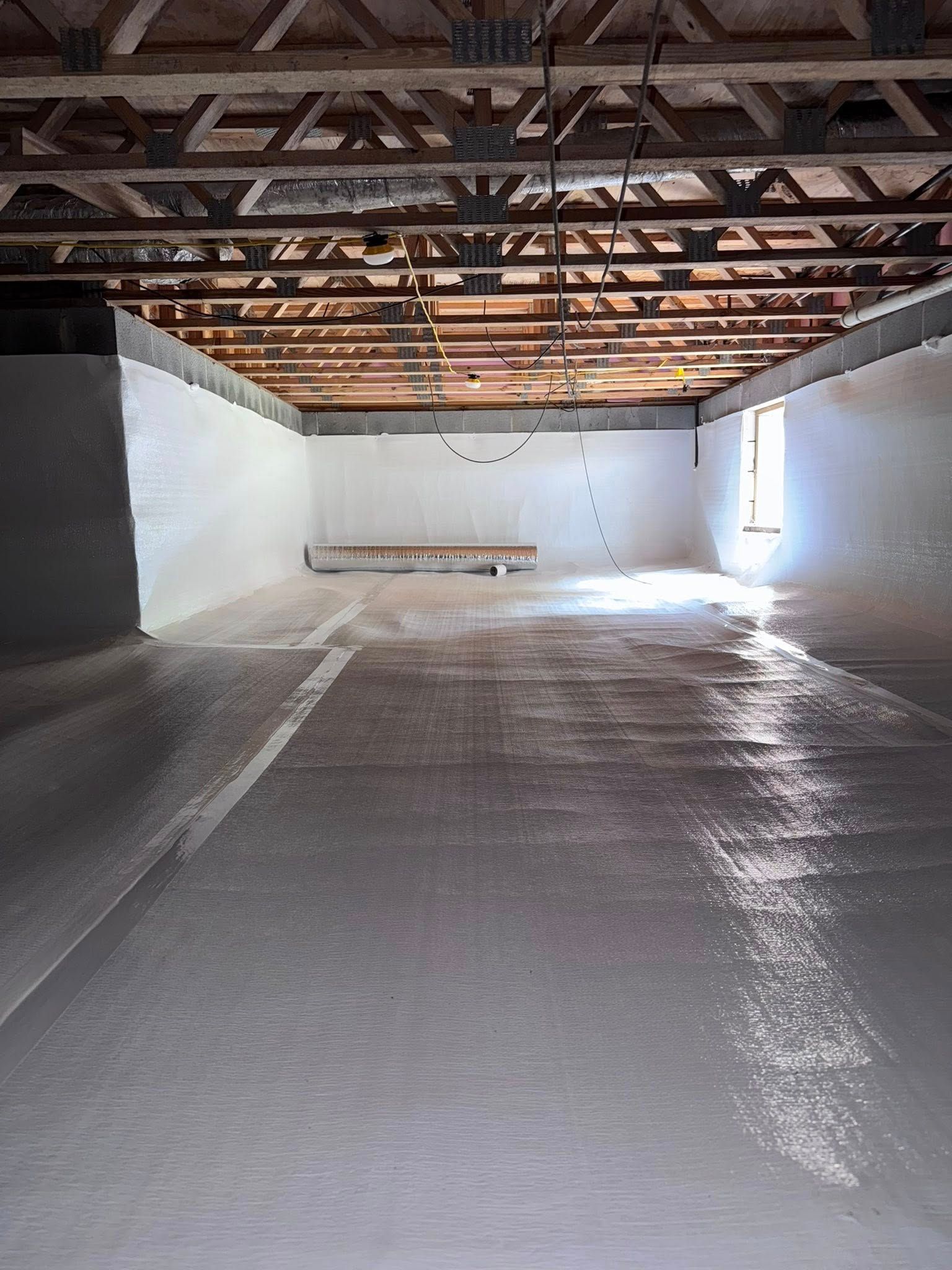
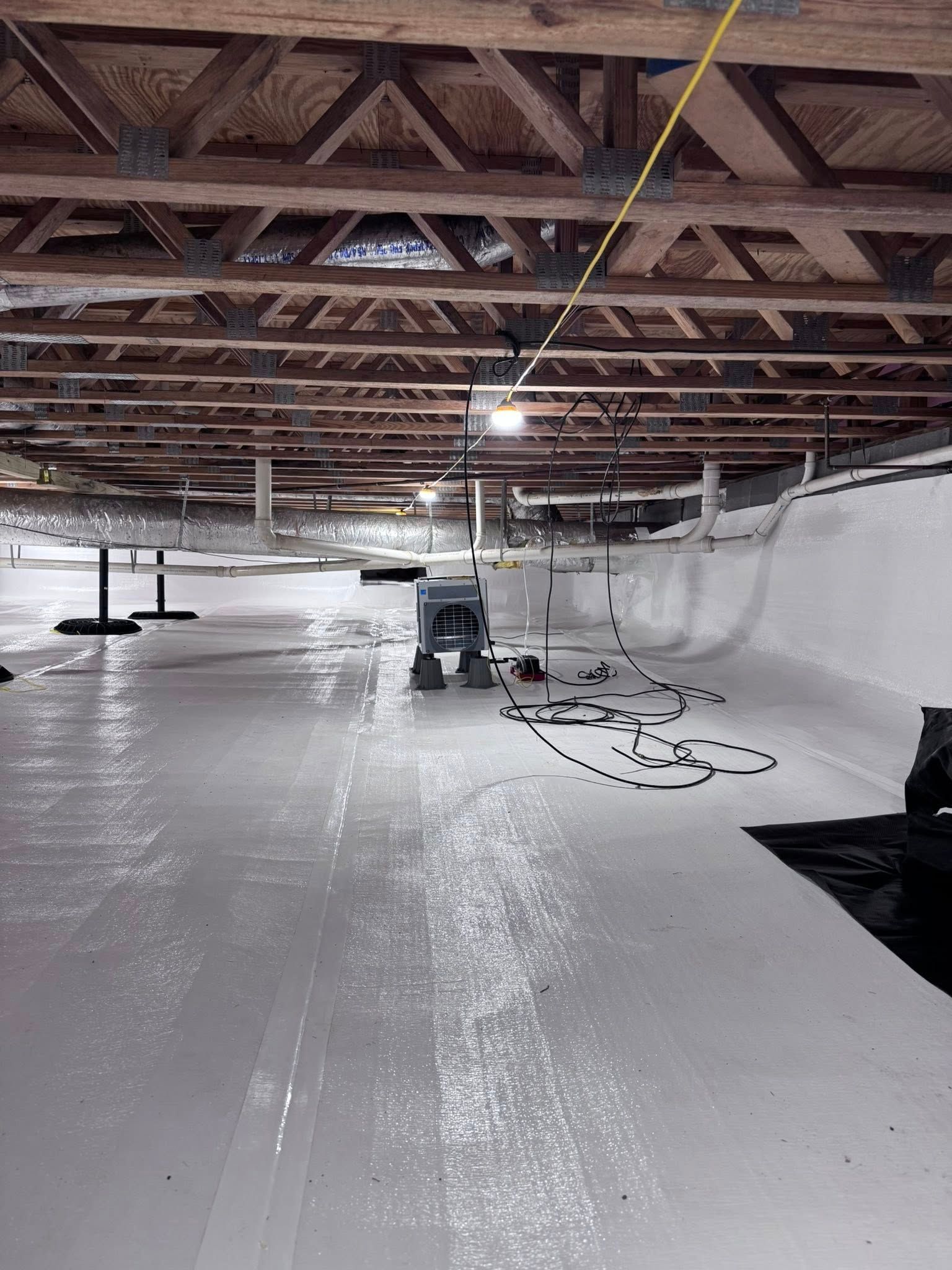
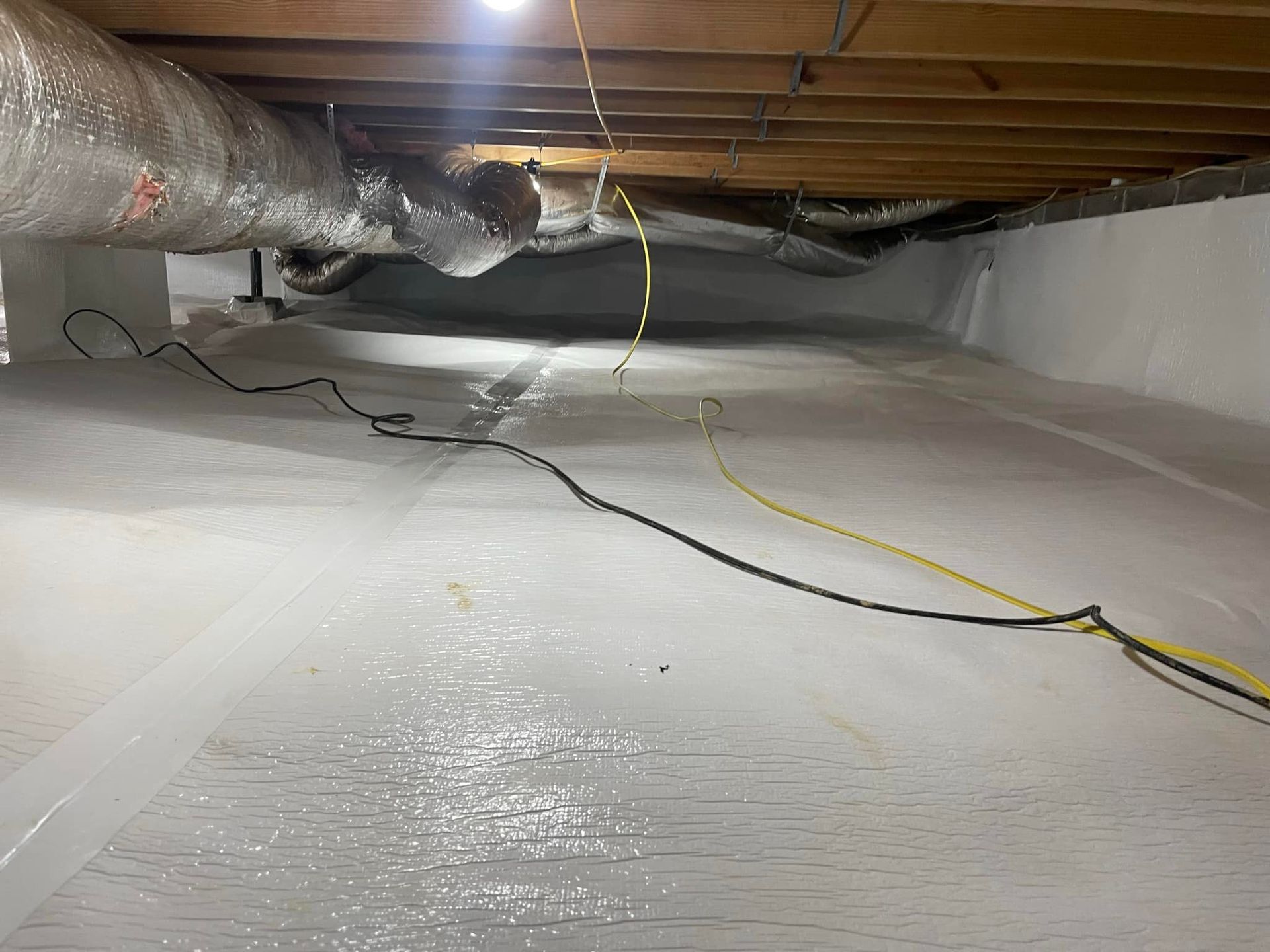
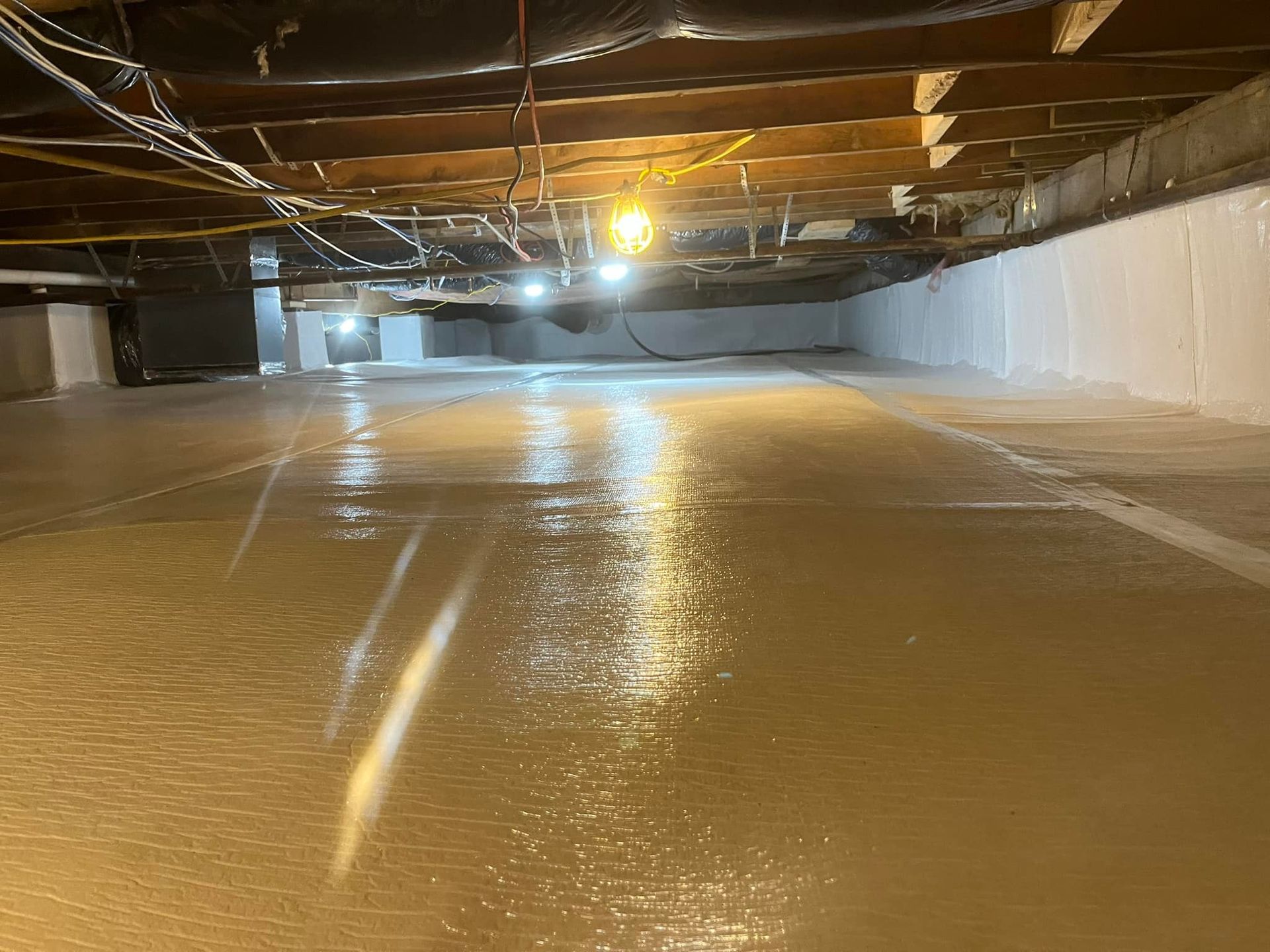
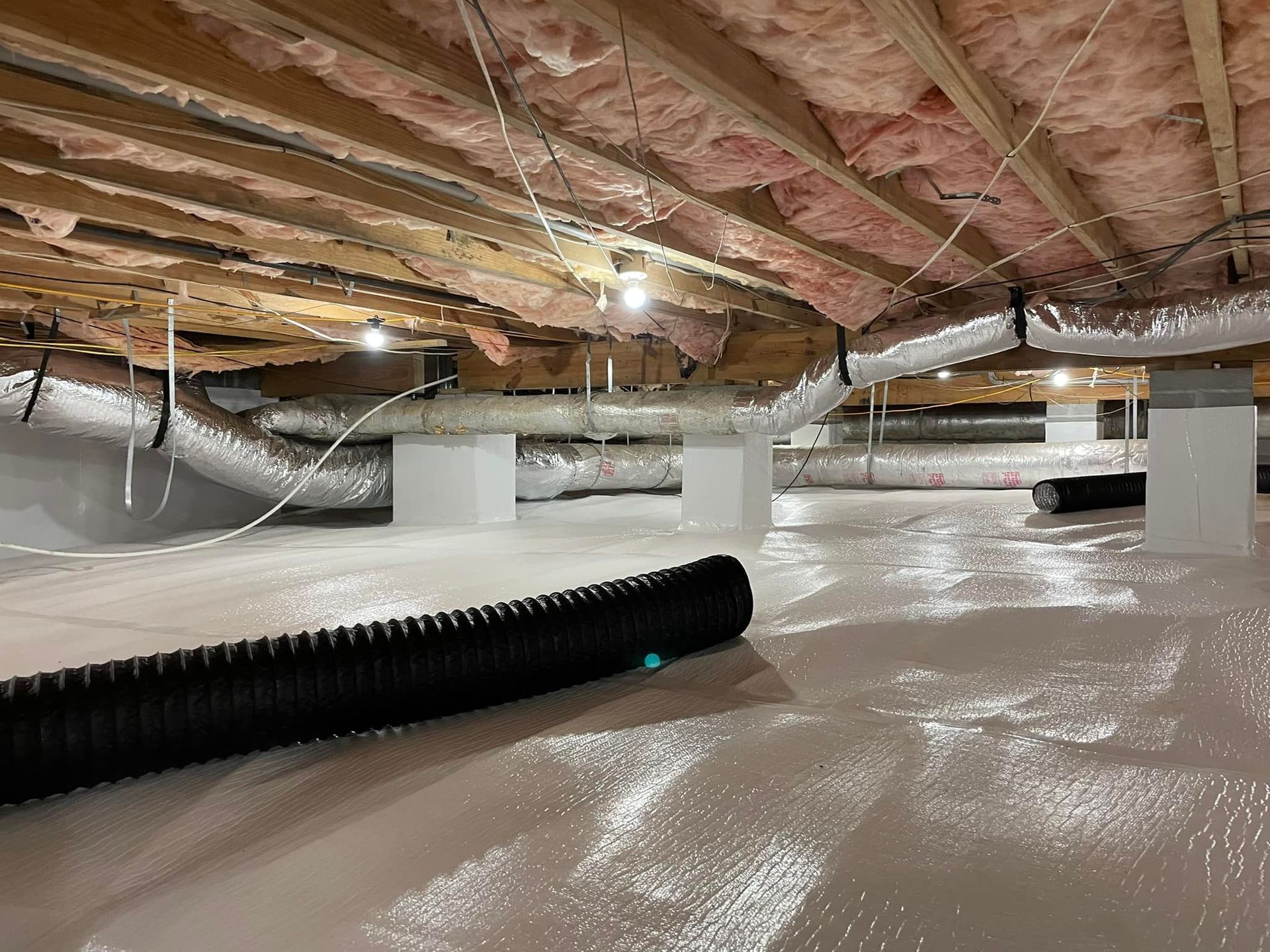
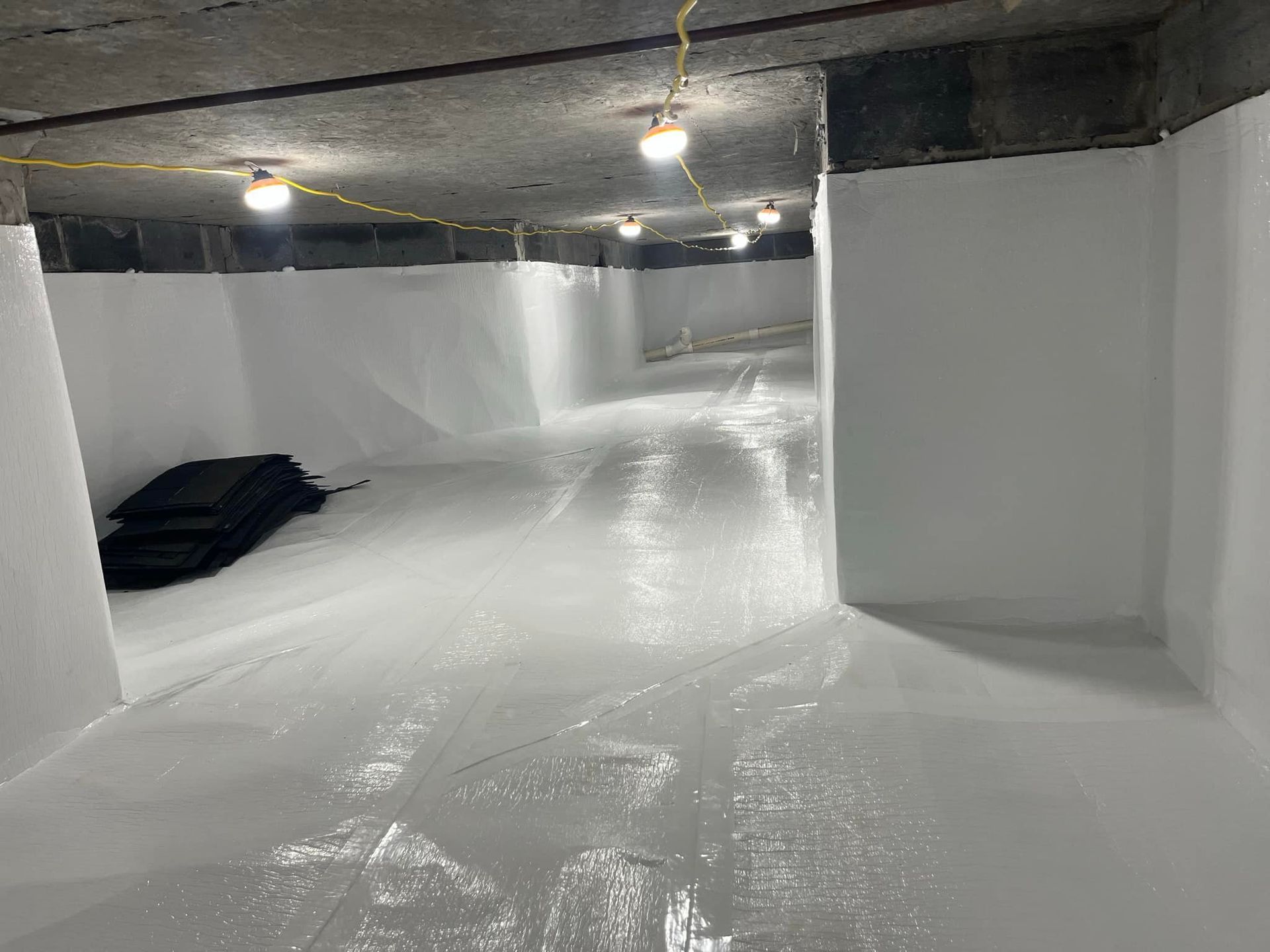
First thing I noticed when I crawled in here - the vapor barrier is paper thin. I'm talking super thin Chinese vapor barrier that you can practically see through. And it's punctured everywhere.
Here's why that matters. A vapor barrier's whole job is to keep ground moisture from getting up into your crawl space. If it's full of holes, it's not doing that job. Might as well not even be there.
But cheap, thin vapor barriers puncture easy. You're crawling around installing it, your knee goes through it. A sharp rock underneath pokes a hole. Normal wear and tear over time just tears it up. We use thicker material specifically because it holds up better and actually lasts.
Then there's the seams - the places where they taped two pieces of barrier together. These seams look like they were done in about five minutes total. Gaps everywhere. Tape barely sticking. Some spots where the tape's already peeling up.
When you do vapor barrier right, those seams need to be overlapped properly and taped with quality seam tape that's actually going to stick. You take your time with it. Make sure it's sealed. Because if moisture can get through your seams, you don't have a moisture barrier - you've got a moisture suggestion.
A proper vapor barrier installation means using material that's thick enough to hold up, taking the time to seal every seam correctly, and making sure the whole thing is actually going to last longer than a year or two.
This? This isn't going to last. It's already failing, and the homeowner's already seeing the consequences.
The Dehumidifier Placement Disaster
Now, I'll give credit where it's due - they installed a Santa Fe dehumidifier, and Santa Fe makes good equipment. That's actually a quality brand. So on paper, it looks like they did the right thing.
But here's the problem - they stuck it in the worst possible spot.
The dehumidifier is boxed into a corner, completely surrounded by ductwork. So it's sitting there running, dehumidifying this one little area around itself, and that's about it. The rest of the crawl space? Still humid.
Think about it like this - if you put a box fan in your closet and shut the door, is it going to cool down your whole house? No. It's going to move air around in that closet and that's it. Same principle here.
When you place a dehumidifier in a crawl space, you need to think about airflow. Where's the air going to circulate? Can it actually pull moisture from the whole space, or is it just recycling the same air in one corner?
This unit is working twice as hard as it should, running constantly, and still not keeping the humidity down where it needs to be. That means higher electric bills every single month. That adds up fast.
Proper dehumidifier placement means putting it where it can actually do its job - somewhere with good airflow, where it can pull air from the whole crawl space, not just one blocked-off corner.
Location matters just as much as the equipment itself. Maybe more.
The Open Vents Issue
So they left two foundation vents wide open. When the homeowner asked why, they told him "soil gases need to escape."
Okay, fine. But did they do a radon test? Did they give him a digital radon monitor so he'd actually know if there's a soil gas problem? Nope. They just left the vents open and moved on.
Here's why that's a problem. If you're trying to encapsulate a crawl space and control the humidity, open vents are working directly against you. You're letting outside air in - humid air in the summer, cold air in the winter. Your dehumidifier has to work that much harder to keep up.
In this case, with those two vents open, that dehumidifier is probably running twice as much as it would need to if the space was actually sealed up. Again - higher electric bills, more wear on the equipment, shorter lifespan.
Now, are there situations where you need to leave vents open? Sure. If you've got a radon problem, you might need ventilation. But you test for that first. You give the homeowner actual data so they can make an informed decision.
You don't just say "soil gases" and leave vents open because it's easier than sealing them up properly.
If those vents don't need to be open - and there's a good chance they don't - this homeowner is paying extra on his utility bill every single month for no reason.
What "Hybrid System" Really Means
Let's talk about this "hybrid system" they sold him. Sounds fancy, right? Sounds like maybe it's some special approach, best of both worlds, something like that.
Here's what it actually means - they didn't finish the job.
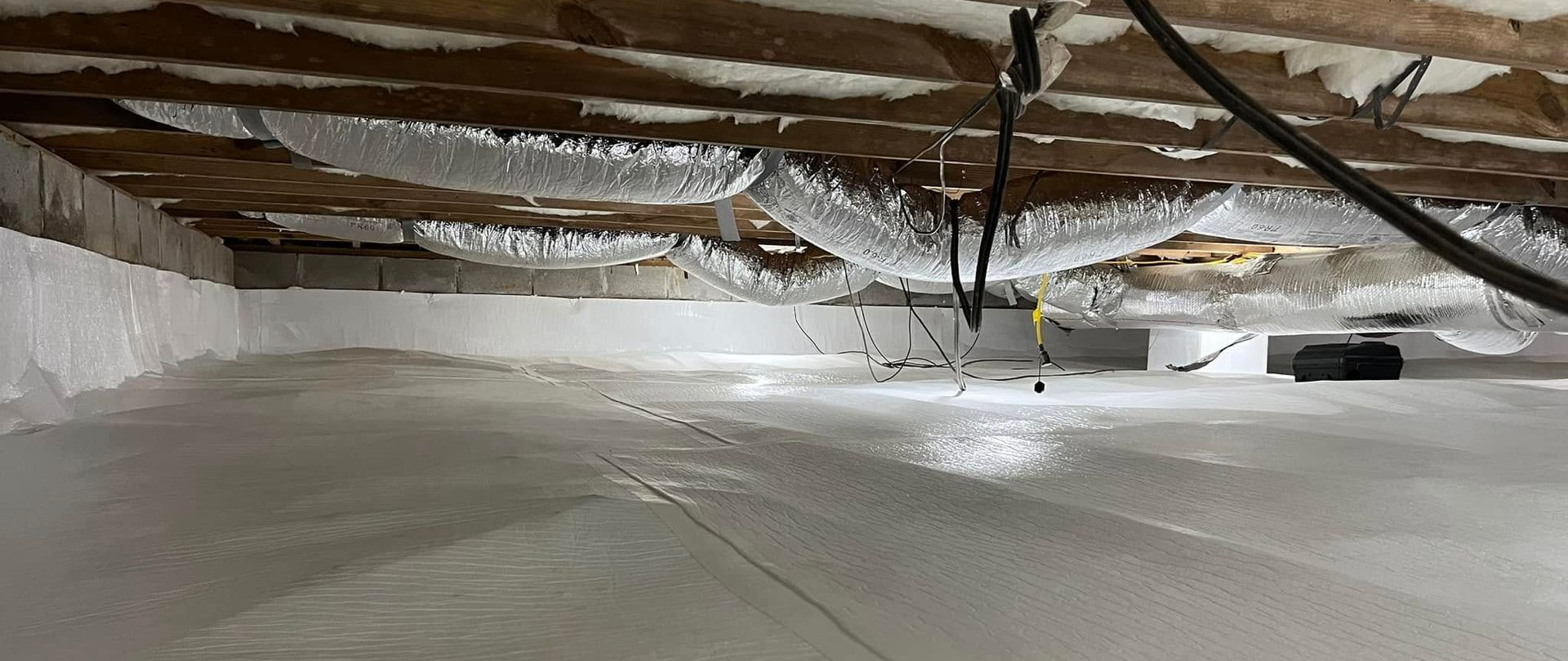
A hybrid system in this case meant they put down a vapor barrier (a cheap one, as we've covered) and installed a dehumidifier (in a bad spot, as we've also covered). And then they called it done.
No insulation work. No proper sealing of the vents. No attention to detail on the vapor barrier installation. Just the bare minimum to technically say they "did something."
Real encapsulation means the whole crawl space is sealed up properly. Vents are closed (unless there's a specific tested reason to leave them open). Vapor barrier is installed correctly with proper overlap and sealed seams. Insulation is addressed if it needs to be. The dehumidifier is sized right for the space and placed where it can actually work.
Everything works together as a system to control moisture and protect your home.
Partial encapsulation - or "hybrid systems" or whatever marketing term they want to use - means they did some of it and skipped the rest. Usually they skip the parts that take more time or cost more money.
When someone pitches you a hybrid system, here's what you should ask: What's different between this and full encapsulation? What are you not doing? And why?
Because "hybrid" usually just means "incomplete." And incomplete crawl space work is going to cost you more in the long run - either in higher utility bills, ongoing moisture problems, or having to pay someone else to come finish it right.
How to Protect Yourself
So how do you avoid ending up in this situation? Here's what I tell every homeowner.
Get multiple quotes. Don't just go with the first company or the cheapest price. Talk to at least three contractors, and pay attention to what they're telling you and how they're telling you it.
Ask about materials. What thickness vapor barrier are they using? What brand dehumidifier? Can you see samples? Don't let them get away with vague answers like "commercial grade" - get specifics.
Ask about the installation process. How do they seal seams? Where will they place the dehumidifier and why? What's their plan for the vents? How long will the job take?
Ask about warranties. Not just if they have one, but who backs it up. Is it the owner standing behind it, or some corporate warranty department three states away? What happens if the company gets sold?
Do some research on the company itself. How long have they been in business? Is it still owner-operated or has it been bought out? What do recent reviews say - not just the five-star ones, but how do they handle problems?
Red flags to watch for: pressure tactics, massive "discounts" if you sign today, vague answers about materials or process, companies that won't let you talk directly to the owner or project manager.
Trust your gut. If something feels off during the sales process, it's probably going to feel worse after they've cashed your check.
Ready to Get It Done Right the First Time?
If you're thinking about crawl space encapsulation, or if you had work done that's not holding up the way it should, give us a call.
We'll come out and do a free inspection. I'll show you exactly what's going on in your crawl space - good, bad, or somewhere in between. No pressure, no games, just honest assessment from someone who actually knows what they're looking at.
And if you already had work done by someone else and you're not sure if it was done right? We do second opinions too. Sometimes all you need is peace of mind. Other times, like this Knoxville homeowner, you need to know what actually needs to be fixed.
Either way, you're talking directly to me or my team. Not a call center. Not some corporate scheduler who's never seen a crawl space.
Contact Forever Guard Waterproofing today. Let's make sure your crawl space is done right - the first time.