The Real Damage From High Water Levels in Your Crawl Space
When Water Gets High Enough to Touch Your HVAC
IT'S NOT JUST ABOUT THE WATER - IT'S ABOUT THE PRESSURE
I'm out here in Knoxville looking at a crawl space in an older home - probably built in the seventies.
And I've got to tell you, I haven't seen water marks this high in a crawl space in a long time.
The homeowner told me she didn't think the water had reached the subfloor yet, but that it had gotten close.
And I thought, okay, that's already pretty serious.
But when I got down there and started looking around, I realized it was worse than either of us thought.
There are water marks on the HVAC unit. Not near it. ON it.
That discoloration at the bottom of the unit? That's from water getting so high it was touching the equipment and saturating the insulation around it.
When water gets that high, we're not just talking about a little standing water problem anymore.
We're talking about serious hydrostatic pressure against your foundation, damaged equipment, and structural issues that have been developing for who knows how long.
So let me walk you through what's actually happening when water levels get this extreme, and what it's doing to your home..
How High Is Too High?
Look, any standing water in your crawl space is a problem. But there are levels to this.
A couple inches of water pooling in low spots? That's bad, but it's manageable. We see that pretty regularly, especially after heavy rain.
But when water is getting high enough to leave marks on your HVAC equipment - equipment that's sitting up off the ground - that's a whole different situation.
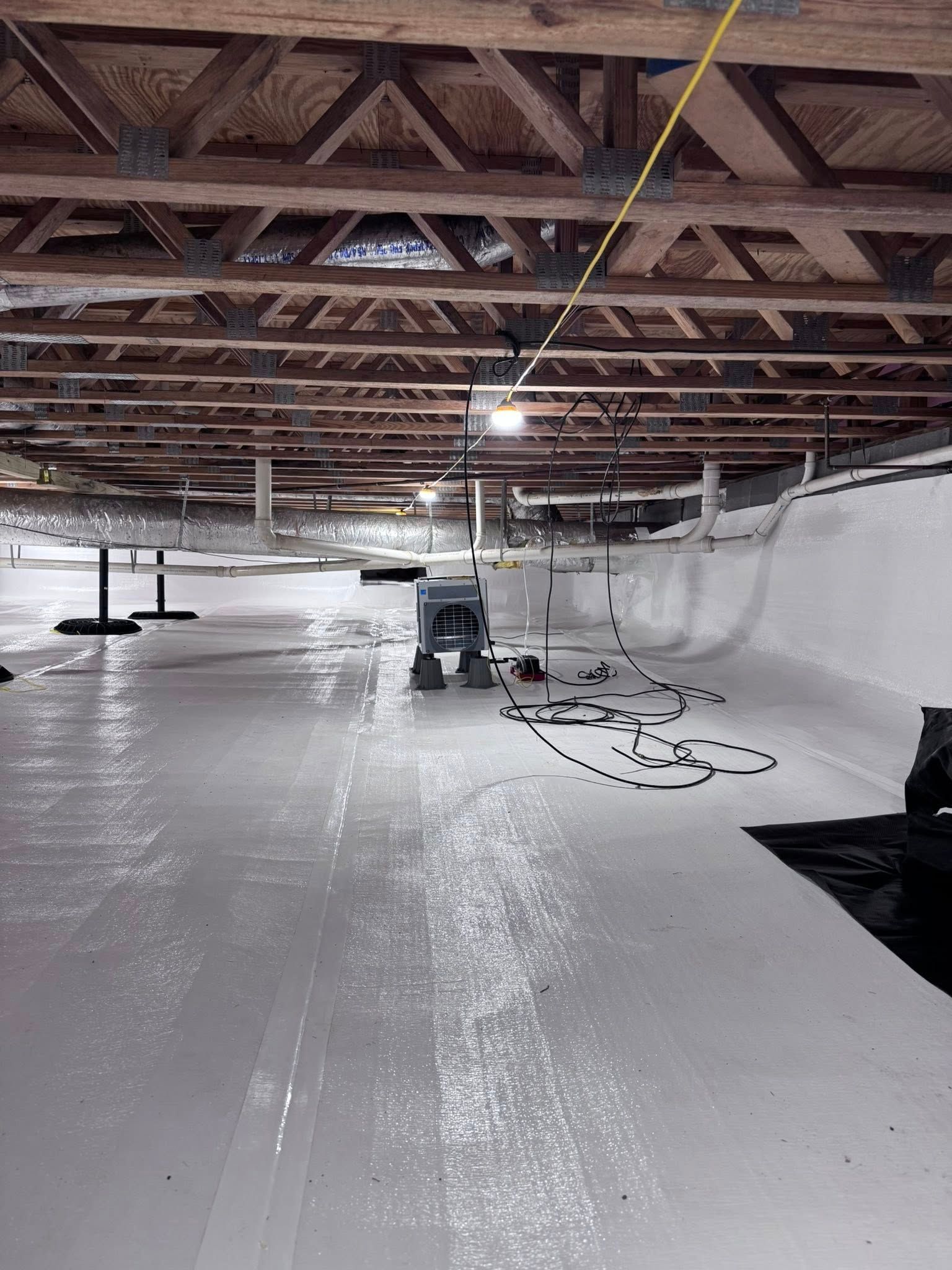
In this Knoxville crawl space, we're looking at water that's been rising several inches deep, maybe more during heavy flooding. High enough to reach the bottom of the HVAC unit. High enough to completely saturate insulation. High enough to create serious pressure against the foundation walls.
Most homeowners don't see this progression happening because, well, who's crawling around in their crawl space regularly? The water comes in during storms, it sits there for a while, eventually it recedes or soaks into the ground. Then it happens again. And again. Each time, it's doing a little more damage.
By the time you're seeing water marks on equipment, this isn't the first flood. This has been happening over and over. The crawl space has been filling up like a bathtub, and all that water has been sitting there pushing against your foundation, soaking into everything, creating the perfect environment for deterioration.
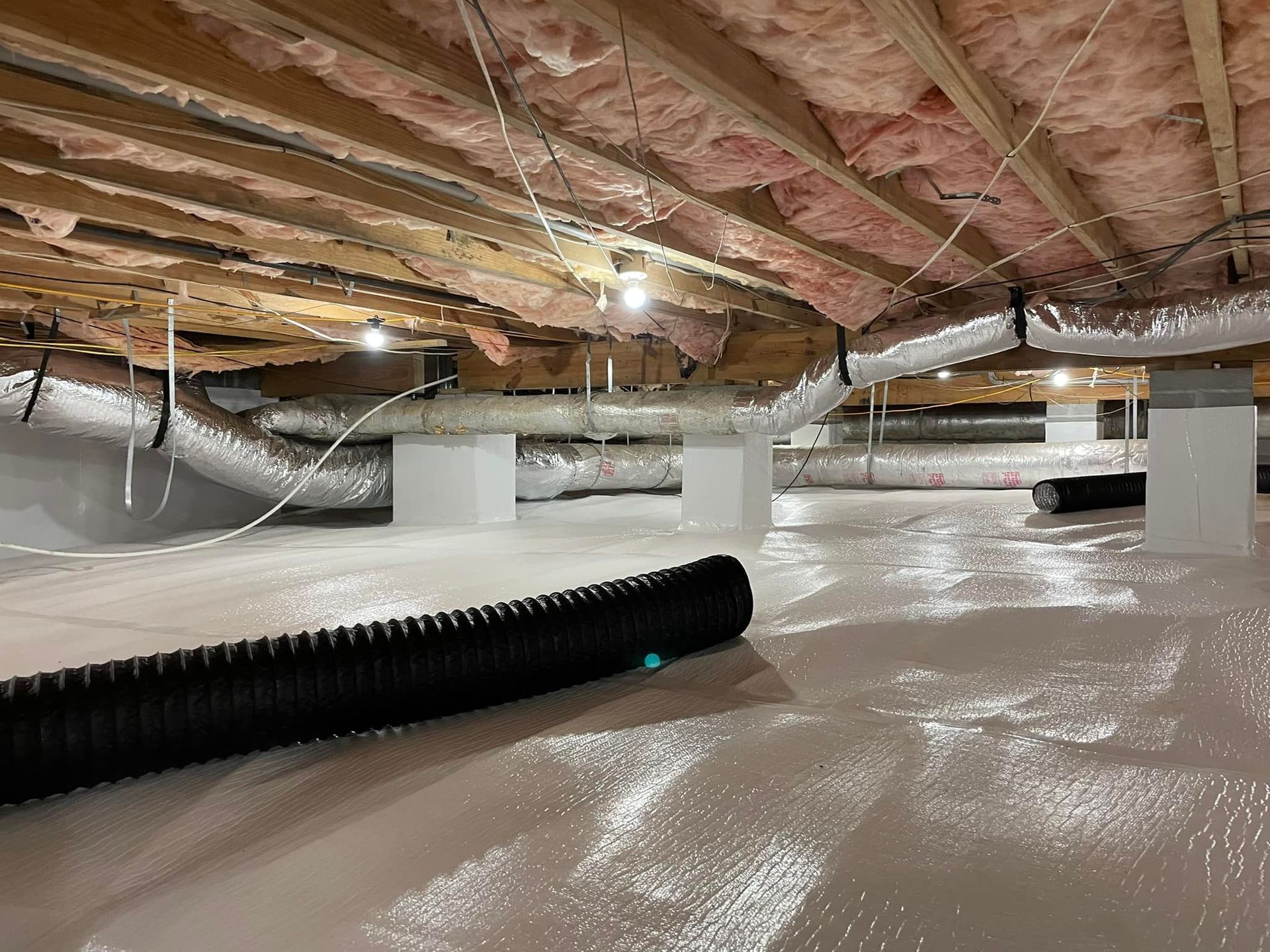
That's how "a little water" turns into what I'm looking at today - insulation falling down everywhere, ductwork deteriorating, foundation cracks developing, and HVAC equipment that's been sitting in water..
The Hydrostatic Pressure Problem
Alright, so let's talk about hydrostatic pressure. I know that sounds technical, but it's actually pretty simple.
Hydrostatic pressure is just the force that water creates when it's pushing against something. The more water you have, and the higher it gets, the more pressure it creates.
So when you've got several inches of water sitting in your crawl space, that water is constantly pushing outward against your foundation walls. It's not just sitting there - it's applying force. All the time. Day after day.
Your foundation walls are strong, but they're not designed to have water pushing against them constantly from the inside. Over time, that pressure starts to cause problems.
You get cracks developing in the foundation. You get settlement - which means parts of your foundation are literally sinking or shifting because the footer underneath is being compromised. The ground gets saturated, the footer loses support, and things start to move.
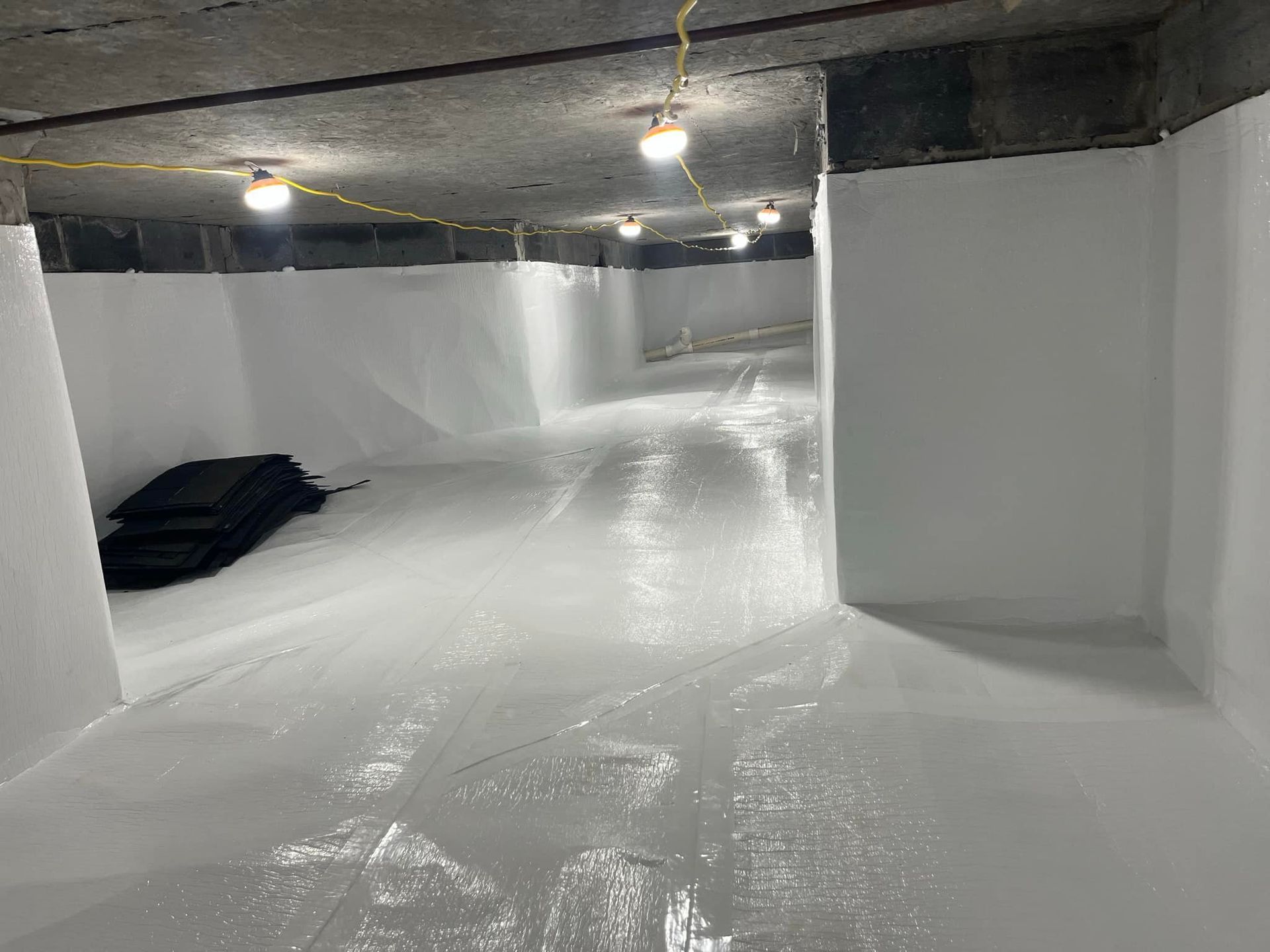
In this crawl space, we're already seeing cracks in the foundation. That's a direct result of this water problem that's been happening for who knows how long. The water gets high, it pushes against the foundation, and slowly but surely, damage develops.
This is why just pumping the water out after it floods isn't enough. You've got to stop it from pooling in the first place, because every time it does, you're getting more of that pressure against your foundation.
What High Water Levels Destroy
Let's talk about what all this water is actually doing to the components in your crawl space.
First, there's the HVAC equipment. When water is getting high enough to touch the unit, you're saturating the insulation around it. That insulation breaks down, gets heavy, falls apart. And the metal components on the bottom of the unit? They're sitting in moisture constantly. That means rust, deterioration, reduced efficiency. Your HVAC system is expensive - you don't want it sitting in water.
Then there's the regular insulation in your crawl space. In this house, it's falling down everywhere. Once insulation gets soaked, it's done. It gets waterlogged, heavy, loses all its R-value, and eventually just falls right off the floor joists. At that point, it's not insulating anything - it's just wet debris sitting in your crawl space.
The ductwork is deteriorating too. If you've got HVAC ducts running through your crawl space and they're constantly exposed to high humidity and water, they break down. Metal ducts rust. Flex ducts develop holes. The seals fail. Now you're losing conditioned air, your energy bills go up, and you're potentially pulling air from a moldy crawl space into your living space.
And we haven't even talked about the wood structure yet - your floor joists, your subfloor, the bottom plate of your walls. All of that is wood. Wood and constant moisture do not mix. You get rot, you get fungal growth, you get structural weakening over time.
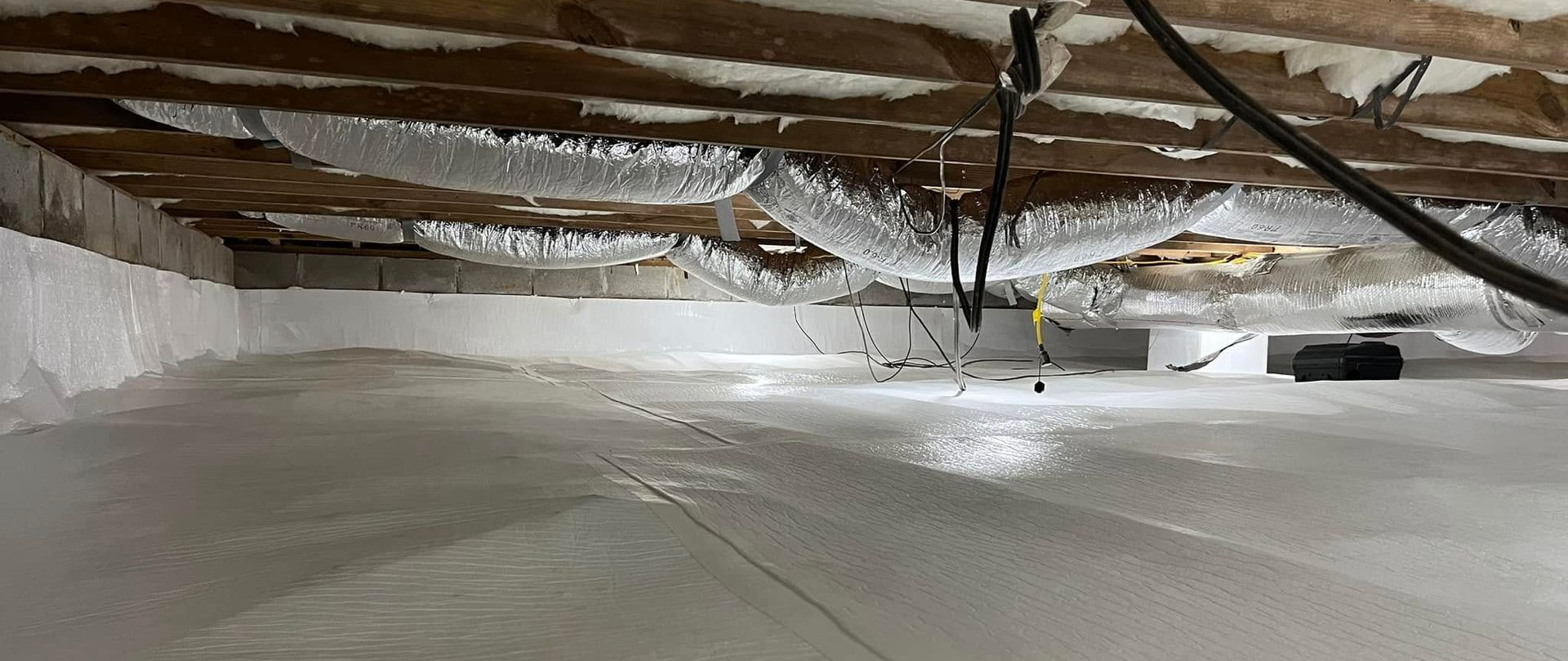
All of this is happening simultaneously. It's not just one problem - it's everything in your crawl space getting damaged at once because the water levels are getting so high.
Why This Happens in Knoxville Homes
Here in Knoxville, I see this kind of extreme water problem pretty regularly, especially in older homes like this one from the seventies.
Part of it is just age. These houses have been around for 50+ years. The drainage systems that might have worked when the house was new don't work anymore. Pipes deteriorate, French drains get clogged with sediment, sump pumps (if there ever were any) fail and never get replaced.
Grading changes over time too. Maybe when the house was built, the yard sloped away from the foundation properly. But decades of settling, landscaping changes, or just natural erosion can change that grade. Now water runs toward your foundation instead of away from it.
Downspouts are another big one. They get damaged, disconnected, or they're just dumping water right next to your foundation. All that roof runoff goes straight into the ground right where you don't want it - next to your house. Then it seeps right into the crawl space.
Sometimes it's just one of these issues. Usually it's a combination of two or three things that have failed over the years.
And here's the thing - when these problems first start, they're small. A little water here and there after big storms. Most homeowners don't even know it's happening because they're not checking their crawl space. By the time it becomes obvious - by the time you're smelling mustiness or seeing foundation cracks or finding water marks on equipment - the problem has been developing for years..
What Knoxville Homeowners Need to Know
If you're in the Knoxville area and you've got an older home, you need to be aware that this kind of thing can happen.
The warning signs usually show up before it gets to this level. Musty smells in your house. Floors that feel soft or bouncy. Cracks appearing in your foundation or drywall. Higher than normal humidity levels inside your home. Cold floors in winter.
Any of those things could be pointing to a crawl space water problem that's developing.
The mistake most homeowners make is waiting until it's obvious. By then, you're looking at significant damage and significant repair costs. The HVAC equipment has been compromised, the insulation needs to be replaced, the foundation has cracks, the wood structure might have rot or fungal growth.
If you're thinking about getting your crawl space checked, here are the questions you should ask contractors: Are they actually going to get in the crawl space and look around? Are they going to take photos and show you what's wrong? How are they planning to handle both the water AND the moisture?
What's their plan for protecting your foundation long-term?
Red flags? Anyone who gives you a quote without inspecting. Anyone who says you just need a dehumidifier and you're good. Anyone who's not talking about drainage when you've clearly got a water problem.
The cost of addressing this now is always less than the cost of waiting. Water damage doesn't get better on its own..
Ready to Check Your Crawl Space?
If you're dealing with water in your crawl space - or if you're just not sure what's going on down there - let's take a look.
We'll come out, do a free inspection, and document exactly what we find. I'll show you the photos, explain what's happening, and give you an honest assessment of what needs to be done.
You'll be talking to me directly - I'm the owner, and I do the inspections myself. No call center, no sales team, just someone who actually knows what they're looking at.
High water levels in your crawl space aren't something to ignore. The damage compounds over time, and the longer it goes, the more expensive it gets to fix.
Let's get it taken care of before it turns into a bigger problem.
Contact Forever Guard Waterproofing today for your free crawl space inspection.