A Sump Pump Alone Won't Fix Your Water Problem
A Sump Pump Alone Won't Fix Your Water Problem
HERE'S WHAT ACTUALLY WORKS IN CRAWLSPACE DRAINAGE
I walked a crawlspace in Dandridge yesterday that perfectly shows why so many homeowners stay frustrated with water problems.
Standing water everywhere. Around the whole perimeter. Both the old house side and the newer addition.
And right in the middle? A sump pump sitting in a Home Depot bucket.
Now, the pump itself was decent. It was a Zoeller - not the best you can get, but not terrible either. The problem wasn't the pump. The problem was how it was installed.
Someone thought dropping a pump in a bucket would solve their water issues. And I get why they thought that. Most people think that's all you need. Put a pump in, water goes away, problem solved.
But that's not how drainage works.
The water was sitting all around that pump. Pooling against the foundation walls. Just waiting there. Because without proper drainage, the water has nowhere to go until it rises high enough to spill over into the bucket.
That's not a solution. That's just hoping the water level gets high enough for the pump to do something.
I'm going to walk you through what actually needs to happen to keep a crawlspace dry. Not just when it floods. All the time.
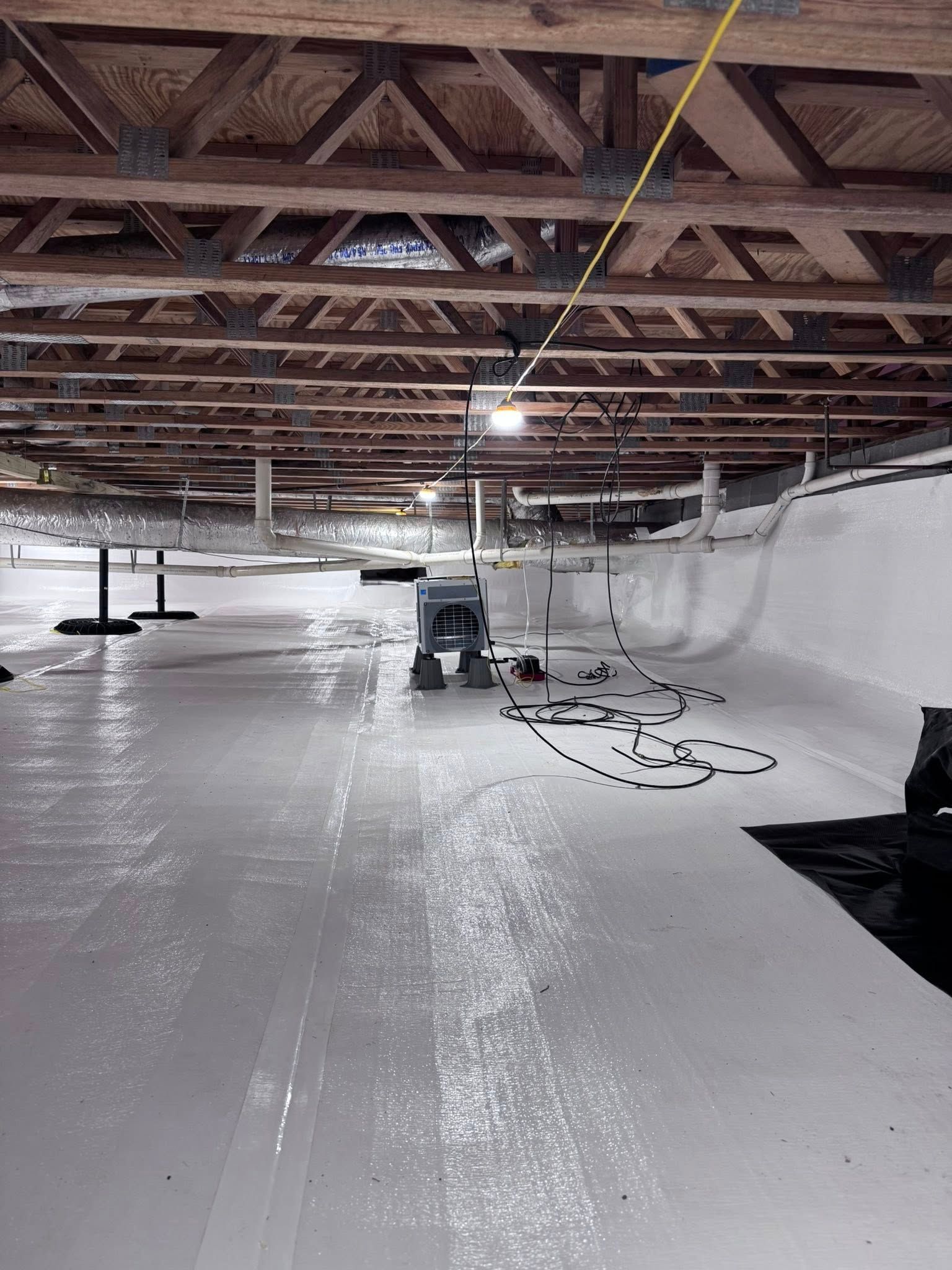
What I Found in This Crawlspace
Let me break down what I was looking at.
This crawlspace is half old house, half new addition. Two different construction periods. Two different sets of problems.
The old side had standing water running the entire perimeter. You could see it against the foundation walls all the way around. That's a drainage issue. Water is getting in and has nowhere to go.
The new addition side? Less standing water, but moisture everywhere. Different problem, but still a problem.
Then there's the sump pump. It's sitting in a regular five-gallon bucket from Home Depot. Not perforated. Just a solid plastic bucket with a pump dropped inside.
So the water is standing all around it. And standing inside it. Because for water to get into that pump, it has to rise up high enough to pour over the edge of the bucket.
That pump isn't collecting water. It's waiting for a flood.
The Zoeller pump itself is fine. It's the kind you can get at Lowe's - not as good as what we get from distributors, but it'll work. The problem is the installation gives it nothing to do until the water level gets dangerously high.
This is what happens when someone tries to fix a drainage problem without understanding how drainage actually works.
Why a Sump Pump Alone Doesn't Work
Here's what most people don't understand about sump pumps.
A pump only removes water that gets to it. It doesn't collect water. It doesn't channel water. It just pumps out whatever flows into the basin.
So if you drop a pump in the middle of a crawlspace with no drainage leading to it, you're relying on the water to naturally flow there on its own. Or worse, you're waiting for the water level to rise high enough that it has no choice.
In this crawlspace, the bucket wasn't even perforated. That means water can't flow through the sides. It has to come up and over the top edge. The pump literally can't do anything until the crawlspace floods enough to fill that bucket.
That's not preventing water problems. That's managing a crisis after it's already happened.
Think about it like this. If your roof was leaking, you wouldn't just put a bucket in the attic and call it fixed. You'd fix the leak. Same concept here. You need to collect the water where it's coming in and give it a path to the pump.
Without that, you've got standing water sitting against your foundation. Soaking into the ground. Creating moisture and humidity problems. And potentially causing your foundation to settle over time.
The pump is an important part of the system. But it's not the whole system.
What Proper Perimeter Drainage Actually Is
Proper drainage means collecting water at the source and channeling it where you want it to go.
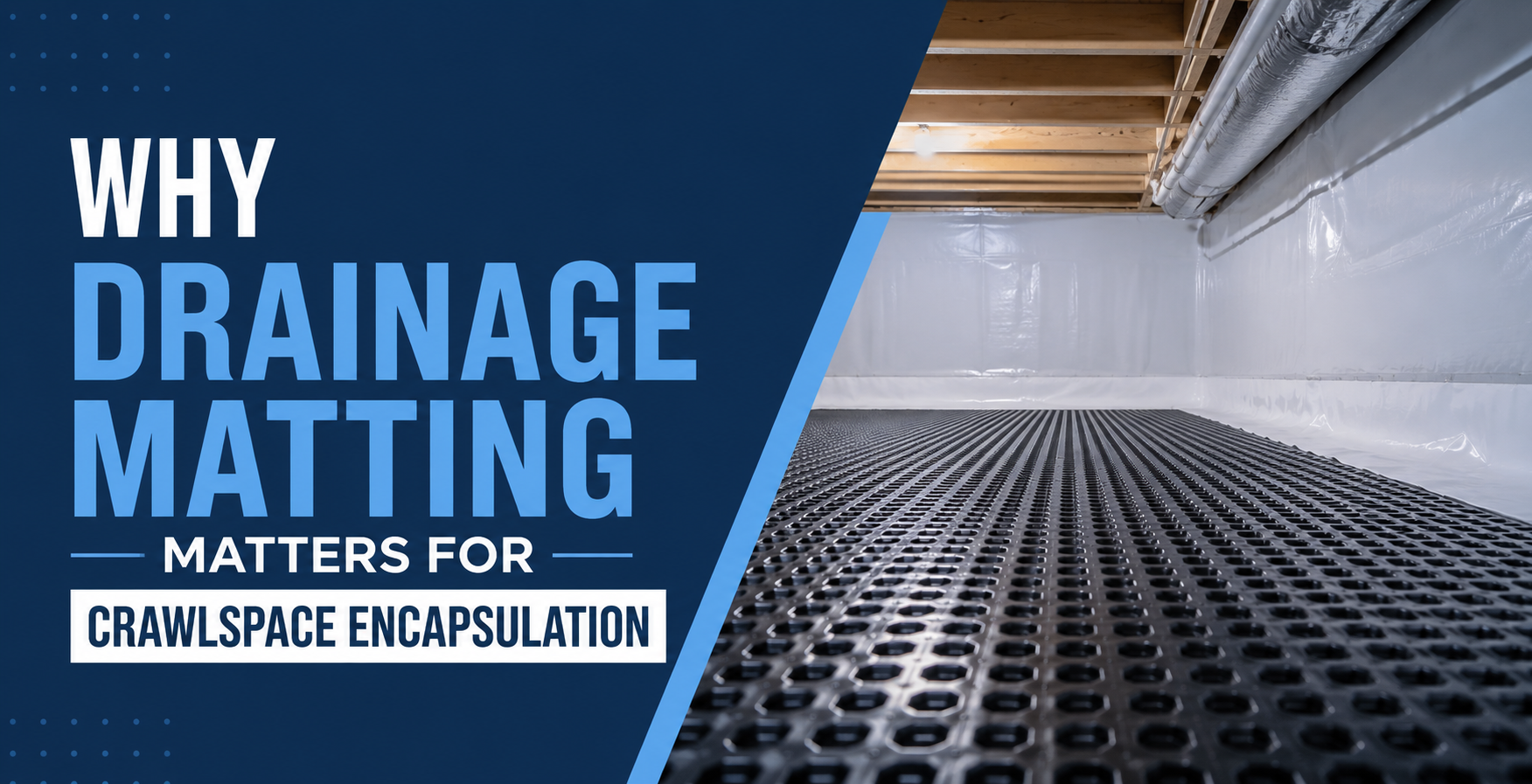
In a crawlspace, that means a perimeter drain. You dig a trench along the foundation walls where water is coming in. That trench collects the water before it can pool and spread across the crawlspace floor.
The trench leads to a sump pump basin. Not a Home Depot bucket. An actual basin that's perforated so water can flow into it from all sides.
The water travels through the drainage system, fills the basin, and triggers the pump. The pump sends it outside, away from your house. That's how it's supposed to work.
It's a complete system. Collection, channeling, removal.
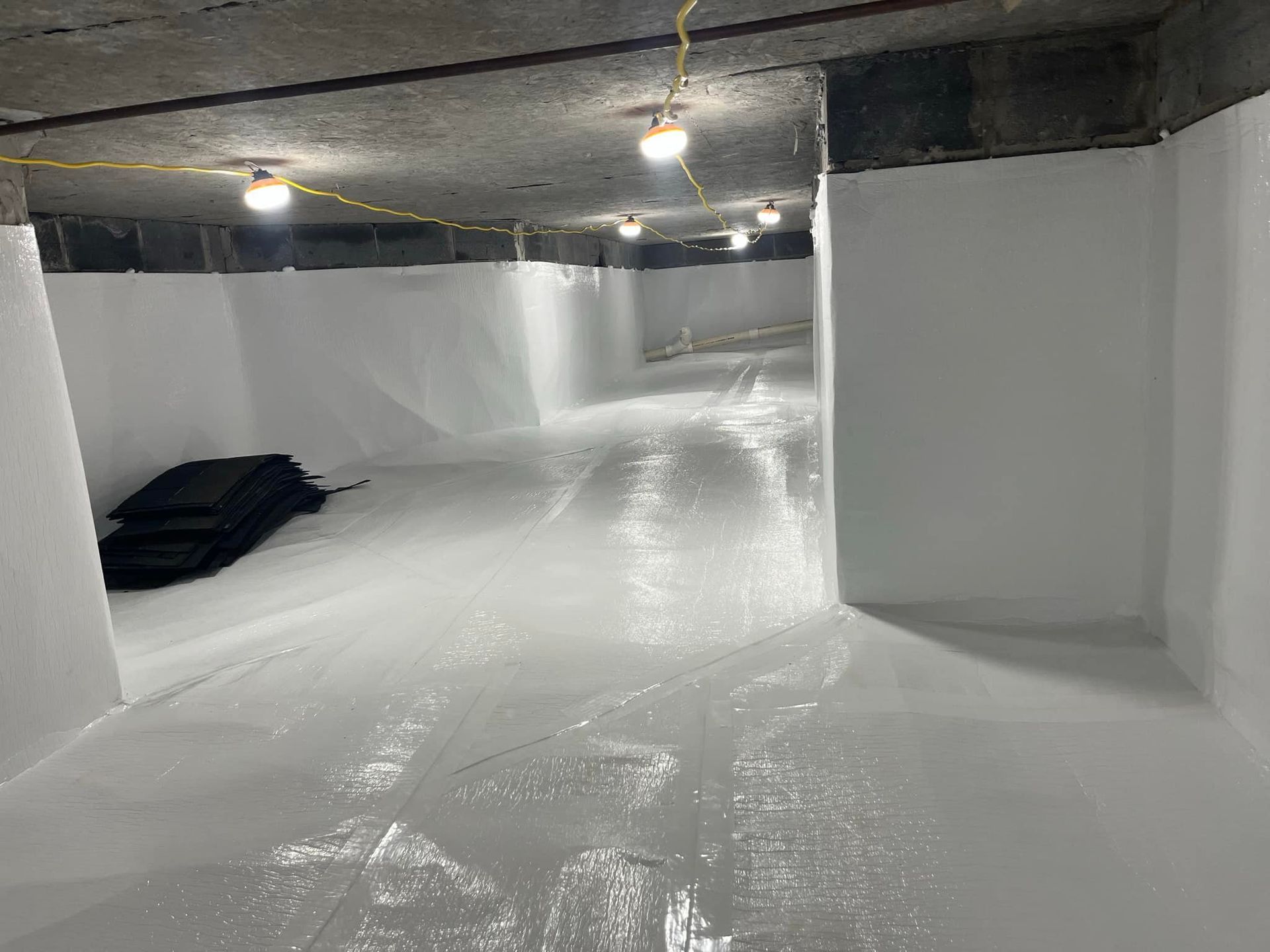
In this Dandridge crawlspace, we're going to install perimeter drainage around the old house side where all that standing water is. The water will flow to a properly installed sump pump instead of just sitting there waiting to cause problems.
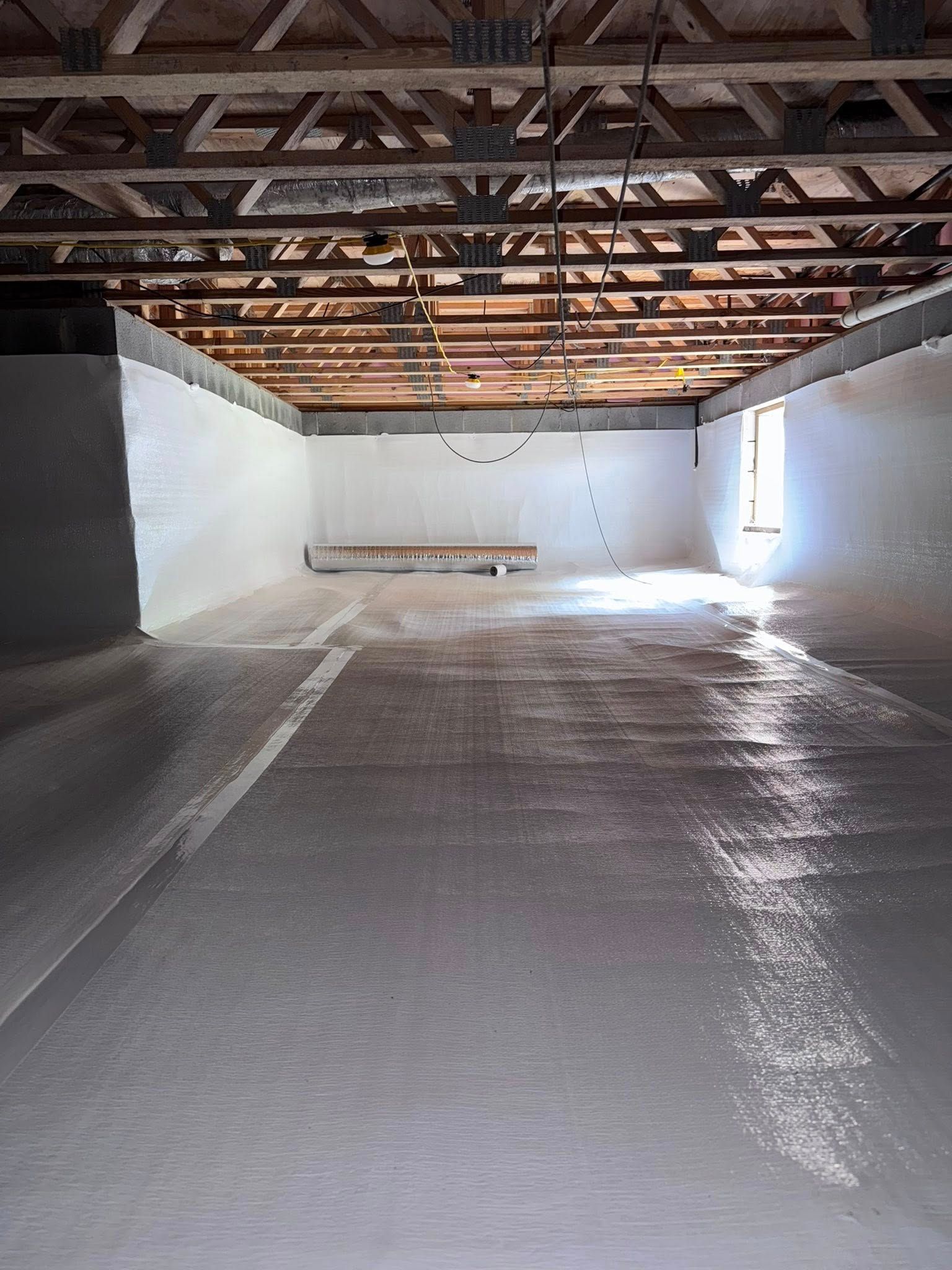
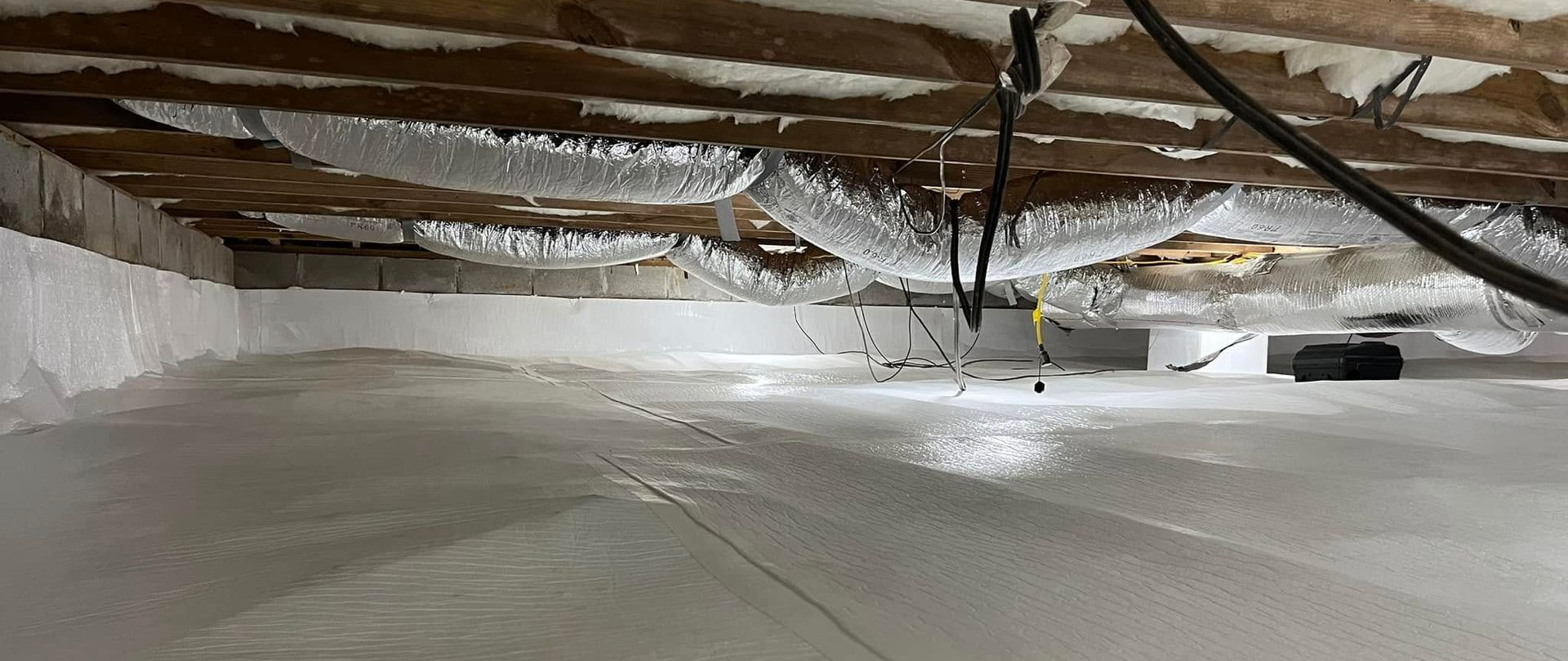
On the newer addition side, we'll address the moisture with encapsulation and a dehumidifier. Different problem, different solution.
But both sides need attention. Which brings me to the next point.
Why Both Sides Need Attention
This crawlspace is a perfect example of why you can't just fix part of the problem and walk away.
One side is an older house with standing water and drainage issues. The other side is a newer addition with mostly moisture problems. Two different situations.
But they share the same air space.
That means the moisture and humidity from one side affects the other. If we only fix the drainage on the old side and ignore the new side, the humidity is still going to be a problem. It's all connected.
Same thing if we only encapsulate the new side and leave standing water on the old side. That moisture is going to migrate. The dehumidifier is going to work overtime trying to fight water it was never designed to handle.
You've got to treat the whole crawlspace as one system. Address the standing water with drainage. Address the moisture with encapsulation. Control the humidity with a dehumidifier.
Half measures don't work. You end up spending money and still dealing with the same problems six months later.
This is why we're doing perimeter drainage on one side and encapsulation on both. It's the only way to actually solve what's happening under this house.
Short-Term vs. Long-Term Concerns
Let me be real with you about what's at stake here.
Short term, standing water and high moisture cause immediate problems. Musty smells. Mold and fungal growth. Poor air quality in your house. That gross feeling when you walk barefoot on your floors in the summer.
Those are annoying. But they're not the scary part.
Long term, water sitting against your foundation causes settling. The soil underneath gets saturated and shifts. Your foundation can sink or crack. Floors start to sag. Doors don't close right. Cracks show up in your walls.
Foundation repair is expensive. We're talking tens of thousands of dollars expensive.
Proper drainage isn't just about keeping your crawlspace dry. It's about protecting the entire structure of your house. That's why we take this stuff seriously.
Spending a few thousand now on the right drainage system beats spending thirty thousand later on foundation work. And it beats living with moisture problems for years hoping they don't get worse.
Take the Next Step
If you've got standing water in your crawlspace, or you're dealing with moisture problems that won't go away, let's take a look.
I'll come out personally or send one of my managers. We'll assess what's actually happening down there. Take pictures. Show you where the water is coming from and what needs to be done.
You'll get an honest explanation of the problem and a clear solution. No laptop presentations. No pressure. Just straightforward answers about your crawlspace.
And if someone already installed a pump for you but it's not working, we'll tell you why. Sometimes it just needs proper drainage added. Sometimes it needs to be redone completely. Either way, you'll know what you're dealing with.
We serve the Knoxville and East Tennessee area. We'll get you on the schedule within a week.
Give us a call or send a message. Let's make sure your crawlspace actually stays dry, not just when it floods.