Why Our Crawlspace Work Costs More
I'm Out Here Fixing Another Company's Work
HERE'S EXACTLY WHY WE CHARGE MORE
I'm standing in a crawlspace in Vonore, Tennessee, fixing work that was done just a few years ago.
Not ten years ago. Not twenty. A few years.
The customer already paid for this once. Now they're paying again because the first company did it cheap and fast instead of right.
I get asked all the time why our prices are higher than some of these other companies. And honestly? This crawlspace is the perfect example.
So let me walk you through exactly what I'm looking at here, and you can decide for yourself if saving a few thousand dollars up front is worth dealing with this a few years down the road.
What I Found in This Crawlspace
First thing that hits you when you get down here? The smell. Like cat pee. Strong enough that you don't want to be down here.
That's the vapor barrier breaking down. It's delaminating and putting off that ammonia smell. This is only a few years old.
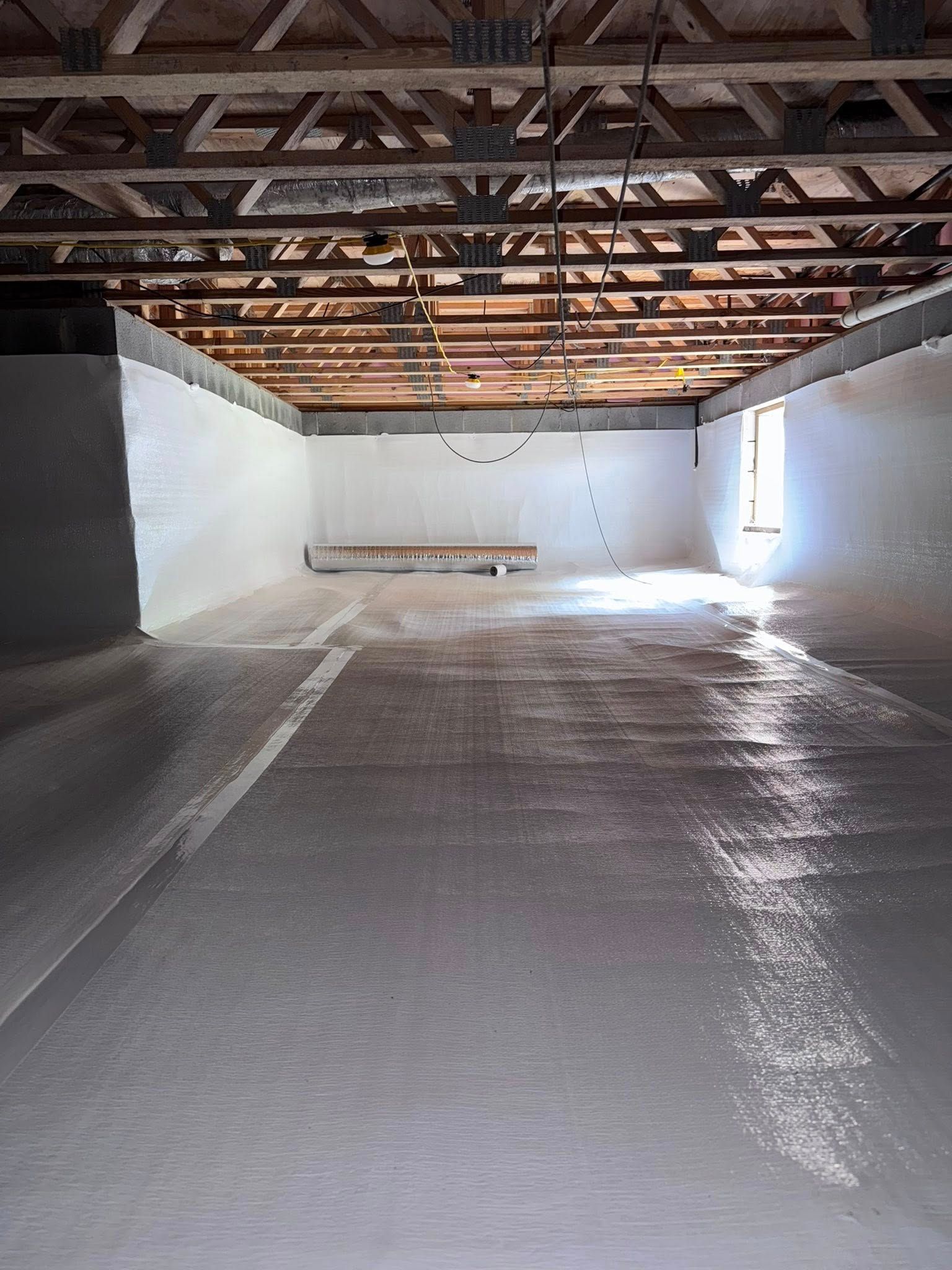
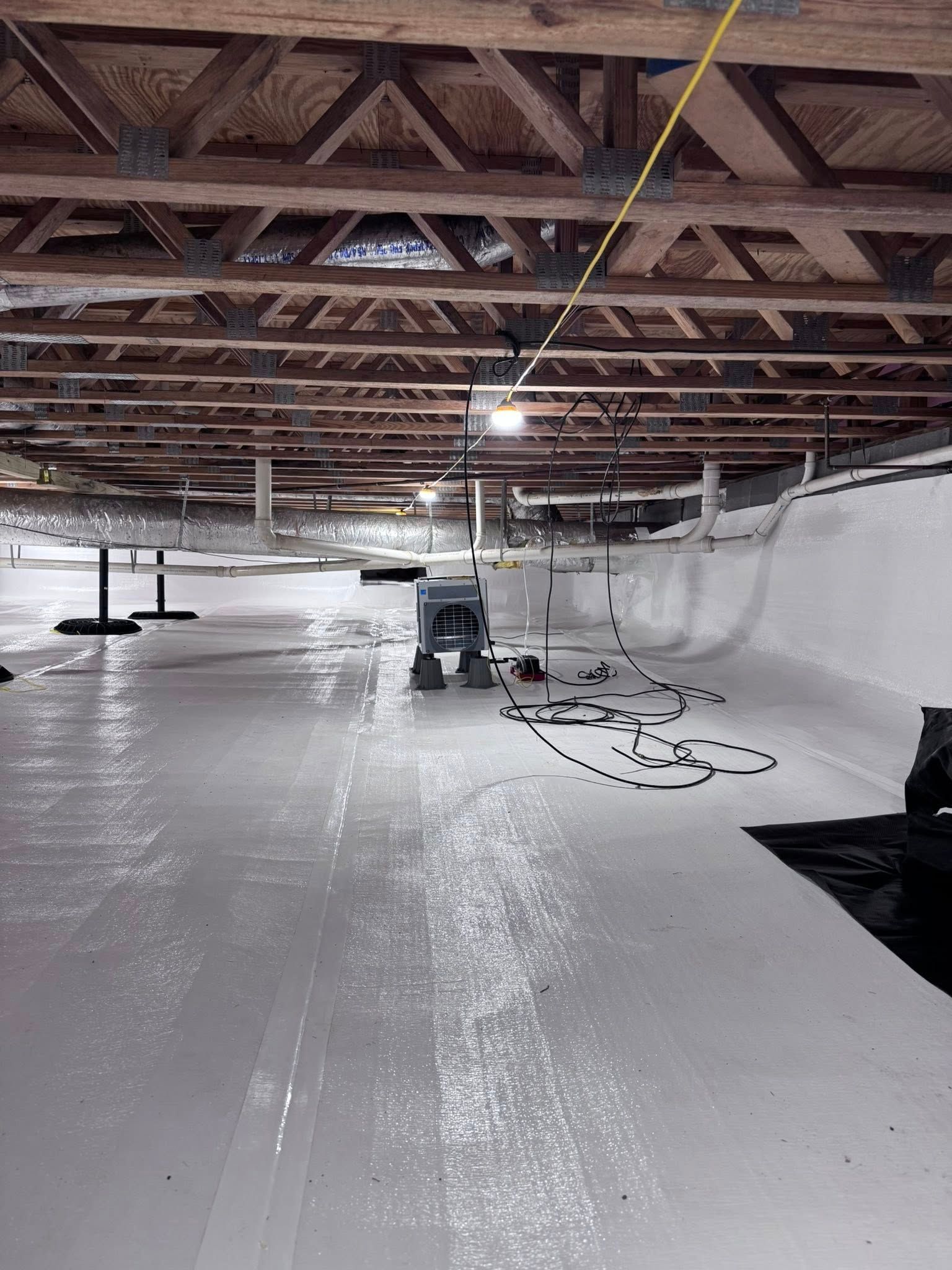
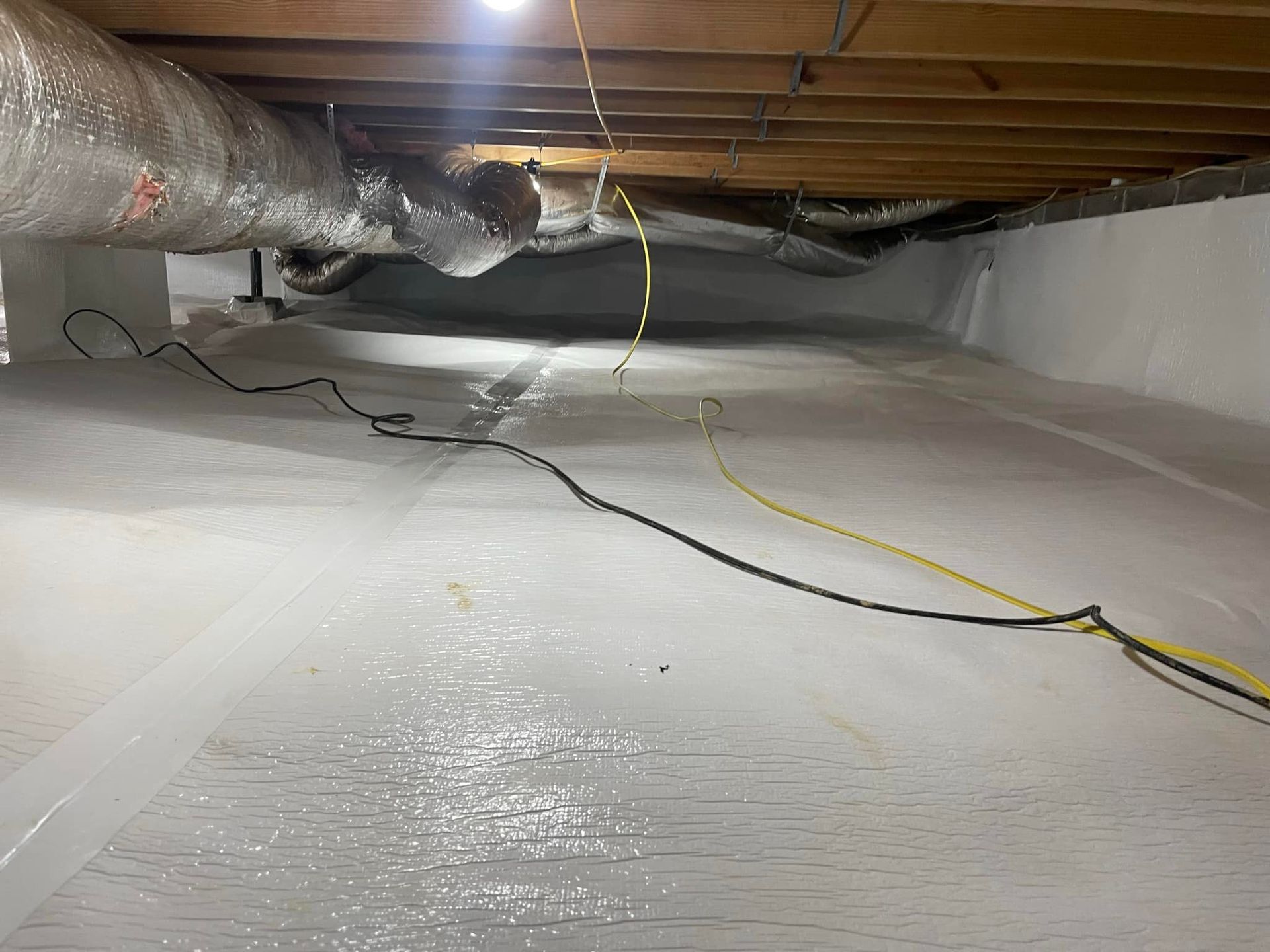
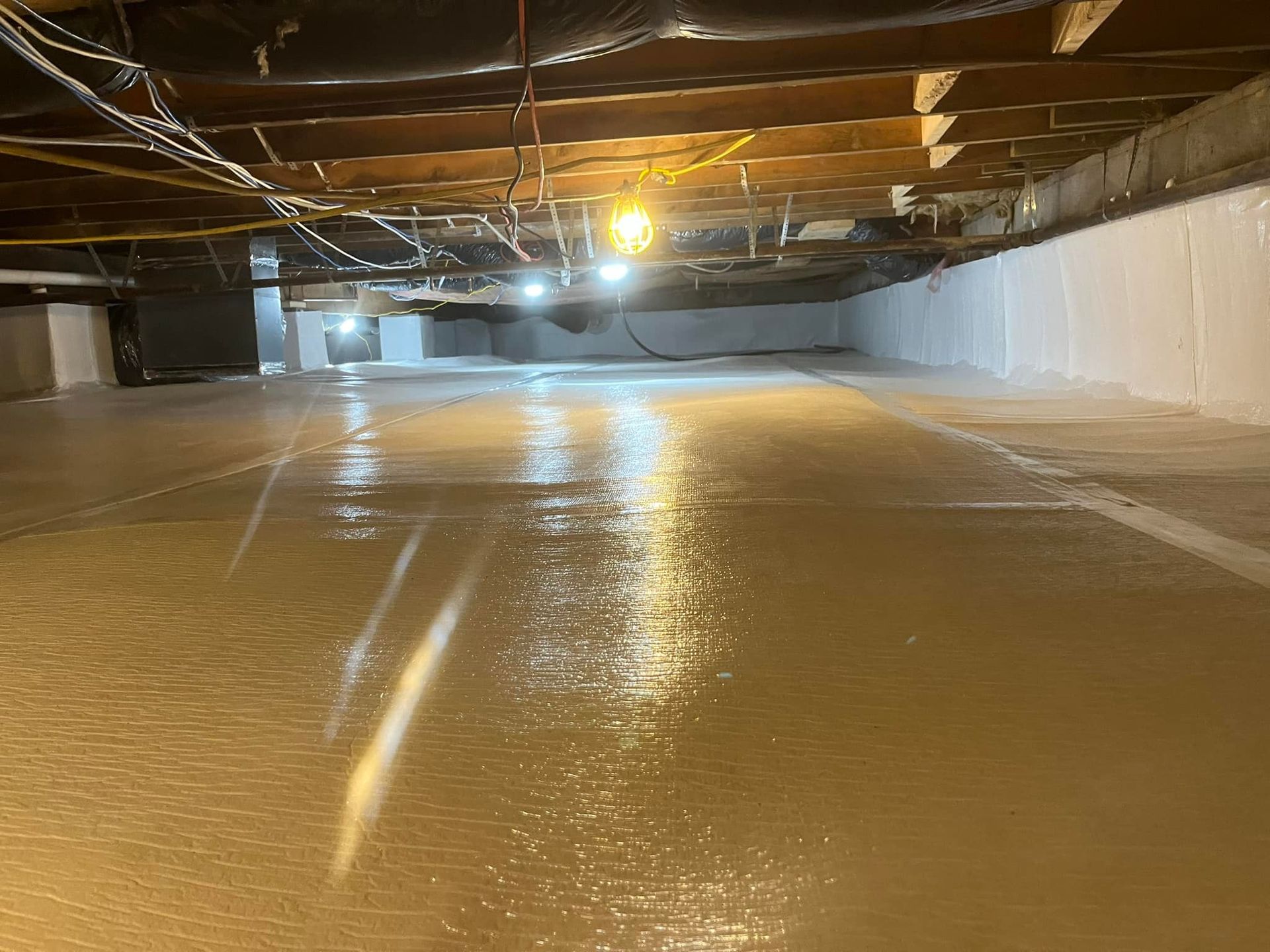
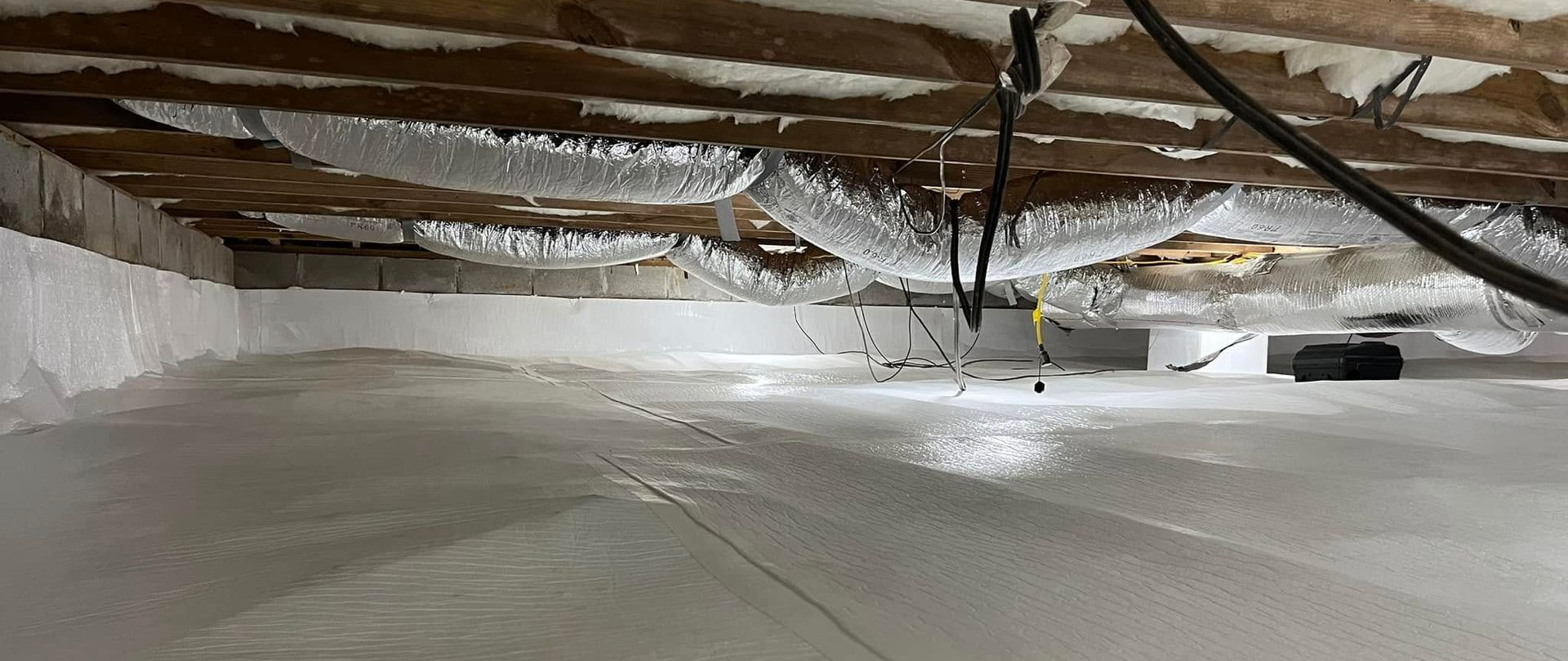
Then you look at the installation itself. It's a mess. Wrinkled. Sloppy. Tape seams just thrown all over the place. You can see they rushed through it. Our crawlspaces don't look like this - not on day one, and definitely not years later.
The dehumidifier is way too small for this space. This is a big crawlspace with ductwork running through it. That little dehumidifier sitting by the door isn't pulling air from one side to the other. It's not doing anything. They just installed what was cheap instead of what would actually work.
And here's the kicker - they ran that vapor barrier all the way to the top of the foundation wall. No termite sight line. That's required by code in most places. Termite inspectors need to see the top of your foundation. These guys blocked it off completely.
Oh, and they left their mess. Dirty. Debris everywhere. This is how they left it when they cashed the check and drove away.
The Vapor Barrier Difference
The vapor barrier they used here is 10 or 12 mil reinforced. That's industry standard for a lot of companies because it's cheap.
The problem? Reinforced barriers have layers. And those layers separate over time - that's the delamination. When they do, the adhesive between them starts breaking down and creates that cat pee smell.
We use thicker, non-reinforced barriers. Usually 20 mil. They cost more. But they're warrantied against breakdown and odor. You won't have this smell problem three, five, ten years down the road.
I can't tell you how many times I've walked crawlspaces that smell like this. And it's always the same type of barrier. Always the cheap reinforced stuff that companies use to keep their prices low.
Your crawlspace affects the air quality in about 50% of your home. You really want it smelling like cat piss?
Professional Installation Standards
Look at how this vapor barrier is installed. It's wrinkled. It's loose. The seams are taped like someone did it in the dark.
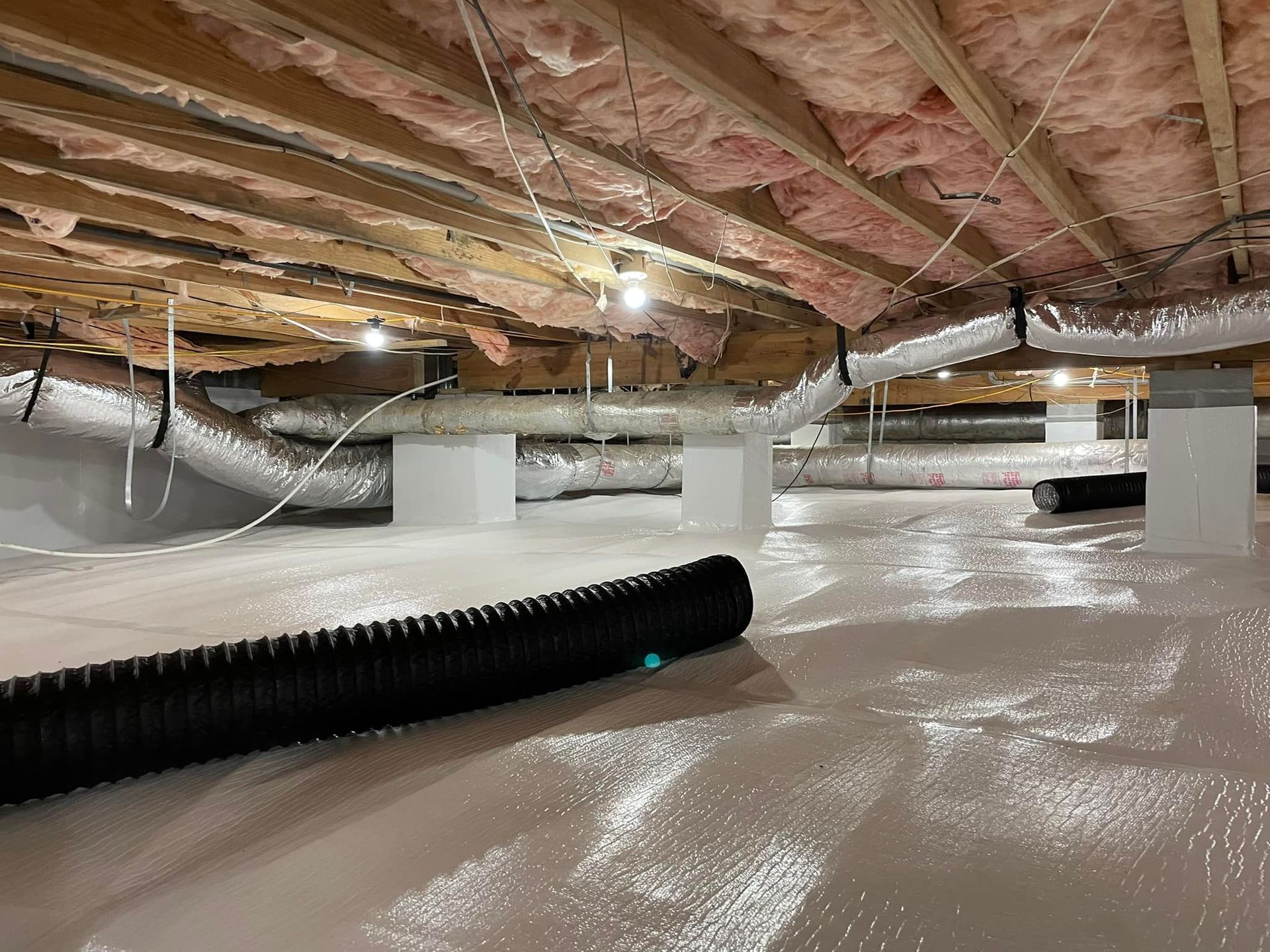
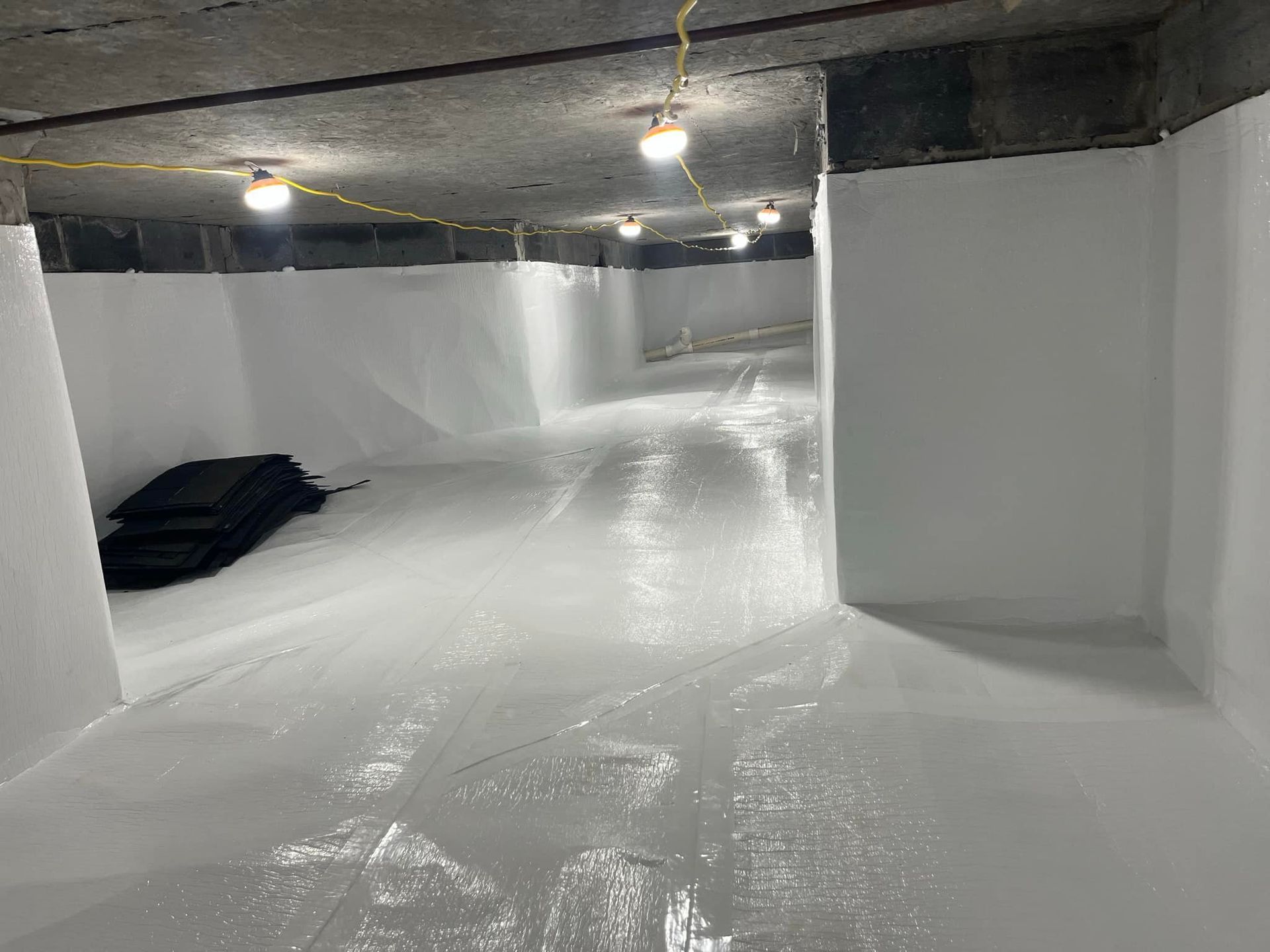
When we install a vapor barrier, it's tight. It's clean. The seams are straight and properly sealed. It looks professional because we take the time to do it right.
This isn't just about appearance. A sloppy installation means gaps. It means air leaks. It means the system doesn't work as well as it should.
Our installers are trained. They've been doing this for years. They know that how it looks reflects how well it works. And they know I'm going to come check their work, so it better be done right.
These big companies? They're pushing crews to do two, three jobs a day. Rush through it. Get to the next one. Quality doesn't matter when you're just trying to hit numbers.
That's the difference between a company that cares about the work and a company that cares about volume.
Equipment Sized Correctly
That dehumidifier sitting by the crawlspace door? It's meant for maybe 1,500 square feet. This crawlspace is easily double that.
A dehumidifier needs to pull air from across the entire space. You've got to think about airflow. In a big crawlspace like this, you need ducting to move air from one end to the other. Or you need a bigger unit that can handle the load.
They did neither. They just stuck a small unit by the door and called it good.
Here's what happens - that dehumidifier runs constantly trying to keep up. It can't. So your humidity stays high. You get condensation. You get mold and fungal growth. The whole system fails.
We size equipment based on the actual square footage and layout of your crawlspace. Sometimes that means a bigger dehumidifier. Sometimes it means adding ducting. Sometimes both.
It costs more to do it right. But the system actually works. And it doesn't burn out in two years from running 24/7 trying to do a job it was never designed for.
Following Code and Best Practices
See how the vapor barrier runs all the way to the top of the foundation wall? That's a problem.
You need a termite sight line. That's the gap between the top of your foundation and where the vapor barrier stops. Termite inspectors have to be able to see the top of the foundation wall to check for mud tubes and activity.
When you block that off, you're creating a code violation. And when the termite inspector shows up, they're going to flag it. Now you've got to pull the barrier down and redo it.
I already fixed it on this job. Dropped it down to where it should be. But the homeowner shouldn't have had to call me for something that basic.
This isn't some obscure rule. This is standard practice. But it takes a little extra time to do it right. So companies skip it.
Same thing happens with other details. Proper drainage. Correct fastening. Clean edges. All the stuff that separates a professional job from a rush job.
We follow code. We follow best practices. Because cutting corners always comes back to bite somebody - and it's never the company that did the work.
Take the Next Step
If you're getting quotes for crawlspace work, let us give you one too.
I'll come out personally or send one of my managers. We'll show you exactly what your crawlspace needs. We'll explain what we'd do and why. And we'll give you a fair price for work that's actually going to last.
No pressure. No games. No trying to scare you into signing today for some fake discount.
Just an honest assessment and a quality solution.
Yeah, we might not be the cheapest quote you get. But talk to this homeowner in Vonore. Ask them if saving money up front was worth paying twice.